
New Delhi, Mar 21 : Consular work serves as both a stabilising force and a bridge, helping to sustain connections even when broader political currents may be uncertain, Congress MP Shashi Tharoor said, asserting that it contributes quietly but significantly to the resilience of global relationships.
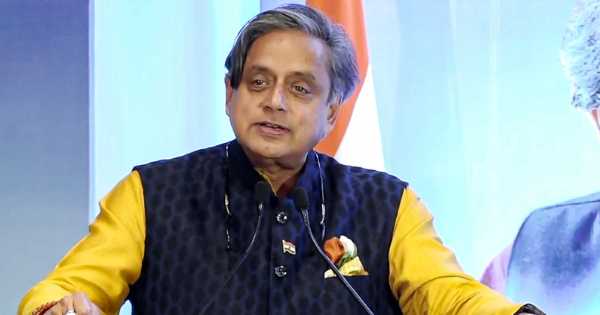
In his address at an event held here on Friday evening to mark Consular Day, Tharoor also said that consular work is a form of diplomacy, “measured not in communiques or declarations, but by the tangible difference it makes to people’s lives”.
The ‘Honorary Consular Corps Diplomatique – India’ hosted the event to present awards to honorary consuls and NGOs for their “excellent work” in boosting consular activities and bilateral relations.
Tharoor, who’s also the chairman of the Parliamentary Standing Committee on External Affairs, was the chief guest at the event, which was attended by the ambassadors of several countries.
“From geopolitical tensions to public health crises, from disruptions in travel to the complexities of migration, the demands placed upon consular systems have grown, both in scale and in sensitivity,” the Thiruvananthapuram MP said.
Tharoor’s remarks come amid the ongoing conflict in West Asia, and the movement of Indian nationals from the affected countries in the region to India, in which consular services play a key role.
Tharoor said the event reflects on a dimension of international relations that is at once “deeply practical and profoundly human”.
While much of diplomacy is often associated with high politics and headline-making negotiations, consular work operates at a different register, one that is closer to the lived realities of people, he said.
At its core, consular work serves as the interface between the state and the individual, beyond national borders, the point at which the “abstract idea of a nation becomes a tangible presence” in the lives of its citizens abroad, and in the experiences of those who seek to engage with it, Tharoor said.
“Whether through the issuance of visas, assistance in moments of distress, or the facilitation of cultural and commercial exchanges, consular services give everyday meaning to international cooperation,” Tharoor said.
In many ways, it is through these everyday interactions that nations are “most authentically experienced”, he added.
“It is therefore a form of diplomacy measured not in communiques or declarations, but in the tangible difference it makes to people’s lives. Often one case, one individual, one moment at a time,” he said.
Acknowledging the work done by consuls and honorary consuls of various countries, the Lok Sabha member emphasised that consular work contributes “quietly but significantly to the resilience of global relationships”.
“Consular cooperation between countries has also assumed greater significance. The facilitation of travel, the resolution of cross-border issues, or the management of shared challenges – all depend upon a degree of coordination and mutual understanding that goes beyond formal diplomacy,” he argued.
“In this respect, consular work serves as both a stabilising force and a bridge, helping to sustain connections even in moments when broader political currents may be uncertain,” Tharoor said.
“There is, if I may say so, something quietly profound about this dimension of diplomacy. It reminds us that the true measure of international relations does not lie solely in agreements signed or positions articulated, but in the quality of the connections we sustain across borders,” he added.
In an era marked by unprecedented mobility, where millions cross borders for work, education, tourism and opportunity, the role of consular service has become ever more central, the Congress MP said.
“They’re not merely facilitators of movement, but enablers of trust,” he underlined.
Consular work also plays a vital role in strengthening the fabric of international engagement by supporting business exchanges, encouraging cultural interactions, and maintaining channels of communication between states and societies, Tharoor said.
He also emphasised that honorary consuls play a role that is both indispensable and deeply impactful.
“As honorary consuls in Delhi and Mumbai, you all play an invaluable role in fostering international understanding and cooperation with countries that do not maintain embassies in India or consulates in Mumbai,” Tharoor said.
If anything, the contemporary global landscape has only “amplified the importance of consular services”, he said.
“We live in a time of both unprecedented connectivity and undeniable uncertainty, where opportunities for international engagement coexist with new and evolving challenges,” Tharoor said.
Consular work also affirms a simple but powerful idea – behind every passport is a person, he said.
“Behind every application is a story. And behind every request is an expectation of fairness, dignity, and consideration,” Tharoor said. (PTI)