
New Delhi, May 13: The government on Wednesday hiked import duty on gold and silver to 15 per cent to curb non-essential imports amid the West Asia crisis which has put pressure on forex reserves.
Effective May 13, import duty on gold and silver has been increased from 6 per cent to 15 per cent and that on platinum has been raised from 6.4 per cent to 15.4 per cent. Consequential changes have also been made to other items such as gold/silver dore, coins, findings, etc.
The duty hike came within days of Prime Minister Narendra Modi’s clarion call for curbs on gold purchases, along with other austerity measures to reduce avoidable foreign exchange expenditure.
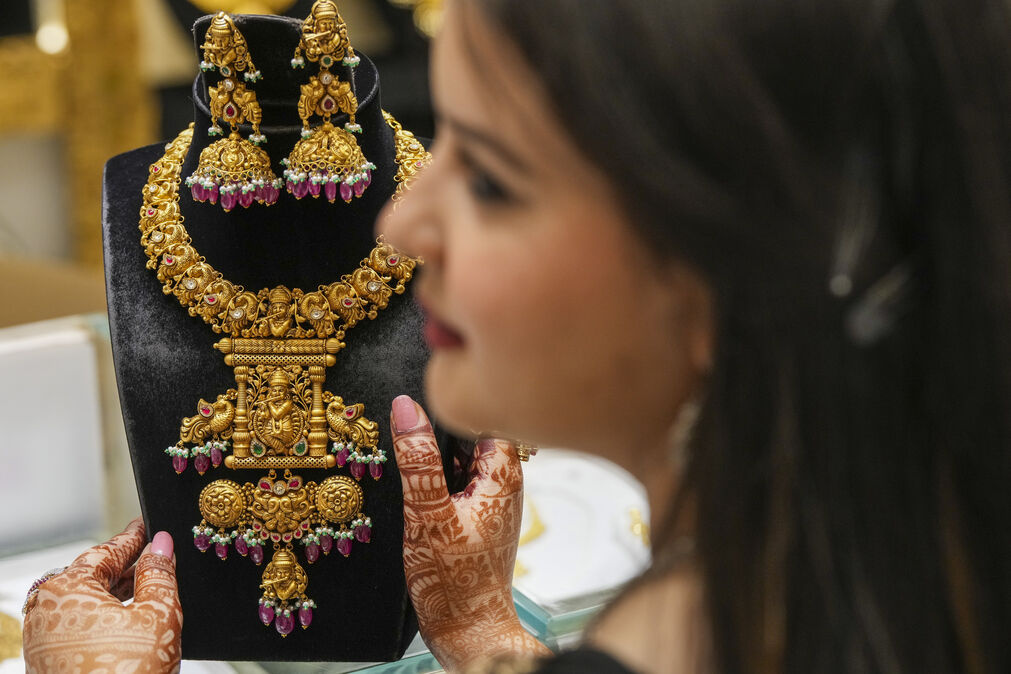
Gold imports in India, the world’s second biggest gold consumer after China, are driven by the jewellery industry demand. Such imports involve substantial outflow of foreign exchange.
“During periods of external stress, measured moderation of discretionary imports may contribute significantly to overall macro-economic stability and prudent external-sector management,” a source said explaining the rationale behind the duty hike.
All India Gems and Jewellery Council (GJC) Chairman Rajesh Rokde said the import duty hike will make gold costlier by around Rs 27,000 per 10 grams, from the earlier Rs 13,500 per 10 gm.
“What the industry fears is that this will give rise to the grey market… smuggling is likely to grow, setting up a parallel economy in the country,” Rokde said.
Jewellery retailer Senco Gold and Diamonds MD and CEO Suvankar Sen said he expects the gold import duty to remain high till the West Asia crisis subsides.
“So maybe for around one year it shall stay at these levels. The volumes might get impacted by 10-15 per cent, but value wise it will remain at a higher level. Consumers will buy lighter-weight jewellery,” he added.
Government sources said the import duty increase is a “preventive measure” amid “extraordinary external conditions” and a signal of prudent economic governance. It reflects India’s proactive response to emerging external risks through targeted interventions, thereby reducing the need for more disruptive corrective measures at a later stage.
“Rather than resorting to quantitative restrictions or more severe import-management tools, the approach relies on moderate price-based disincentives that preserve market flexibility and consumer choice,” a source said.
The increase in customs duty on precious metals is intended to moderate avoidable import demand and ease pressure on the external account, sources said, adding that it is a “calibrated and proportionate intervention” designed to encourage moderation in non-essential imports at a time when external vulnerabilities remain elevated.
Sources said the ongoing war in West Asia is expected to balloon India’s import bill, and the government wants to prioritise forex expenditure towards essential imports like crude oil, fertilisers, industrial raw materials and capital goods that directly support economic activity and food security.
The war in West Asia and the effective blockade of the Strait of Hormuz has raised prices of crude oil and food, fertiliser imports. Brent crude prices have jumped from about USD 73/ barrel level prevailing before the war started on February 28, to around USD 107/barrel. It had touched a 4-year high of USD 126/barrel on April 30.
India imports 87 per cent of its crude requirement, of which 46 per cent transits through or near the Strait of Hormuz, where the seven-day moving average tanker traffic has fallen to five vessels. 60 per cent of India’s LPG is imported, over 90 per cent via the Gulf. Besides, 38 per cent of annual remittances originate in Gulf countries.
India’s gold imports surged more than 24 per cent to an all-time high of USD 71.98 billion in 2025-26. In volume terms, however, the shipments dipped 4.76 per cent to 721.03 tonnes in 2025-26.
The prices of gold have risen from USD 76,617.48/KG in FY25 to USD 99,825.38/KG in FY26.
In the national capital, the price of gold increased by Rs 1,500, or nearly 1 per cent, to Rs 1,56,800 per 10 grams on Tuesday from Monday’s closing level of Rs 1,55,300 per 10 grams. Silver prices also advanced by Rs 12,000, or 4.53 per cent, to Rs 2,77,000 per kg.
In the international market, spot gold slipped USD 42.33, or 1 per cent, to USD 4,692.64 per ounce while silver fell 3.04 per cent to USD 83.49 per ounce.
Chief Economic Advisor V Anantha Nageswaran, on Tuesday, said that the ongoing West Asia crisis is a “live balance of payments stress test”, with direct consequences for inflation, the current account, and the exchange rate.
BoP (balance of payment) is the difference between inflows into and outflows of foreign exchange from the country in a particular period of time.
The Indian rupee hit a record low of 95.63 against the US dollar on Tuesday.
Modi, on Sunday, called for judicious use of fuel, postponement of gold purchases and foreign travel, among other measures, to conserve foreign exchange amid the West Asia crisis.
Addressing a rally organised by the Telangana BJP in Hyderabad, he suggested reducing petrol and diesel consumption, using metro rail services in cities, carpooling, increased use of electric vehicles (EVs), utilising railway services for parcel movement, and working from home to conserve foreign exchange amid the crisis in West Asia.(PTI)