
Larger policies and decisions will always be there, but it is the positive impact you can have on even one individual’s life every day that is truly meaningful when serving the people of our State. – Conrad K Sangma, Chief Minister
3rd Cabinet Retreat
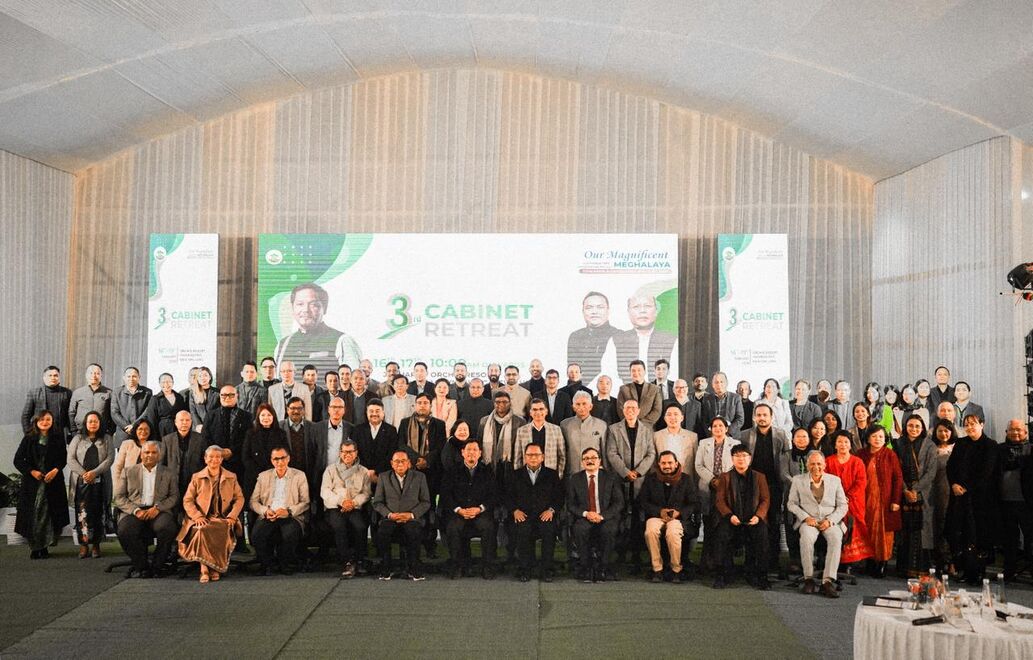
Shillong, Jan 17: The third Cabinet Retreat has concluded today at Orchid Resort, Mawkasiang, New Shillong, with the state government resolving to lay focus on its strategic commitments and opportunities under Mission 10.
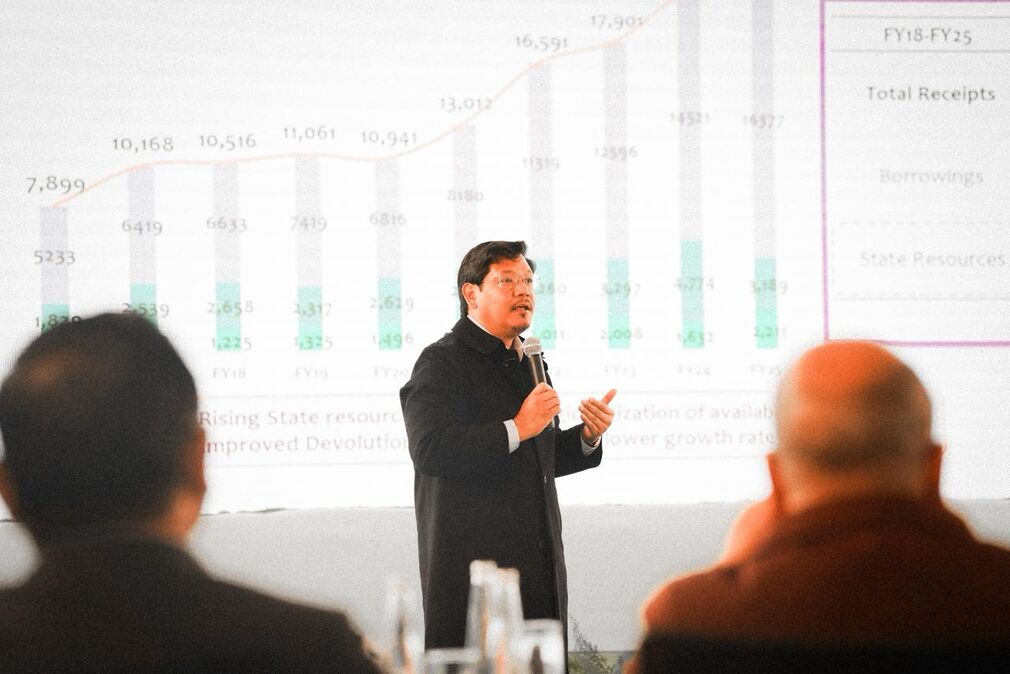
On the second day, Chief Minister Conrad K Sangma, his cabinet minister and senior officials deliberated on the “10 Opportunities” under Vision 2032, strategically aimed at transforming the State’s economic landscape.
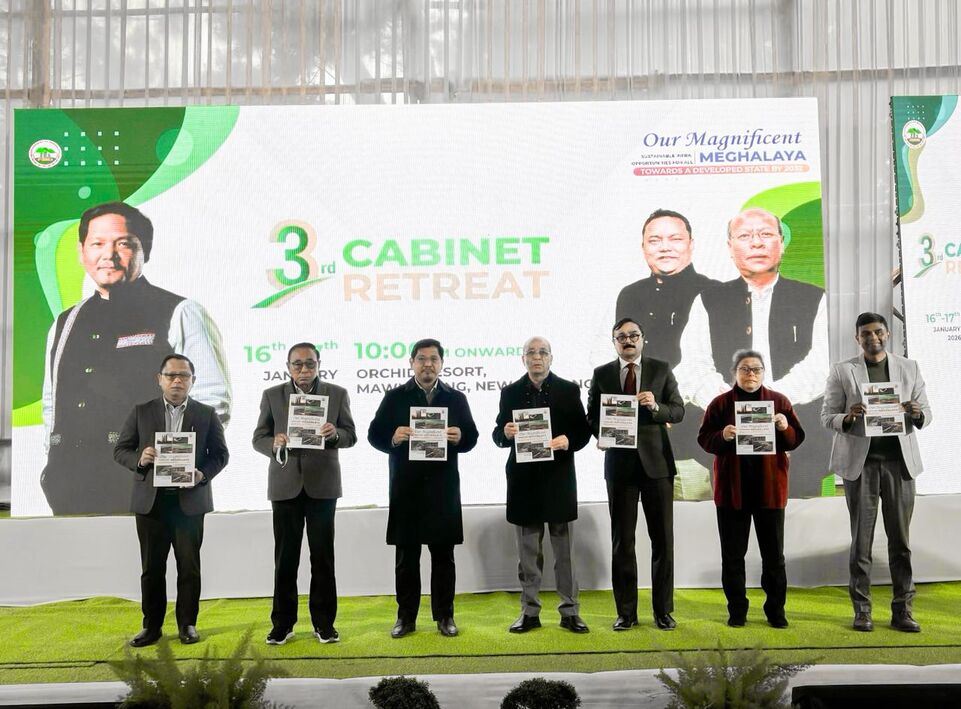
The chief minister outlined the development trajectory and emphasised the critical need to unlock opportunities across key sectors, including tourism, agriculture, and private sector investment, to drive the State’s growth.
He reiterated the Government’s commitment to achieving a $10 billion economy by 2028, scaling to $16 billion by 2032, and targeting $100 billion by 2047. He underscored that realising these ambitious goals demands more than aspirational targets; it requires coordinated, actionable planning across all departments.
Highlighting the importance of impact-oriented governance, the Hon’ble Chief Minister stated, “Larger policies and decisions will always be there, but it is the positive impact you can have on even one individual’s life every day that is truly meaningful when serving the people of our State. I have always believed that nothing is too small; in fact, it is the small differences we make that matter more.”
The deliberations focused on strengthening Meghalaya’s agricultural ecosystem through forward-looking policies, institutional reforms, and technology-driven interventions to enhance farmer resilience and productivity.
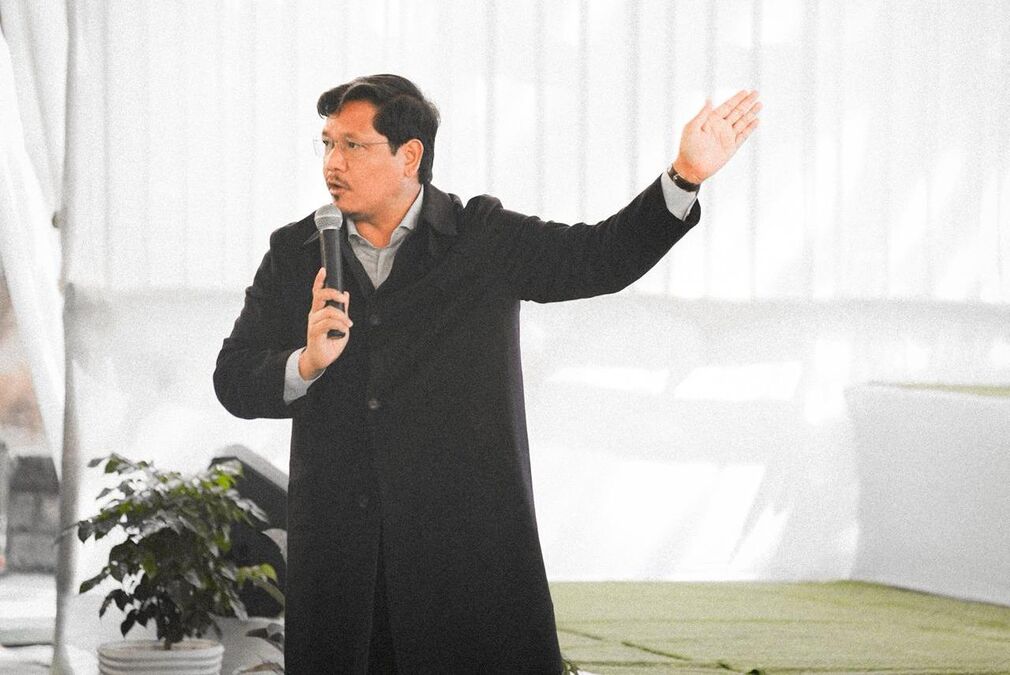
A key priority discussed was the formulation of the Meghalaya Agriculture Policy 2026, envisioned to provide a comprehensive roadmap for sustainable agricultural growth in the State.
The promotion of agro tourism was also highlighted as an emerging opportunity to diversify rural incomes while showcasing Meghalaya’s rich agricultural practices and natural landscapes.
The Chief Minister emphasised leveraging advanced technology to predict weather patterns accurately and reduce crop diseases, thereby strengthening climate resilience in agriculture. The Animal Husbandry and Veterinary Department will develop a contingency plan with 171 rapid response teams to closely monitor livestock health, with the CM highlighting the sector’s potential to boost local production and reduce import dependency.
Discussions on sports centred around the Sports Action Plan launched in 2025 to nurture athletes, alongside 303 projects worth over ₹2,000 crore underway to host the 2027 National Games, aimed at creating an ecosystem to develop a youth-focused sports economy.
Under PRIME Meghalaya, over 500 entrepreneurs have been incubated, achieving a 25% increase in revenue post-incubation. To further strengthen the entrepreneurship ecosystem, the CM-ELEVATE program targets over 3,800 beneficiaries with an outlay of over Rs 130 crore.
Plans include finalising the Startup Policy and initiating a PRIME Venture Capital Fund to support entrepreneurs through private investments and build high-growth business enterprises.
The Tourism, Arts, and Culture department outlined a robust roadmap to generate 1.25 lakh employment opportunities by 2028. A target was set to develop 3,000 units by 2028 under the CM Meghalaya Homestay Mission 2025, offering a 70% financial subsidy.
The Chief Minister reiterated the need to profile tourists, as younger visitors increasingly seek curated and unique experiences, making homestays a strong growth opportunity for the State.
The session on Urban Transformation presented a comprehensive strategy to reshape the State’s urban landscape, prioritising the decongestion of Shillong through traffic restructuring and the organised relocation of hawkers, a model to be replicated in Tura and Jowai to streamline urban spaces.
Reflections from the Ground spotlighted innovative grassroots interventions. In East Garo Hills, Anganwadi Centres are being transformed into holistic health and early learning hubs by addressing infrastructure gaps and converging funds with the erstwhile MGNREGA.
Educational strides were also highlighted in South Garo Hills’ Purakhasia Block through community-driven digital libraries combating low literacy rates.
In his concluding address, Chief Secretary Shakil P Ahammed hailed the two-day event as a significant milestone for inter-departmental collaboration and cross-learning. Commending the “worth emulating” presentations by various officers, he urged the administration to adapt these innovative models locally with a steadfast “Citizen First” approach.
In his closing remarks, the Chief Minister encouraged officers to take a “leap of faith” and continue working on actionable steps.