
By Dipak Kurmi
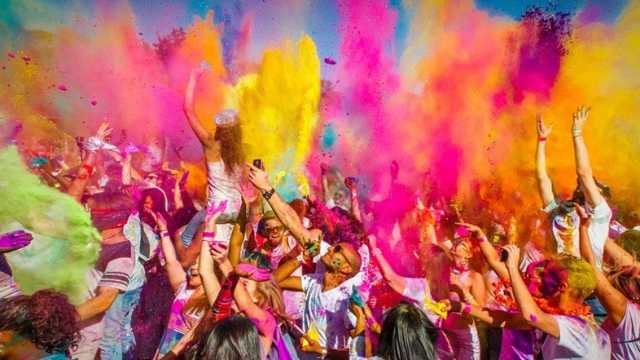
Holi, often referred to as the “Festival of Colors,” is one of the most vibrant and joyous celebrations in India and across various parts of the world. It is a festival that marks the arrival of spring, the triumph of good over evil, and the renewal of relationships. Holi is a time for people to come together, play with colors, enjoy festive foods, and revel in the spirit of unity and love. Rooted in history and mythology, Holi has evolved over centuries, embracing modern traditions while maintaining its cultural essence.
The Historical and Mythological Roots of Holi
The origins of Holi can be traced back to ancient Hindu scriptures, particularly the legend of Prahlad and Holika. According to Hindu mythology, Prahlad was a devoted follower of Lord Vishnu, while his father, King Hiranyakashipu, was an arrogant ruler who sought to be worshiped as a god. Enraged by Prahlad’s devotion, Hiranyakashipu ordered his sister, Holika, to burn Prahlad in a fire. However, through divine intervention, Prahlad emerged unscathed, while Holika perished in the flames. This story symbolizes the victory of good over evil, and the burning of Holika in bonfires on the eve of Holi, known as Holika Dahan, commemorates this event.
Another famous legend associated with Holi is that of Lord Krishna and Radha. Krishna, known for his playful nature, was concerned about his dark complexion compared to Radha’s fair skin. His mother, Yashoda, playfully suggested that he apply color to Radha’s face, leading to the custom of smearing colors on loved ones. This legend gave birth to the joyful color-throwing traditions of Holi and is particularly significant in the region of Braj, Mathura, and Vrindavan, where Krishna is worshiped.
The Celebration of Holi Across India
Holi is celebrated with diverse traditions across different regions of India. While the essence of joy and togetherness remains common, each region has its unique customs:
- North India: In cities like Mathura and Vrindavan, Holi celebrations can last for weeks. Special events like Lathmar Holi in Barsana, where women playfully hit men with sticks, add a unique cultural dimension to the festival.
- West India: In Rajasthan and Gujarat, Holi is celebrated with grand processions, folk music, and traditional dance performances. The festival coincides with the celebration of Dhulandi in Haryana, where families engage in playful teasing and song contests.
- East India: In Bengal, Holi is known as Dol Jatra or Basanta Utsav, inspired by the poet Rabindranath Tagore. People dress in yellow and celebrate with poetry, dance, and music.
- South India: In Tamil Nadu and Kerala, Holi is a more subdued affair compared to northern states, but it is still observed with family gatherings, festive sweets, and traditional rituals.
The Colors of Holi: Their Symbolism and Evolution
The most iconic feature of Holi is the throwing of colors, which symbolizes joy, love, and the breaking of social barriers. Traditionally, colors were made from natural sources like turmeric, neem, flowers, and sandalwood. However, with commercialization, synthetic colors became popular, raising concerns about skin safety and environmental impact. In recent years, there has been a significant shift towards eco-friendly colors made from herbal and organic ingredients.
Each color in Holi holds a symbolic meaning:
- Red – Love and fertility
- Yellow – Prosperity and health
- Green – New beginnings and harvest
- Blue – Power and the divine essence
- Pink & Orange – Joy and enthusiasm
The Modern-Day Celebrations and Global Influence
Holi is no longer confined to India. Its universal message of joy and unity has made it a global festival. Countries like the USA, UK, Canada, Australia, and South Africa have embraced Holi celebrations with great enthusiasm. The rise of Holi-themed events, such as color runs, music festivals, and cultural showcases, has brought the spirit of Holi to diverse communities worldwide.
In metropolitan cities, Holi has also seen innovations such as rain dance parties, DJ events, and organic color festivals, making it an exciting experience for both the young and old.
The Role of Food and Music in Holi
No Indian festival is complete without food, and Holi is no exception. Special delicacies such as Gujiya (sweet dumplings), Thandai (a spiced milk drink), Puran Poli, Malpua, and Dahi Bhalla are prepared and enjoyed. Many also indulge in Bhang, a cannabis-infused drink that has been historically associated with Holi celebrations in parts of North India.
Music and dance also play a crucial role. Traditional folk songs, Bollywood Holi anthems like “Rang Barse” and “Holi Ke Din,” and energetic drum beats (Dhol) create an electrifying atmosphere. Dance performances, especially in rural areas, add to the festive spirit.
Challenges and Sustainability Concerns
While Holi is a festival of joy, there are growing concerns about its environmental and social impact. The excessive use of synthetic colors, water wastage, and chemical-laden products have raised environmental alarms. To ensure a more eco-friendly Holi, people are now opting for organic colors, waterless celebrations, and sustainable festivities.
Additionally, cases of harassment and misbehavior during Holi have been reported, highlighting the need for respectful celebrations. Campaigns promoting “Holi with Consent” are gaining momentum to ensure that the festival remains enjoyable for all.
The Spirit of Holi Lives On
Holi is more than just a festival of colors—it is a celebration of love, renewal, and cultural heritage. Its significance transcends boundaries, bringing people of different backgrounds together in a spirit of happiness. Whether celebrated traditionally in Indian villages or with modern twists in urban settings and global communities, Holi continues to spread its message of joy, harmony, and togetherness.
As we celebrate Holi each year, it is important to remember its rich traditions while embracing sustainable and inclusive practices, ensuring that the festival remains a cherished and meaningful occasion for generations to come.
Happy Holi!
(the writer can be reached at dipakkurmiglpltd@gmail.com)