
Satyabrat Borah
Picture this: It’s early 2026, and the world feels like it’s spinning faster than usual. In the United States, President Donald Trump is back in the White House for his second term. His policies are shaking things up everywhere—from military moves to trade fights. Headlines talk about big actions like the U.S. capturing Venezuela’s President Nicolás Maduro in January 2026, threats over Greenland, pulling out of international groups, and pushing hard on tariffs. It’s a lot of noise, and the global order feels unsettled.
In the middle of all this chaos, India seems quiet. People call it “on mute.” New Delhi isn’t shouting back or making big dramatic statements. Instead, India’s leaders are handling things carefully, step by step. Why? Because India has learned that in a stormy world, staying calm and smart often works better than getting loud.
Let’s start with what’s happening in the U.S. Trump’s return brought big changes right away. In early 2026, U.S. forces carried out an operation in Venezuela. They captured Maduro, the longtime leader there, and brought him to New York on charges related to drugs and other issues. Trump said the U.S. was now “in charge” in some ways and talked about using Venezuela’s oil to benefit America. This shocked many countries. Venezuela has huge oil reserves, and suddenly, global oil markets felt the pressure. Prices jumped, and people worried about more instability in Latin America.
It’s not just Venezuela. Trump has talked tough on other fronts too. He’s had long calls with Russia’s Putin and plans meetings with China’s Xi Jinping. In Ukraine, he’s pushed for deals that might mean giving up some land, which worries Europe. NATO allies feel the strain. Trump has also used tariffs like a tool,big taxes on imports to push countries to do what he wants. He pulled the U.S. out of many international organizations and made bold statements about places like Greenland or even Canada. The world sees America as less predictable, more focused on “America First,” and willing to break old rules.
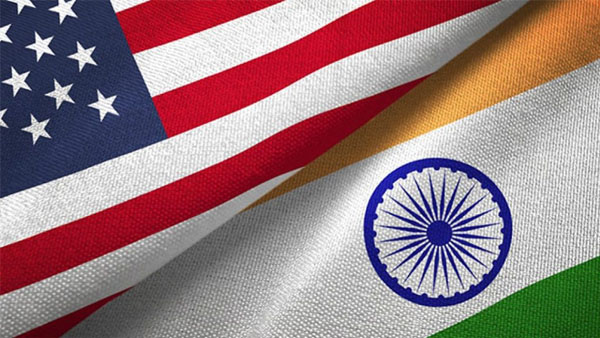
For India, this creates real challenges. The U.S. is a key partner in trade, technology, defense through the Quad, and more. But Trump’s team got upset with India for two main reasons. First, India kept buying cheap oil from Russia even after the Ukraine war started and sanctions came in. Second, India’s trade surplus with the U.S. was large,meaning India sold more to America than it bought. In 2025, Trump hit back hard. He put a 25% tariff on Indian goods, then doubled it to 50% in August. That’s one of the highest rates anywhere. It hurt Indian exporters in things like textiles, steel, and more. Trump said it was to punish India for Russian oil buys and to force change.
So how did India react? Not with big anger or matching tariffs right away. The government stayed calm. Prime Minister Narendra Modi and his team repeated that India needs energy security. Cheap Russian oil helps keep fuel prices low for India’s 1.4 billion people and controls inflation. Cutting it off suddenly would hurt everyday Indians. Instead of fighting openly, India focused on quiet steps.
Officials worked behind the scenes on a trade deal with the U.S. They talked about separating trade issues from bigger politics. India also looked elsewhere,signing or pushing free trade agreements with countries like the UK, Australia, UAE, Oman, and the EU. Exports stayed strong in many areas, even hitting records in some months. India diversified,selling more to Asia, Africa and other places so it didn’t depend only on the U.S. market. Growth continued, and the economy showed resilience despite the rupee weakening a bit.
In Venezuela, India was careful too. It didn’t strongly condemn or support the U.S. move. India has its own oil needs and ties with many countries. It walked a tightrope—keeping good relations with the U.S. while not burning bridges elsewhere. When Trump claimed he helped with an India-Pakistan ceasefire in 2025 (after some border tensions), India politely said no thanks, we handled it ourselves. No big drama, just clear boundaries.
This “mute” style comes from India’s way of thinking. India sees itself as a big, old civilization that plays the long game. It doesn’t want to pick sides in every fight. Instead, it follows “strategic autonomy”,being friends with many, not tied to one. In a world where the U.S. is unpredictable, China is a neighbor with its own issues, and Russia supplies cheap defense and energy, India balances everyone.
Being quiet doesn’t mean doing nothing. India is building options. It chairs BRICS in 2026, pushing for more trade in local currencies and less dollar dependence. It strengthens ties with Europe,EU leaders are coming for Republic Day in January. It keeps the Quad alive for Indo-Pacific security. And it invests in its own strength,making more electronics, pharma, and defense gear at home.
Of course, some people wonder if silence is risky. If U.S. pressure grows, or if tariffs bite harder, India might need to speak up more. Trade talks are ongoing, and a deal could ease things. But so far, the approach seems to work. India’s economy is growing toward being one of the world’s biggest. Exports adapt, partnerships expand, and the country avoids getting pulled into someone else’s storm.
When the world is loud and chaotic, sometimes the smartest move is to listen, plan, and act steadily. India is betting that by staying composed, diversifying its friends and markets, and protecting its core interests, it will come out stronger. As 2026 unfolds, with more summits, talks, and surprises ahead, that quiet strength might prove to be the best response of all.