
By Satyabrat Borah
Global energy shocks are a recurring nightmare that the world has lived through many times before. We saw the first major tremors in the early 1970s following the Yom Kippur War when oil became a political weapon. We saw it again in 1979 after the Iranian Revolution and in the early 1990s when Iraq marched into Kuwait. Even as recently as 2022 the Russian invasion of Ukraine sent natural gas prices into a tailspin. But the crisis we are watching today sparked by the friction between American-Israeli interests and Iran feels fundamentally different from those past chapters. While the war in Ukraine made us realize how easily natural gas can be used as a geopolitical leverage, the current conflict is hitting both oil and gas flows at the same time. This is happening at a delicate moment when the world is already trying to change its entire energy DNA. The International Energy Agency has made it clear that the shift toward electric vehicles is no longer a distant dream but a present reality. In 2023 electric cars cut down oil demand by nearly a million barrels every day and that number is jumping significantly in 2024. Even though this represents a tiny fraction of the world’s total oil hunger it proves that a structural change is taking root. If a massive supply shock occurs now it might simply act as a catalyst that pushes everyone to run away from fossil fuels even faster.
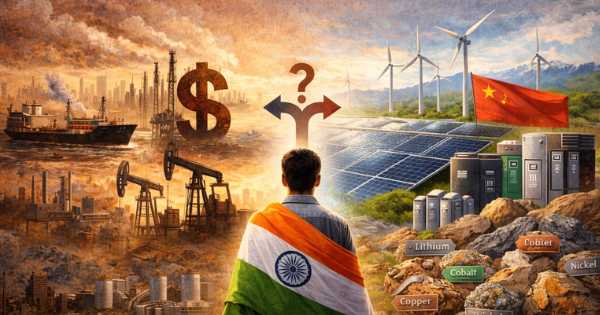
This shift does more than just change what we put in our fuel tanks. It threatens to dismantle the long standing kingdom of the American dollar in global trade. Since the 1970s the world has operated under the petrodollar system. This was a clever arrangement where oil was priced only in dollars and the massive profits made by oil exporting nations were funneled back into American financial markets. This setup allowed the United States to carry huge debts while keeping its currency as the undisputed king of the world. Now that old world is fracturing. Energy is moving from being a liquid commodity traded on a global exchange to becoming a game of controlling physical supply chains for minerals. We are moving from a world of oil wells to a world of mines. Lithium reserves are mostly tucked away in places like Chile, Argentina and Australia. Most of the world’s cobalt comes from the Democratic Republic of Congo while Indonesia has a firm grip on the nickel market. Copper, which is the literal nervous system of any electric grid, is concentrated in South America. While countries like Canada and Australia are trying to build reliable supply chains for the West, the real power lies in who can actually process these raw rocks into useful batteries and components. Right now that power belongs almost entirely to China. This creates a scary possibility where the future energy system could be just as dependent on Chinese factories and the yuan as the old one was on Middle Eastern oil and the dollar.
For a country like India this situation is a double edged sword. On one hand moving away from oil is a massive relief for the national budget because importing fuel is incredibly expensive. On the other hand there is a real danger of trading one master for another. India needs to find a way to exit the oil age without falling into a new trap of technological and material dependence. This requires a very smart and very conscious strategy that looks back at the history of non alignment. India cannot afford to pick a side that leaves it vulnerable. It has to secure its own access to resources and build the ability to process and manufacture things at home. The goal should be to avoid a new hierarchy where a few powerful nations control the technology of the future just as they controlled the oil of the past. If India is not careful it will find itself replacing its dependence on oil tankers with a dependence on imported battery cells and solar panels.
The transition to clean energy must be orderly because a chaotic jump could crash the economy. India is currently the world’s third largest oil consumer and its energy needs are only going to grow as more people enter the middle class. We cannot just turn off the taps overnight. Instead we need to build a bridge. That bridge involves massive investments in domestic solar and wind power but it also involves a hard look at the minerals required to make those technologies work. If we don’t own the mines or the processing plants we are simply changing the name of the person we write the check to every month. True energy independence for India means being able to create the entire value chain within its own borders or through very stable and fair partnerships with multiple countries. We have to learn from the mistakes of the past century. We saw how the world was held hostage by oil prices and we must ensure that the same thing doesn’t happen with lithium or copper.
The shift toward electricity in transport is a huge part of this puzzle. As more people switch to electric scooters and cars the demand for petrol will drop. This is great for the environment and for the air quality in our crowded cities. But we have to ask where the electricity is coming from. If we are still burning coal to charge electric cars we are just moving the pollution from the tailpipe to the power plant. And if the batteries in those cars are all made in one specific country that has a habit of using trade as a weapon we are in a very risky position. India’s strategy has to be about diversification. We should look toward the Global South and build alliances with mineral rich nations in Africa and South America. These countries are often in the same boat as India wanting to grow their economies without being exploited by superpowers. By working together we can create a more balanced and fair energy market that doesn’t rely on a single currency or a single dominant factory floor.
The financial side of this is just as important as the technical side. As the petrodollar fades we might see a more fragmented world where different regions use different currencies for trade. India should be prepared for this by strengthening the use of its own currency and building financial systems that can bypass traditional bottlenecks. The transition is not just about moving from black gold to green energy it is about a total rewrite of the rules of global power. Every time there is a major shift in how the world gets its energy the countries that come out on top are the ones that saw the change coming and prepared for it. India has a chance to be a leader in this new era but only if it stays alert and avoids the lure of easy shortcuts.
Building domestic capacity is the only real shield. This means the government and private companies have to work together to create an environment where high tech manufacturing can thrive. We need our own research and development so we aren’t always buying second hand technology from abroad. We need to train a workforce that understands the complexities of material science and chemical engineering. This is a long term project that will take decades but the work has to start now while the old system is still crumbling. The current crisis in the Middle East is a loud wake up call. It reminds us that relying on volatile regions for our basic survival is a recipe for disaster. The era of cheap and easy oil is coming to an end and the era of mineral competition is beginning. India has to play this game better than it played the oil game. It has to be more than just a consumer, it has to be a creator and a controller of its own energy destiny.
The path forward is difficult and full of hidden obstacles. There will be pressure from old allies to stick with the status quo and there will be pressure from new powers to sign unfair deals. India’s strength lies in its ability to navigate these waters with its own interests at heart. We must remember that energy is the lifeblood of any nation. Without it factories stop trucks don’t move and homes stay dark. Securing that lifeblood in a way that is clean, sustainable and free from foreign control is the biggest challenge of our generation.
We are moving toward a world that looks very different from the one our parents grew up in. It is a world where the sun and the wind are the primary engines of growth. That is a beautiful vision but it only works if we have the keys to the engine ourselves. As we make this orderly exit from the age of fossil fuels let us make sure we are walking toward true freedom and not into a new kind of cage. The stakes are too high for anything less than a total commitment to self reliance and strategic wisdom. Every decision made today regarding energy policy will echo for the next fifty years. It is time to build a system that serves the people of India first and ensures that we are never again at the mercy of global shocks that we cannot control.