
7,000 artistes are supported by the government to do busking, to perform in tourist locations, in restaurants; so they do what they love to do and they get paid for it.
Conrad K Sangma, Chief Minister
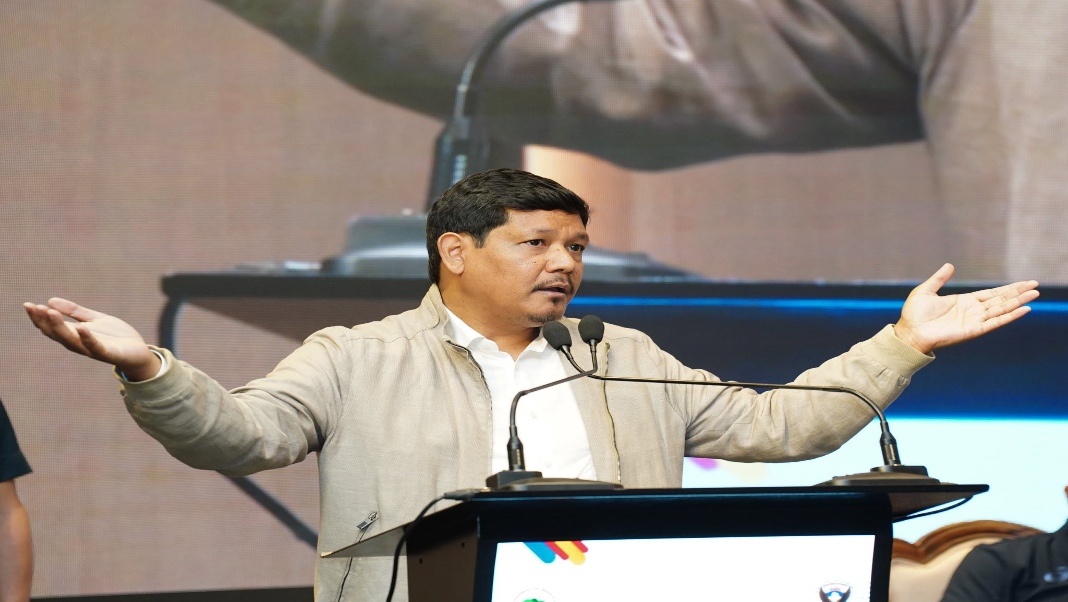
Shillong, June 16: Meghalaya’s investment in sports not driven just by the pursuit of medals, but a broader goal of building character and opportunity for its youth, said Chief Minister Conrad K Sangma during his address at the Meghalaya Sports Conclave on Tuesday.
He reflected on the government’s tenure since 2018, saying the administration began its term facing “many challenges” but chose to see “opportunities in those challenges.”
The Chief Minister described the past over eight years as a process of addressing “structural challenges and basic aspects of governance, capacity building, a vision, a direction, a goal.”
The aim, he said, is to “restructure and reposition ourselves and take us towards that goal and vision that we have which we envision that it would be in the next 15 years’ time we will get there.”
Placing young people at the core of policy, the Chief Minister said, “Out of the many challenges we saw and the opportunities that came out of those challenges, we realize that the youth of our state are at the centre and the heart of what we want to achieve and that’s how our journey for sports began.”
While he acknowledged that “we all want medals, we wish to see that we win medals in games – that is the ultimate objective,” he stressed that the bigger purpose is to “make sports a way of life and to ensure that sports help us shape the future and shape the overall character of every single youth of our state.”
Sangma argued that government decisions “cannot and must not be simply based on only one aspect of winning a medal.”
He connected the sports agenda to parallel efforts in music, creative industries and entrepreneurship.
Under the CM’s Meghalaya Grassroot programmes, “7,000 artistes today are supported by the government to do busking, to perform in tourist locations, in restaurants, so they do what they love to do and they get paid for it.”
Similar support is being extended to “fashion, whether it is music videos, documentaries, whether it is arts,” while schemes like CM Elevate and PRIME were launched because “it is also the different business opportunities where youth needs to be motivated to take risk, calculated risk to then convert those different gaps in the market into real opportunities and business ideas.”
He conceded that education remains a challenge but said the government is “slowly and steadily moving in the right direction where we will see the transformation in education which we feel has to be there.”
Highlighting Meghalaya’s demographic profile, Sangma noted that “18 lakh U-20 which means 50% of our population which is below the age of 20.”
He added that the state’s population pyramid is dominated by younger cohorts: “You will be surprised to know that Meghalaya has a GenAlpha majority – so we have a pyramid shaped population structure where the maximum population is GenBeta and Gen Alpha and then comes GenZ. I am sorry GenZ, you are a minority now in the state of Meghalaya.”
That reality, he said, makes it “even more important for us to create the institutional systems now” to handle the surge of youth entering colleges and seeking livelihoods.
On hosting the National Games, the Chief Minister called the bid itself a sign of progress. “Today for a state like Meghalaya to even dream of hosting the National Games is in itself an achievement for us because we have to take the dream and I keep telling everybody that we should never let this entire thought process and this mindset of ours which is so critical for us,” he said.
Addressing Meghalaya’s history of returning without medals, Sangma attributed it to “no proper planning and no proper investments for the past many years.”
He added, “We are seeing changes today. We are seeing this transformation and transition happening as we speak. I am not saying that we have reached closer to where we want to be, we are very far, but I am telling you we are proceeding in that direction.”
He concluded by inviting public feedback, saying, “I would like to hear constructive criticism, I would like to hear actionable points.”
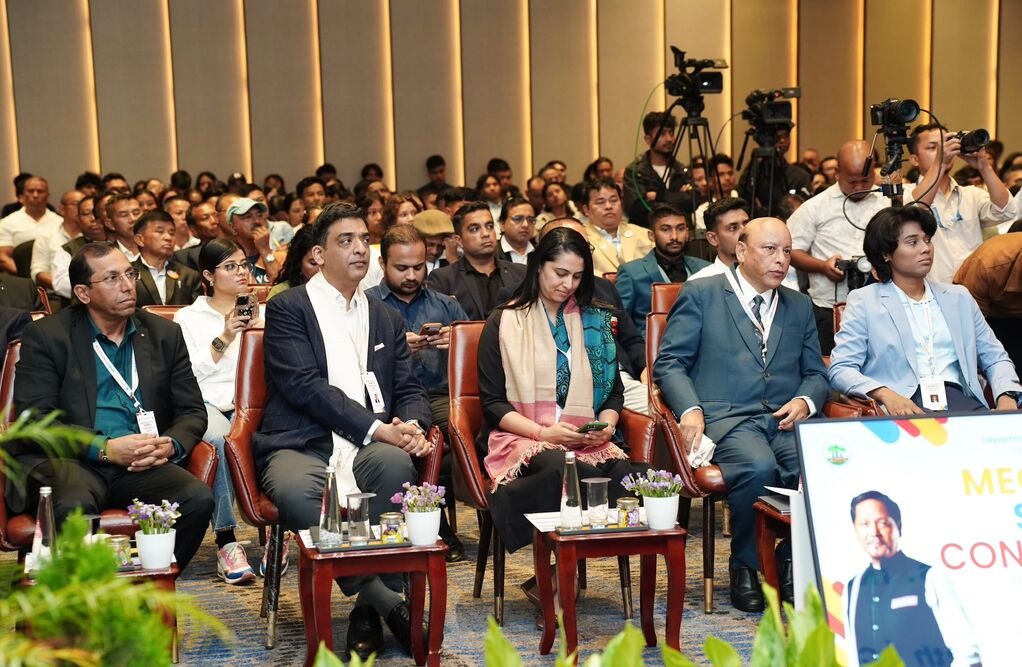
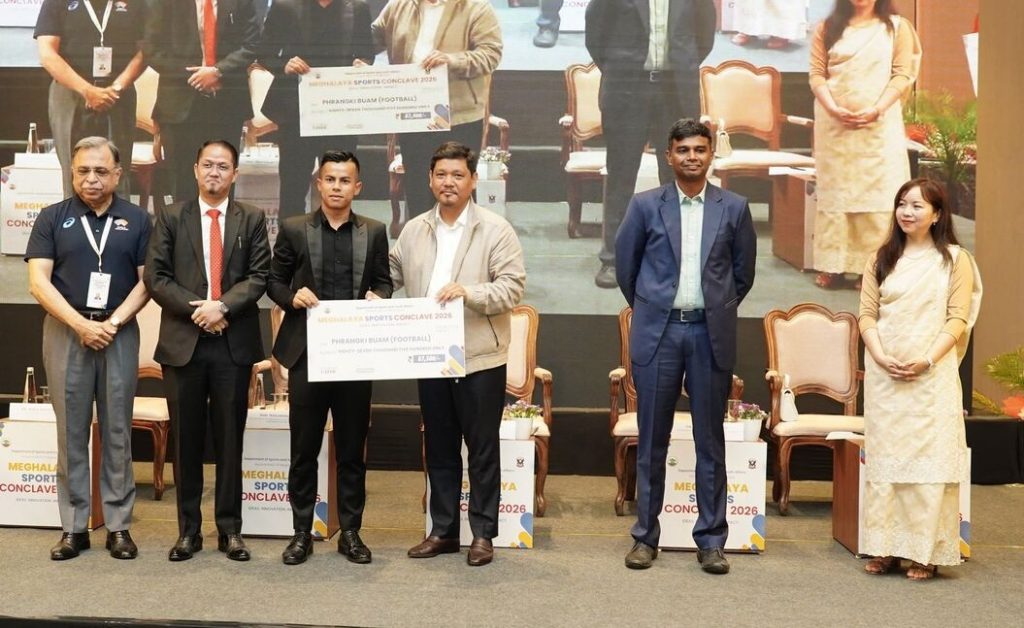
Sports & Youth Affairs Minister Wailadmiki Shylla also spoke at the conclave, which drew Olympians, sports industry experts, senior bureaucrats and other dignitaries from across the country.