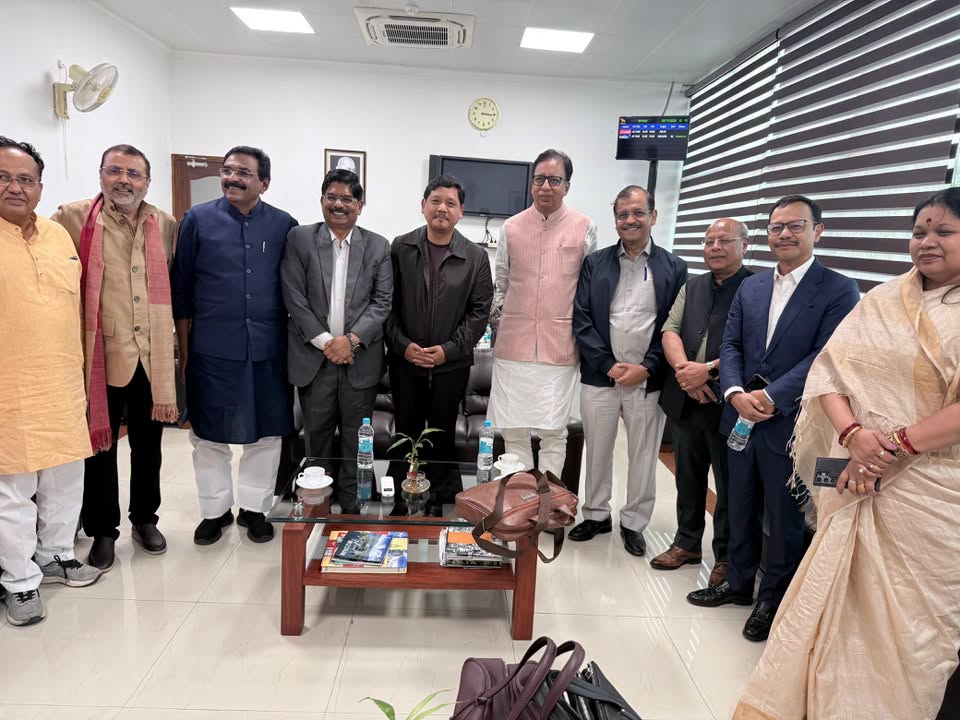

Shillong, Nov 2: The Joint Parliamentary Committee (JPC) on FCRA Bill on Monday stakeholders from the North East to submit their views and suggestions to the committee within next 15 days.
In its first sitting outside the national capital in Shillong, which was chosen following a request from Chief Minister Conrad K Sangma, the JPC took note of the suggestions from various stakeholders.
The hearing saw participation of the Archbishop of Guwahati and nearly 40 organisations from Meghalaya, Manipur, Nagaland and Assam. Altogether 84 organisations have expressed interest to depose, JPC chairman Sanjay Jaiswal said.
The panel will also hold hearings in Kochi and Chennai before taking a final call.
The stakeholders gave constructive feedback and have been asked to submit detailed replies within 15 days, after which the committee will prepare a final Bill, Jaiswal said.
“We have taken note of every suggestion. We will definitely take care of it and make a final Bill which is good for everyone,” Jaiswal said.
Informing about Sangma’s role in the JPC’s Shillong sitting, he said, “Chief Minister Conrad K Sangma specifically asked us to come to Meghalaya and listen to the problems of those groups who have foreign contributions.”
He said Sangma wanted the JPC to hear the North East stakeholders directly on the sensitive issue.
“After discussion in Parliament, it was decided that a JPC will be formed and with the JPC we have come to Shillong. This is the first meeting outside Delhi,” Jaiswal said.
Stressing the need for the amendment Foreign Contribution (Regulation) Amendment (FCRA) Bill, 2026, he said, “The amendment to the FCRA Act 2026 became necessary because the original Act was of 2010.”
Meanwhile, he refused to elaborate on the nature of suggestions given by the stakeholders on the FCRA Bill, saying, “First we will put before Parliament which organisation has given what suggestion.”
“We want to talk to those getting foreign contributions on the ground, what are the practical problems and suggestions, and how to improve this Bill. Then we will come out with an acceptable Bill for everyone,” he said.
Jaiswal noted that India receives about Rs 22,000 crore annually as foreign contribution.
On criticism, he said the 2010 law enacted under the UPA gave vetting power to state home secretaries and principal secretaries and had a provision that allowed takeover of religious places, while the new Bill explicitly protects them.
“There are some reservations now, but the 2010 Bill clearly said even temple or church or mosque can be taken by home secretary. The new Bill clearly says temple or church or mosque should be maintained as it is, nobody can interfere. That is very clear,” he said, adding only 6% of foreign funds go to religious bodies and 94% to NGOs and others.
On registration hurdles for small groups, he said, “We are taking everyone’s suggestions to make a law beneficial for those who want to do good to society but should be a deterrence to those who want to harm national security.”
He clarified that the SBI account in Delhi is only an entry point for tracking foreign remittances and funds can thereafter be transferred to any bank in India, and that political parties remain barred from receiving foreign contributions.