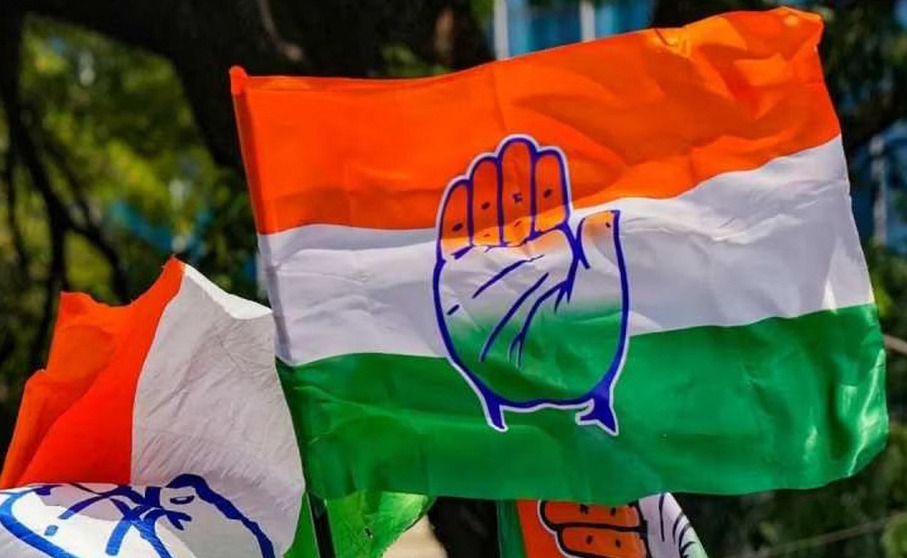

Shillong, Jan 21: The newly-appointed general secretary of All India Mahila Congress has slammed the Modi government for its “anti-women” policies, saying that while the government talks of women empowerment, its actions are weakening women’s economic independence.
“Empowerment is not slogans like ‘Beti Bachao’. Empowerment means roti, rozgaar aur suraksha,” Lhingkim Haokip said, emphasizing that the Congress party believes empowerment cannot be reduced to mere rhetoric.
Haokip pointed out that women are the worst affected by inflation, shrinking welfare schemes, joblessness, and cuts in social security and livelihood support.
She announced that the Mahila Congress will lead peaceful protests, conduct awareness campaigns, and take women’s issues from villages to the streets and to Parliament.
Addressing the issue of MGNREGA, Haokip stated that the Modi government has systematically weakened the scheme, despite it being a legal right to employment guaranteed by Parliament.
“MGNREGA is a right, not a favour. Weakening MGNREGA is a direct attack on women, workers, and the rural poor,” she asserted.
Haokip emphasized that women constitute the majority of MGNREGA workers, and for rural and tribal women, the scheme is a critical source of livelihood, nutrition security, and dignity.
The Mahila Congress will demand timely payment of wages, adequate budgetary allocation, and oppose any dilution of the Act.
Haokip concluded that the organization will continue its struggle to protect MGNREGA and fight policies that harm women, workers, and the poor.
Haokip outlined the organisational direction of Mahila Congress in Meghalaya, stating that it will be rebuilt as a grassroots organisation, with a focus on tribal women, rural women, and first-time women voters.
“The Congress party believes in promoting local women leaders, not parachuting faces disconnected from grassroots realities,” she said, adding that the Mahila Congress will prioritize leadership development, with structured training programmes for women on constitutional rights, social justice, economic issues, and local governance.