
BY Satyabrat Borah
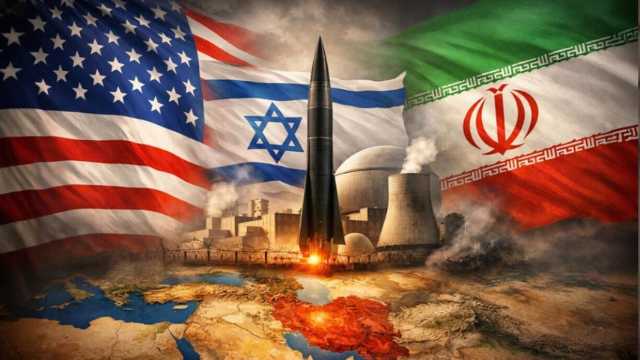
The Middle East has long been a region where history, politics, religion, and power intersect in complicated ways. For decades the tensions between Iran on one side and the United States and Israel on the other have shaped the region’s fragile balance. From economic sanctions to covert operations, from diplomatic negotiations to proxy conflicts, the rivalry has simmered for
years. Recently, however, that tension erupted into open military confrontation. The conflict that began with large scale strikes on Iran has quickly drawn the attention of the entire world, raising fears of a wider war that could reshape the geopolitical landscape.
The latest escalation began when the United States and Israel launched coordinated military strikes against Iran. These attacks targeted what officials described as key elements of Iran’s military infrastructure. Missile bases, weapons storage facilities, and strategic command centers were among the primary targets. The strikes were not limited to remote military installations. Several locations in and around Tehran were also hit, signaling that the campaign was aimed not only at weakening Iran’s military capabilities but also at disrupting the leadership structure that directs those capabilities.
The most dramatic development came when Iran’s long serving Supreme Leader, Ayatollah Ali Khamenei, was reportedly killed during the first wave of attacks. For more than three decades he had been the central figure in Iran’s political and religious leadership. Since assuming power in 1989, he had overseen Iran’s transformation into one of the most influential and controversial states in the region. His death sent shockwaves through Iran and across the Middle East. Supporters mourned him as a symbol of resistance while critics saw his removal as a turning point that might reshape Iran’s political future.
Along with Khamenei’s reported death, several senior figures from the Islamic Revolutionary Guard Corps were also said to have been killed. The Revolutionary Guard is one of the most powerful institutions in Iran. It operates not only as a military organization but also as a political and economic force within the country. The Guard oversees key strategic programs including missile development and maintains close relationships with allied groups across the region. The loss of senior commanders therefore represented more than a tactical setback. It struck at the leadership network that has guided Iran’s regional strategy for years.
The United States and Israel justified the attacks by pointing to concerns over Iran’s missile and nuclear capabilities. For many years Israel has warned that a nuclear armed Iran would pose an existential threat. Israeli leaders argue that Iran’s leadership has repeatedly expressed hostility toward Israel’s existence and that any progress toward nuclear weapons must be stopped before it reaches an irreversible stage. American officials have echoed similar concerns, although different administrations have adopted different strategies for addressing them. Some have favored negotiations while others have emphasized sanctions and military pressure.
Iran has consistently rejected accusations that it seeks nuclear weapons. Iranian officials insist that the country’s nuclear program is peaceful and intended for energy production and scientific research. They argue that as a sovereign nation Iran has the right to develop nuclear technology for civilian purposes. Many Iranian citizens also see the nuclear program as a matter of national pride and technological progress. For them it represents independence and resistance against external pressure.
Suspicion has remained high among Western governments and Israel despite these claims. International inspections, diplomatic agreements, and sanctions have all been part of the effort to manage the issue. The nuclear agreement reached in 2015 was once seen as a potential path toward easing tensions. However the agreement later collapsed after the United States withdrew from it and reimposed sanctions on Iran. Since then the atmosphere has grown steadily more confrontational.
The recent strikes appear to have been driven by the belief among American and Israeli leaders that Iran’s military capabilities were approaching a dangerous threshold. Supporters of the strikes argue that decisive action was necessary to prevent Iran from expanding its missile arsenal or advancing its nuclear program. Critics however warn that such attacks risk igniting exactly the kind of regional war that many have long feared.
Iran’s response came quickly. Iranian leaders condemned the attacks as illegal and unprovoked. They described them as acts of aggression that violated international law and threatened regional stability. Within days Iran launched a series of missile and drone strikes aimed at Israeli targets. Military installations and government facilities were among the reported targets. Explosions were heard in several locations across Israel as air defense systems attempted to intercept incoming missiles.
The confrontation soon expanded beyond Israel itself. Iran also launched strikes toward locations associated with the United States and its allies in the Gulf region. Several countries host American military bases that play a strategic role in the region’s security structure. Reports emerged of strikes or attempted strikes in Qatar, Bahrain, Jordan, Kuwait, and the United Arab Emirates. Although many of these attacks were intercepted or caused limited damage, they demonstrated Iran’s willingness to widen the scope of the conflict.
There were also incidents that appeared to involve civilian or non military locations. Drones reportedly struck areas near diplomatic facilities and commercial zones. In Saudi Arabia a drone hit the area around the United States embassy in Riyadh. In Dubai another drone struck a parking area near the American consulate. Some reports suggested that hotels and shipping routes in the Gulf had also been targeted. These incidents increased fears that the conflict might spill into areas heavily populated by civilians and international workers.
Countries across the region reacted with alarm. Gulf states that host American forces condemned attacks on civilian infrastructure and diplomatic facilities. Several governments issued joint statements calling for restraint and warning that the expansion of the conflict could
threaten global energy supplies and economic stability. The Gulf region is home to some of the world’s most important oil and gas infrastructure. Any disruption could have immediate consequences for international markets.
The situation grew even more complicated when other countries began to feel the effects of the conflict. A British military base in Cyprus was reportedly struck by a drone. The government of Cyprus suggested that Iran or groups aligned with Iran were responsible. This raised the possibility that European interests might also become entangled in the confrontation. Lebanon also entered the conversation as tensions rose along its southern border with Israel. Armed groups allied with Iran have a strong presence there, and any involvement from those groups could open a new front in the conflict.
Inside Iran the situation became increasingly tense. The government imposed severe restrictions on internet access across the country. Communication networks were disrupted and access to many international websites was blocked. Iran also closed its airspace to commercial flights. These measures were seen as attempts to control information and maintain security during a time of crisis. At the same time they made it difficult for the outside world to obtain clear information about events inside the country.
Humanitarian concerns quickly came to the forefront. Reports from various organizations indicated that hundreds of people had been killed since the beginning of the strikes. Some estimates suggested that the number could be much higher. Civilian casualties were reported in several cities where military installations were located near residential neighborhoods. Images circulating online showed damaged buildings, injured civilians, and emergency responders working to rescue people trapped under rubble.
One particularly disturbing report described an attack near a girls’ school close to a Revolutionary Guard facility in southern Iran. Iranian officials claimed that more than one hundred and sixty people were killed in that incident alone. The United States stated that it was investigating the reports, while Israeli officials said they were not aware of operations in that specific location. Such incidents highlight the tragic reality that modern warfare often affects civilians even when the intended targets are military.
As the fighting entered its fifth day the central question on many minds was how long the war might last. Military analysts have offered different predictions. Some believe that the conflict could remain limited if both sides choose to avoid further escalation. In that scenario the confrontation might consist of a series of strikes and counterstrikes lasting several weeks before diplomatic pressure pushes the parties toward a ceasefire.
Others fear a more dangerous path. If additional countries or armed groups become involved the conflict could spread across the region. Lebanon, Syria, Iraq, and Yemen all host groups that maintain relationships with Iran. If those groups launch attacks against Israel or American interests the situation could evolve into a multi front war. Such a scenario would be extremely difficult to control and could continue for months or even years.
Another factor that could influence the duration of the war is domestic politics within the countries involved. In Iran the loss of a long time leader creates uncertainty about the future direction of the government. Different factions within the political and military establishment may have different views about how aggressively to respond. In Israel political leaders must balance security concerns with the risk of drawing the country into a prolonged regional war. In the United States policymakers face debates about the extent of military involvement and the potential consequences for American forces stationed abroad.
The global community has responded with concern and urgency. Several countries have called for immediate ceasefire negotiations. International organizations have warned that the conflict could worsen humanitarian conditions in an already fragile region. Diplomats are working behind the scenes to prevent further escalation, although progress has been slow.
Beyond the political calculations and military strategies lies the human dimension of the conflict. For ordinary people living in the affected regions the war is not an abstract geopolitical struggle. It is a daily reality filled with fear, uncertainty, and loss. Families worry about loved ones serving in the military. Civilians in cities near military targets fear the sound of sirens and explosions.
Refugees who have already endured years of conflict in neighboring countries now face the possibility of another wave of instability.
The current war reflects deeper patterns that have shaped the Middle East for generations in many ways. Historical grievances, ideological differences, and strategic rivalries have created a complex web of alliances and conflicts. Each new confrontation carries echoes of previous struggles while also introducing new uncertainties.
Whether the war ends quickly or drags on for a longer period will depend on decisions made by leaders in the coming days and weeks. Military power can shape the battlefield, but political choices ultimately determine the path toward peace or prolonged conflict. History shows that wars often begin with clear objectives but evolve in unpredictable ways.
A wider regional war could disrupt global trade, energy markets, and international security arrangements. It could also deepen divisions between major powers and complicate efforts to address other global challenges.
At the same time many voices continue to call for diplomacy and dialogue. Even in moments of intense confrontation there remains the possibility that negotiations could reduce tensions and create space for compromise. The path toward such a resolution is rarely easy, especially after
violence has already occurred. Yet history also offers examples where persistent diplomacy eventually opened doors that once seemed closed.
The situation remains uncertain for now. Missiles and drones continue to be launched, military forces remain on high alert, and civilians across the region hope that the violence will not spiral further out of control. The conflict between Iran, the United States, and Israel has entered a
dangerouschapter, and itsoutcomewill shapenotonlythefutureoftheMiddleEastbutalso thestabilityofthewiderworld.