
ICAR launches initiative to boost farmers’ income, strengthen regional food security
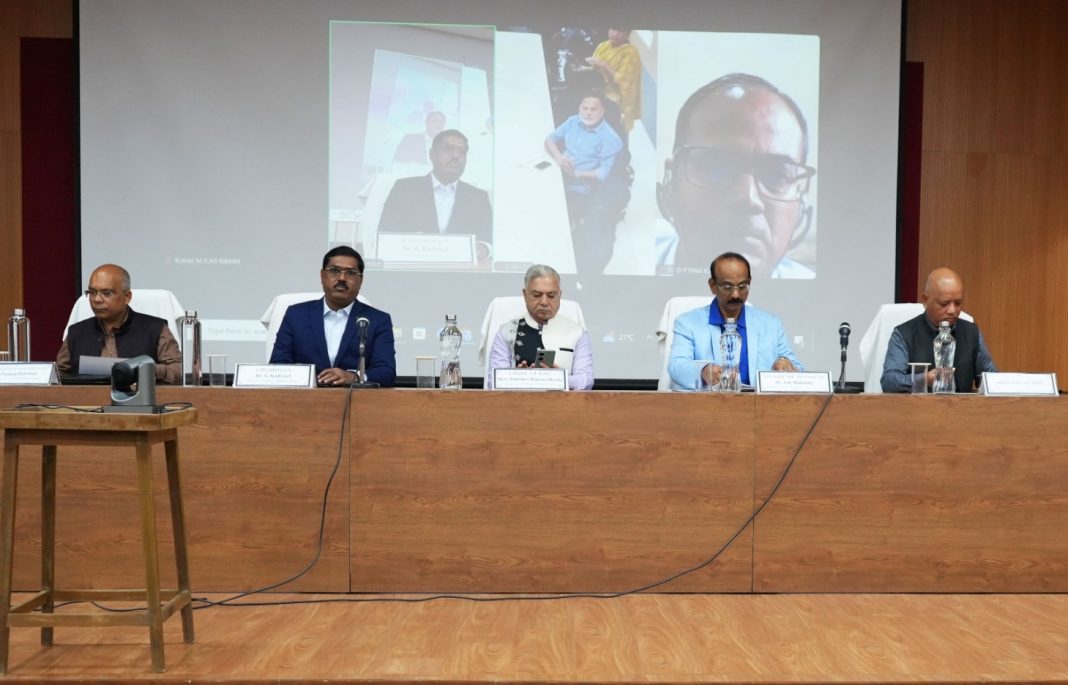
Shillong, Nov 19: Agricultural scientists, government officials and farmers took part in the launch of a major initiative to bring more than 52,700 hectares of rice fallow land across the North East under cultivation at a programme held at the ICAR Research Complex for North Eastern Hill Region (ICAR-RC-NEH), Umiam, on Thursday.
The Rice Fallow Intensification Programme for the North Eastern Region aims to increase cropping intensity, improve land-use efficiency and diversify farming systems while strengthening food and nutritional security and raising farmers’ incomes.
More than 300 participants, including agricultural scientists, senior officials, representatives of state governments, farmers and officials from 90 Krishi Vigyan Kendras (KVKs), took part in the launch. Representatives from Assam, Meghalaya, Tripura, Manipur, Sikkim and Arunachal Pradesh attended the programme.
Addressing the gathering as chief guest, North Eastern Council (NEC) Secretary Satindra Kumar Bhalla said the success of the initiative would depend not merely on technology but also on four critical components — Seed, Sowing, Sale and Support, which he described as the ‘4S’ framework.
He stressed the need to ensure that farmers have access to quality seeds, appropriate sowing practices, reliable markets and institutional support to make the programme successful.
ICAR Research Complex for North Eastern Hill Region Director Govindsamy Kadirvel called for stronger intervention by state governments to expand seed production and ensure large-scale availability of quality planting material.
Emphasising the importance of reliable data and coordinated implementation, he said the region needed to become more self-reliant in the production of pulses, oilseeds, meat, fish and eggs.
He also highlighted the role of KVKs in taking improved agricultural technologies to farmers and translating research into tangible changes at the grassroots level.
The programme will be implemented through a convergence-based approach involving ICAR institutes, Assam Agricultural University, Central Agricultural University, state agriculture departments and 90 KVKs across the region.
Several specialised ICAR institutions, including the Indian Institute of Oilseeds Research, Indian Institute of Pulses Research, Directorate of Rapeseed and Mustard Research, Indian Institute of Maize Research and Vivekananda Parvatiya Krishi Anusandhan Sansthan, will contribute technical expertise and support.
The initiative will focus on improving farmers’ access to technology through training, awareness campaigns and capacity-building programmes. Timely availability of quality seeds, fertilisers and other critical agricultural inputs will also be a priority.
Besides increasing production, the programme seeks to address market-related challenges through the development of better market linkages and processing infrastructure for pulses and oilseeds. Strengthening regional seed production systems is another key component, aimed at reducing dependence on supplies from outside the Northeast.
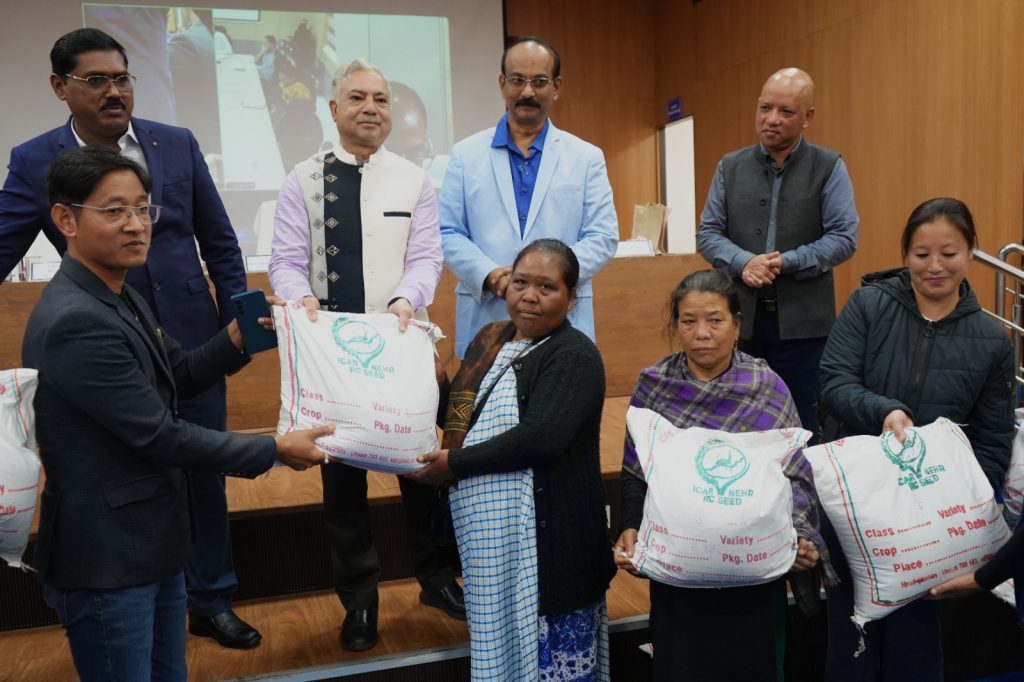
As part of the launch, toria and lentil seeds were distributed to farmers from different northeastern states.
ICAR officials also called upon state departments and KVKs to align the initiative with existing government programmes, including missions on oilseeds and pulses, the Pradhan Mantri Krishi Sinchayee Yojana and the Sub-Mission on Agricultural Mechanization.