
Kathmandu, May 8: Nepal on Friday said it is committed to resolving the border issue with India through diplomatic channels.
“We have already made public our views regarding Lipulekh. We have also expressed our view regarding the proposed Kailash Mansarovar journey between India and China via Nepalese territory, Lipulekh,” Foreign Ministry spokesperson Lok Bahadur Chhetri said.
Nepal is willing to resolve the issue in accordance with the spirit of close and friendly relations existing between Nepal and India, Chhetri said.
“The Nepalese government is always committed to resolving the border-related issue through diplomatic channels on the basis of historical agreements and understanding, facts, map and evidence,” he added.
His comments came days after India firmly rejected the Himalayan nation’s objection to the upcoming Kailash Mansarovar Yatra via the long-established Lipulekh Pass in Uttarakhand, dismissing Kathmandu’s territorial claims over the region as an “unilateral artificial enlargement” that New Delhi finds “untenable.”
New Delhi’s sharp reaction came after the Nepalese foreign ministry objected to preparations by India and China for the annual pilgrimage via Lipulekh Pass, claiming the region belongs to it.
Chhetri said that Limpiyadhura, Lipulekh and Kalapani areas lying east of the Mahakali river are “inseparable parts of Nepal on the basis of the Sugauli Treaty of 1816.”
“We have already informed our stance and concern to both India and China,” he said.
On Monday, the Nepal government spokesperson Sasmit Pokharel told the media that Nepal “doesn’t intend to enlarge its boundary; the territory belongs to Nepal, and the government has a clear view about this and is committed to its stance.”
“The issue needs to be resolved through collaboration and diplomatic dialogue between the two countries,” said Pokharel, who is also the Minister for Education, Science and Technology.
The annual Kailash Mansarovar Yatra is set to take place from June to August via two routes — Lipulekh Pass in Uttarakhand and Nathu La in Sikkim, the Ministry of External Affairs (MEA) announced on April 30.
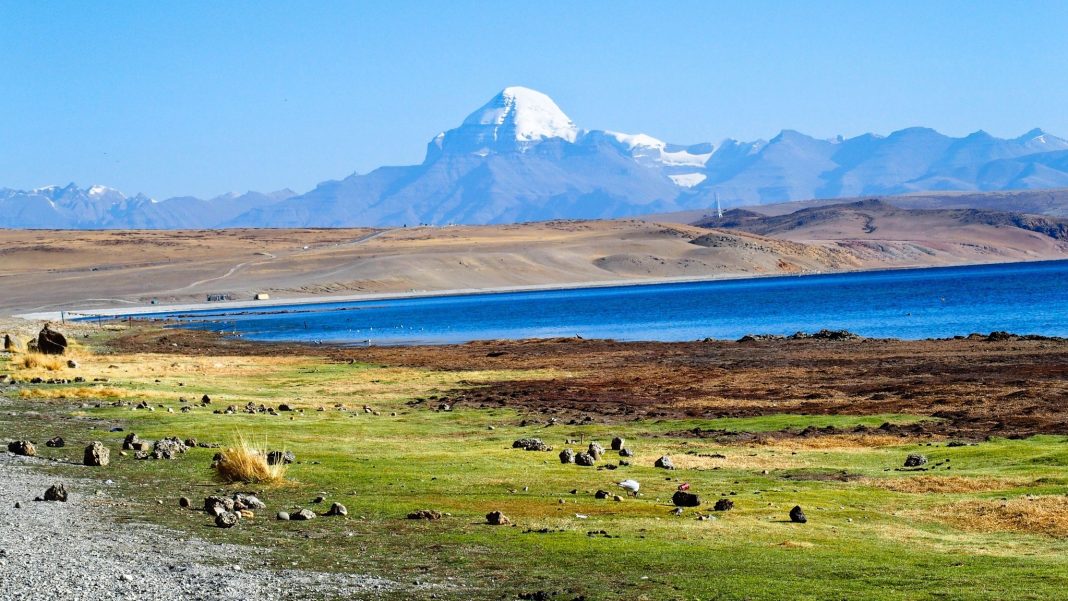
The pilgrimage to Mount Kailash and Mansarovar Lake in the Tibet Autonomous Region holds religious significance to Hindus, Jains and Buddhists.
The yatra resumed last year after a gap of nearly five years as part of efforts to normalise the relations between India and China. (PTI)