
Satyabrat Borah
The Arctic has once again become a flashpoint in global geopolitics, and the world’s attention has turned to the vast, ice-covered island of Greenland. What started as a bold, almost whimsical idea during Donald Trump’s first presidency—buying the territory outright—has escalated into something far more serious. President Trump, now back in the White House, has repeatedly declared that the United States needs Greenland for national security reasons, refusing to rule out any options, including military force. His administration has described acquiring the island as an “absolute necessity,” pointing to potential threats from Russia and China in the rapidly changing Arctic region. Yet, in response, a quiet but firm diplomatic front has emerged, one that quietly but decisively pushes back against American pressure. At the center of this is a strengthened alignment between Denmark and Canada, supported by broader European solidarity, that reaffirms Greenland’s future lies solely with its people and Denmark.
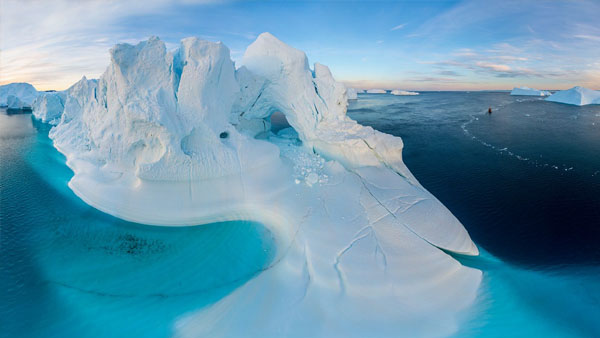
Greenland, the world’s largest island, sits strategically between North America and Europe, guarding key Arctic shipping routes that are opening up as climate change melts the ice. With a population of just over 56,000, mostly Inuit, it has been an autonomous territory within the Kingdom of Denmark since 2009, handling its own internal affairs while Denmark manages foreign policy and defense. The United States already maintains a significant military presence there through the 1951 Defense Agreement, which allows bases like Thule Air Base to operate with broad access. Despite this existing foothold, Trump has insisted that full ownership or control is essential to counter rivals who might exploit the island’s rare earth minerals, strategic location, and emerging sea lanes.
The renewed push began gaining momentum right after Trump’s inauguration, but it intensified dramatically in early January 2026. Trump spoke publicly about the need to act, warning that if the U.S. didn’t secure Greenland, Russia or China might step in. White House statements followed, confirming that officials were exploring “a range of options” to bring the territory under American influence, with some reports even mentioning military contingencies. This rhetoric sent shockwaves through Copenhagen and Nuuk, Greenland’s capital. Danish Prime Minister Mette Frederiksen responded forcefully, stating that any forceful takeover would mark the end of NATO itself—a stunning warning from one ally to another.
Enter Canada. Prime Minister Mark Carney, who took office amid his own set of challenges with U.S. trade pressures, stepped in with measured but unmistakable support for Denmark. In early January, Carney met Frederiksen in Paris and publicly affirmed that “the future of Greenland is a decision exclusively for the people of Greenland and Denmark.” He emphasized Canada’s commitment to Denmark’s sovereignty and territorial integrity, including Greenland, in line with international law. This wasn’t just polite diplomacy; it came alongside Canada’s announcement of deeper engagement, including an upcoming visit by Governor General Mary Simon (herself of Inuit descent) and Foreign Minister Anita Anand to Nuuk to open a new Canadian consulate. These moves signal a practical strengthening of ties in the Arctic, where Canada and Denmark already cooperate on issues like search and rescue, environmental protection, and defense.
What makes this Canada-Denmark alignment particularly significant is how it fits into a larger web of support. On January 6, 2026, leaders from France, Germany, Italy, Poland, Spain, the United Kingdom, and Denmark issued a joint statement declaring that “Greenland belongs to its people” and that only Denmark and Greenland can decide its future. Nordic foreign ministers echoed this in their own declaration. This wasn’t a formal treaty or “pact” in the traditional sense,no binding new defense treaty was signed overnight,but rather a coordinated diplomatic posture that isolates unilateral American action. By rallying behind the principle of self-determination and sovereignty, these nations have created a united front that makes overt pressure or force politically costly for the United States. Any move against Greenland would not just alienate Denmark; it would risk fracturing NATO, alienating key European allies, and undermining the very alliance that has underpinned Western security for decades.
For Trump, this development highlights the limits of his preferred style of diplomacy—one built on leverage, threats, and deal-making. In his first term, the Greenland idea was largely dismissed as eccentric. Now, with the Arctic’s strategic value rising due to melting ice and great-power competition, the stakes feel higher. Yet the response has shown that even the world’s most powerful military cannot simply dictate terms without consequences. Greenlanders themselves have been unequivocal. Leaders from the island’s major political parties issued a joint statement rejecting any notion of becoming American, insisting that their future must be decided by them alone. “We do not want to be Americans,” they made clear, echoing a deep sense of identity tied to Inuit heritage and a desire for greater autonomy or even full independence from Denmark on their own timeline.
This situation also underscores broader shifts in the international order. The Arctic is no longer a frozen backwater; it’s a frontier where climate change, resource competition, and military positioning intersect. Canada, with its own vast Arctic territory and interests, sees Greenland’s stability as directly linked to its own security. Deeper cooperation with Denmark,on infrastructure, critical minerals, defense, and research,helps build resilience against external pressures without escalating into confrontation. Carney’s government has framed this as responsible stewardship of the region, emphasizing collective security through NATO rather than dominance by any single power.
Critics in the U.S. might argue that Trump’s approach is pragmatic, driven by real threats from authoritarian rivals. The island’s rare earth elements are vital for modern technology, and its location could become crucial for monitoring northern approaches. Yet the existing 1951 agreement already provides extensive military flexibility, and experts note that expanding presence could be negotiated without challenging sovereignty. The push for outright acquisition, especially with threats of force, has instead galvanized opposition and reminded the world that sovereignty and self-determination remain core principles, even in a multipolar era.
As January 2026 unfolds, the diplomatic temperature in the Arctic remains high. Secretary of State Marco Rubio is reportedly set to meet Danish officials soon, perhaps to explore purchase options or concessions. But the message from Copenhagen, Ottawa, and European capitals is consistent: Greenland is not for sale, and its path forward belongs to its inhabitants. This quiet realignment,Canada standing shoulder to shoulder with Denmark, backed by Europe,has effectively boxed in aggressive unilateralism, proving that solidarity and respect for international norms can still check even the boldest ambitions.
The Greenland story is about more than one island. It’s a test of whether power politics can override shared values, or if alliances built on mutual respect can hold firm in turbulent times. For now, the diplomatic currents favor restraint, self-determination, and cooperation over coercion. The Arctic’s future may yet be shaped not by who shouts loudest, but by who listens most carefully to those who call it home.