
By Dipak Kurmi
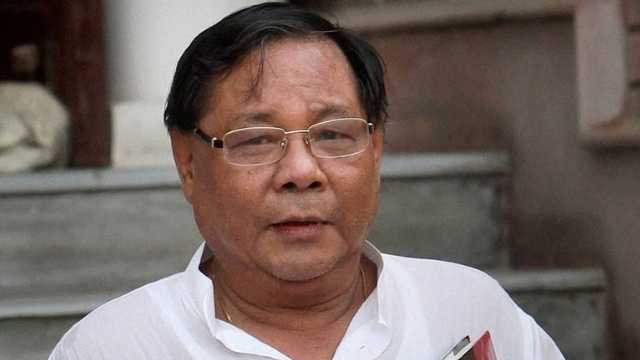
The political history of Northeast India contains several remarkable figures who attempted to bridge regional aspirations with the wider national framework of Indian democracy. Among them, few leaders left as enduring an imprint as Purno Agitok Sangma. Popularly known as P. A. Sangma, he emerged from the remote Garo Hills of Meghalaya to occupy some of the most influential positions in Indian politics, including the office of the Speaker of the Lok Sabha. His journey from a small village in the hills of Meghalaya to the centre of national political power represents not merely a personal success story but also the evolving political voice of tribal communities in India. Through his long career as a parliamentarian, minister, chief minister, and party organiser, Sangma attempted to articulate a distinctive political vision rooted in democratic participation, regional pride, and national integration.
P. A. Sangma was born on 1 September 1947 in the village of Chapahati in the West Garo Hills district of Meghalaya, to parents Diphou Ch. Marak and Chimeri A. Sangma. Raised in a modest environment, he pursued higher education with remarkable dedication. After completing his graduation from St. Anthony’s College, Shillong, he obtained a master’s degree in political science and a law degree from Dibrugarh University in Assam. His early professional life was not directly political; instead, he worked as a journalist and edited a local newspaper named Chandambeni Kalrang. This exposure to journalism allowed him to develop analytical skills and a deep understanding of social and political realities, which later shaped his style as a public leader and parliamentarian.
Sangma formally entered politics in 1973 when he joined the Meghalaya Pradesh Youth Congress Committee as its vice president. Within a year, he rose to become its general secretary, demonstrating both organisational capability and persuasive leadership. During the late 1970s, he served as general secretary of the Meghalaya Pradesh Congress Committee. His political career took a decisive turn in 1977 when he was elected as a Member of Parliament from the Tura constituency during the turbulent period following the Emergency in India. At a time when the Congress Party faced formidable opposition from the Janata movement, Sangma quickly established himself as an articulate and confident speaker in Parliament, earning recognition beyond his region.
Over the following decades, Sangma’s career expanded steadily within national politics. He was re-elected multiple times to the Lok Sabha, eventually winning from the Tura constituency an extraordinary nine times. Under the leadership of Indira Gandhi, he served as Union Deputy Minister for Industry between 1980 and 1982 and later as Deputy Minister for Commerce from 1982 to 1984. These assignments marked the beginning of his long tenure in various ministerial roles. In the mid-1980s he held several important portfolios, including Minister of State for Commerce and Civil Supplies, Minister of State for Home Affairs, and later Minister of State with independent charge for Labour. His responsibilities within the Union government reflected growing trust in his administrative competence and his ability to represent the interests of diverse regions.
Apart from his role at the national level, Sangma also played a significant part in the politics of his home state. From February 1988 to March 1990, he served as the Chief Minister of Meghalaya. His tenure occurred during a period of complex coalition politics in the state, where maintaining stability required careful negotiation among various regional and national parties. Though his chief ministership was relatively brief, it strengthened his stature as a leader capable of balancing local concerns with national responsibilities. Later, he also served as Leader of the Opposition in the Meghalaya Legislative Assembly, further demonstrating his versatility within different political roles.
The most defining moment of Sangma’s parliamentary career came in 1996 when he was elected Speaker of the Lok Sabha. This election carried historical significance because he was the first Speaker chosen from the opposition benches. The decision reflected a rare moment of consensus in Indian politics, as both the ruling and opposition parties agreed to his appointment. During his tenure from May 1996 to March 1998, Sangma earned widespread respect for maintaining parliamentary decorum and fairness in debates. His ability to manage a diverse and often contentious assembly enhanced the credibility of parliamentary procedures and strengthened democratic traditions.
The late 1990s brought a dramatic shift in his political affiliations. Differences with the Congress leadership over the issue of the foreign origin of Sonia Gandhi led Sangma, along with Sharad Pawar and Tariq Anwar, to leave the party in 1999. The three leaders subsequently founded the Nationalist Congress Party, with Pawar as president while Sangma and Anwar served as general secretaries. However, Sangma’s association with the party did not remain permanent. Political disagreements eventually led him to leave the NCP and briefly join the All India Trinamool Congress led by Mamata Banerjee. After some time, he returned again to the NCP, demonstrating the fluid and dynamic nature of coalition politics in India.
Another significant chapter in Sangma’s career emerged during the presidential election of 2012. Dissatisfied with his party’s decision to support Pranab Mukherjee as the candidate of the ruling coalition, Sangma resigned from the NCP and contested the election as an independent candidate. He received support from several political leaders, including J. Jayalalithaa and Naveen Patnaik, as well as backing from the Bharatiya Janata Party. Despite running a spirited campaign emphasising the representation of tribal communities, Sangma ultimately lost the election to Mukherjee. Nevertheless, the contest marked the first major national attempt to mobilise political support around a tribal identity at the highest constitutional level.
Following the presidential election, Sangma turned his attention toward building a new political platform. Rather than creating an entirely new organisation, he revitalised the National People’s Party, which had earlier existed as a small regional formation. Under his leadership, the party sought to represent tribal interests across India while maintaining a national outlook. Sangma envisioned the NPP as a platform capable of uniting tribal communities from states such as Rajasthan, Gujarat, Jharkhand, Chhattisgarh, Odisha, and various regions of the Northeast. By positioning the party within the broader alliance structure of national politics, he aimed to ensure that tribal issues received greater visibility in policy debates.
The political legacy of P. A. Sangma is also closely tied to his family, many of whom continue to play prominent roles in public life. His son Conrad Sangma later became a major political figure and eventually assumed the office of Chief Minister of Meghalaya. Another son, James Sangma, and his daughter Agatha Sangma also entered politics, with Agatha serving as a Member of Parliament and holding a ministerial position in the central government during the administration of Manmohan Singh. The continuing involvement of his family in governance illustrates how Sangma’s political influence extended across generations.
Looking back at his long career, P. A. Sangma’s life reflects the changing dynamics of Indian democracy. From journalism to national leadership, from regional politics to parliamentary authority, his journey mirrored the growing assertion of voices from India’s northeastern states. At a time when political representation from remote regions was limited, Sangma managed to bring the concerns of tribal communities into national discourse. His commitment to democratic institutions, his advocacy for regional inclusion, and his efforts to create a political platform for marginalised groups remain significant contributions to the evolution of Indian politics.
(the writer can be reached at dipakkurmiglpltd@gmail.com)