
By Satyabrat Borah
Parliament is not merely a building where laws are passed. It is the living heart of a democracy. It is the one place where the nation is expected to speak to itself honestly, loudly, and sometimes uncomfortably. When Parliament functions well, it reflects the anxieties, hopes, disagreements, and aspirations of society. When it does not, the silence or chaos inside its walls begins to echo outside, weakening democratic trust. At the core of parliamentary democracy lies a simple but powerful idea: Parliament must function as the primary forum to debate contentious issues.
Contentious issues are not accidents in a democracy. They are natural outcomes of a diverse society where people differ in beliefs, identities, economic interests, and visions of the future. These differences cannot be wished away, suppressed, or resolved through force or executive fiat. They must be discussed, argued over, questioned, and refined in a public, structured, and accountable space. That space is Parliament.
Debate is not a luxury in Parliament. It is its essential purpose. Laws that shape millions of lives are not mere technical documents. They carry moral, social, economic, and cultural consequences. When such laws are introduced without thorough debate, they may be legally valid but democratically hollow. A law passed without debate might satisfy the numbers required for a majority, but it fails to satisfy the deeper requirement of democratic legitimacy.
Parliamentary debate allows competing viewpoints to confront each other openly. It forces those in power to justify their decisions, explain their reasoning, and respond to criticism. This process improves the quality of legislation. No government, however experienced or well intentioned, has a monopoly on wisdom. Opposition voices, subject experts among legislators, and representatives from different regions bring perspectives that can expose flaws, unintended consequences, or overlooked groups. Debate acts as a collective intelligence mechanism, refining ideas through disagreement.
Contentious issues especially demand parliamentary discussion because they often touch deep social nerves. Issues related to identity, religion, language, land, labour rights, economic reforms, national security, or constitutional values cannot be treated as routine administrative matters. They generate fear, hope, anger, and uncertainty among citizens. When such issues are debated in Parliament, people see their concerns reflected and articulated by their representatives. Even if they disagree with the final outcome, the fact that their viewpoint was heard offers a sense of inclusion.
The absence of debate creates a dangerous vacuum. When Parliament does not discuss contentious issues, the debate does not disappear. It merely shifts to the streets, social media, television studios, and sometimes to the courts. These spaces lack the discipline, responsibility, and accountability that Parliament is supposed to provide. Public discourse becomes polarised, emotional, and often misinformed. Instead of reasoned argument, slogans take over. Instead of persuasion, there is intimidation. Parliament’s failure to debate thus weakens social cohesion.
Parliamentary norms exist precisely to ensure that debate remains meaningful rather than destructive. These norms are not written merely in rulebooks; they are sustained by practice, restraint, and mutual respect. Listening to opposing views, allowing interruptions only within limits, respecting the authority of the Speaker or Chair, and adhering to time allocations are not bureaucratic formalities. They are the guardrails that allow disagreement without disorder.
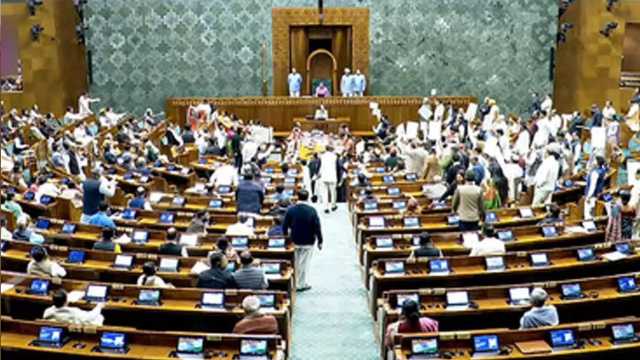
One of the most damaging trends in modern parliamentary practice is the shrinking space for discussion. Bills are often passed with minimal debate, sometimes amid chaos, disruptions, or even walkouts. While protests inside Parliament may sometimes draw attention to ignored issues, persistent disruption ultimately undermines the institution itself. A Parliament that cannot hear itself think cannot serve the people effectively.
Government benches often justify limited debate by citing urgency, national interest, or electoral mandates. While urgency can sometimes be genuine, it cannot become a permanent excuse. Electoral victory grants the right to govern, not the right to silence. Majority rule in a democracy is always balanced by minority rights. Parliament is where this balance is meant to be maintained.
Opposition parties, on the other hand, carry an equal responsibility. Their role is not simply to oppose for the sake of opposition, nor to paralyse Parliament through constant disruption. Their duty is to scrutinise legislation, question executive action, propose alternatives, and represent dissenting voices constructively. When opposition reduces itself to noise rather than argument, it weakens its own credibility and deprives citizens of meaningful representation.
The quality of parliamentary debate also depends on preparation and seriousness. Debates should not be theatrical performances designed solely for media soundbites. They should reflect engagement with facts, data, historical context, and constitutional principles. Legislators owe it to the public to study bills, consult stakeholders, and articulate reasoned positions. Passion has its place, but passion without substance erodes trust.
Committees play a crucial role in deepening debate on contentious issues. Parliamentary committees allow for detailed examination away from the glare of the main chamber. They provide space for expert testimony, cross party discussion, and nuanced consideration. Referring contentious bills to committees is not a sign of weakness or delay. It is a sign of democratic maturity. When committee recommendations are ignored or bypassed, Parliament loses an important layer of deliberation.
Another vital aspect of parliamentary debate is transparency. Debates are recorded, televised, and archived so that citizens can judge the performance of their representatives. This public scrutiny encourages accountability. When debates are rushed, curtailed, or conducted amid disorder, citizens are deprived of the opportunity to understand how decisions are made. Democracy then becomes a distant spectacle rather than a participatory process.
Parliamentary debate also serves an educational function. It helps citizens understand complex issues by presenting multiple viewpoints. A well conducted debate can clarify trade offs, explain policy choices, and dispel misinformation. In a time when misinformation spreads rapidly, Parliament can act as a stabilising force by anchoring public discussion in reasoned argument.
Respect for parliamentary norms is closely linked to respect for institutions. When elected representatives disregard norms, shout down opponents, or treat Parliament as an inconvenience, they signal to society that rules do not matter. This attitude gradually seeps into other institutions and everyday life. Democratic erosion often begins not with dramatic events but with the slow normalisation of disregard.
Contentious issues test the strength of a democracy. They reveal whether a system can handle disagreement without breaking. Parliament is the arena designed for this test. It allows conflicts to be expressed symbolically through words rather than physically through violence. In this sense, debate is a form of peaceful conflict resolution. When Parliament fails in this role, tensions may seek more dangerous outlets.
History offers many examples of how robust parliamentary debate has helped societies navigate crises. Equally, history shows how the sidelining of legislatures has often preceded authoritarian tendencies. When executive power expands at the cost of parliamentary scrutiny, democracy becomes procedural rather than substantive. Elections continue, but meaningful participation declines.
Citizens too have a role in demanding better parliamentary functioning. Voters often reward performative aggression rather than thoughtful debate. Media coverage tends to amplify disruptions over substance. This creates perverse incentives for legislators. A mature democracy requires citizens to value seriousness over spectacle and to hold their representatives accountable for their conduct in Parliament.
Rebuilding respect for parliamentary debate is not easy, but it is necessary. It requires political will from the government, responsibility from the opposition, firmness from the presiding officers, and awareness among citizens. Small steps such as ensuring adequate time for discussion, strengthening committee systems, enforcing rules consistently, and encouraging cross party dialogue can gradually restore faith.
Parliament must not be reduced to a mere law passing factory or a battleground for political one upmanship. It is a moral space where the nation negotiates its differences. Contentious issues are not obstacles to governance; they are opportunities for democratic engagement. Avoiding them weakens democracy, while confronting them through debate strengthens it.
The measure of a democracy is not how efficiently it silences disagreement, but how confidently it engages with it. Parliament stands as the symbol and substance of that engagement. When it functions as a genuine forum for debating contentious issues, it affirms the idea that democracy is not about uniformity, but about managing diversity through dialogue. That is a responsibility Parliament cannot afford to abandon.