
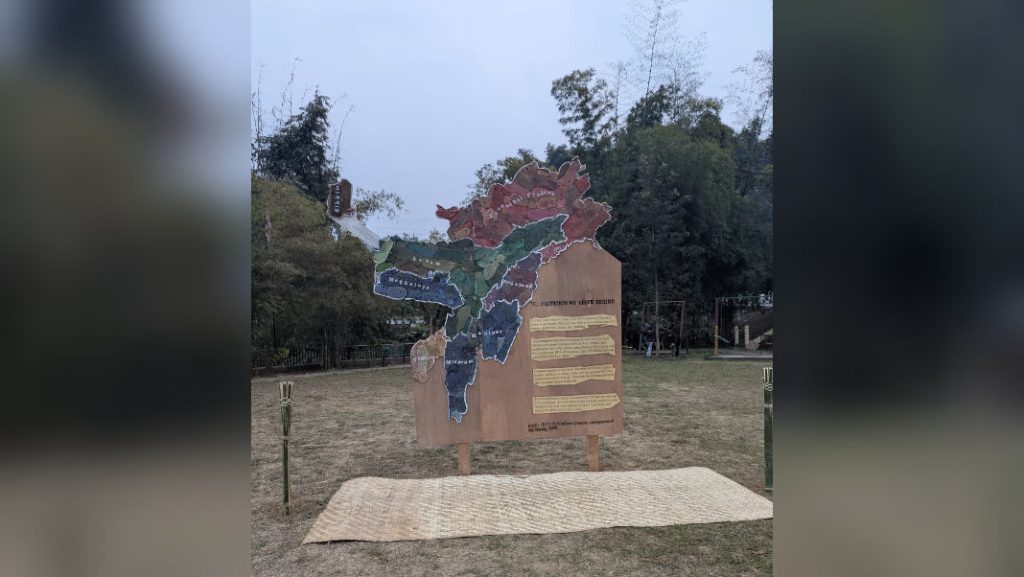
Shillong Feb 9: In a compelling blend of environmental activism and public art, Meghalaya-based start-up ECO-RI has transformed 100 kilograms of discarded footwear recovered from Umiam Lake into a striking installation mapping the Northeast of India.
The artwork, titled “The Footsteps We Leave Behind,” was unveiled at the 8isone Festival held recently.
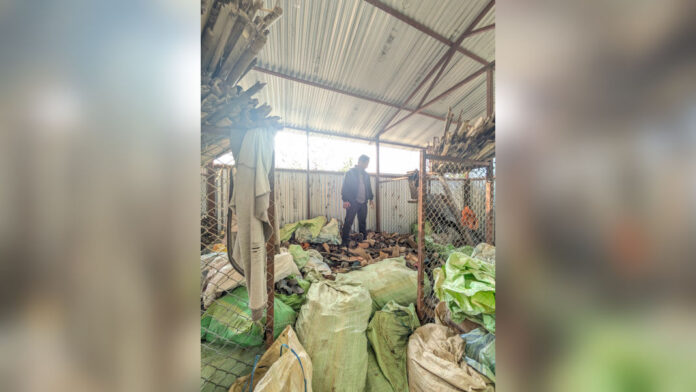
The installation has been created by ECO-RI in collaboration with DejaMe Creacions, another Meghalaya-based start-up working in sustainable design. The footwear waste used in the artwork was collected as part of the ongoing Umiam Lake Clean-Up Project, which ECO-RI undertakes in collaboration with the Smart Village Movement (SVM).
Footwear is among the most complex waste streams to manage due to its composite materials—rubber, foam, fabric and adhesives fused together—making recycling difficult. Once discarded, it lingers in lakes, forests and landfills. By reshaping recovered soles into the contours of the eight Northeastern states, the installation highlights how everyday waste is quietly reshaping fragile ecosystems.
More than 70 percent of the structure is made from reclaimed materials, including discarded plywood. The 100 kg used in the artwork mirrors the amount of footwear waste generated in India every three minutes, underscoring the magnitude of the issue.
ECO-RI says its mission extends beyond clean-up drives. The organisation is working to reduce plastic waste and change public attitudes by encouraging communities to see waste as a resource within a circular economy.
“Through our Waste to Grace initiative, we aim to bring a solution that will change the status of plastic waste from a problem to an opportunity by giving it value through innovative recycling and repurposing methods,” an official said.
“Our solution is not only to reduce plastic waste but also to give people a sense of hope where they can contribute to cleaning the environment and use waste as a resource. ECO-RI converts plastic waste into various products, ranging from home décor items to furniture. We do not see plastic as a problem but as a solution,” the official added.
By placing recovered waste at the centre of a cultural festival, the installation delivers both a warning and a message of possibility—urging citizens to rethink consumption, responsibility and the footprints they leave behind.