
By Dipak Kurmi
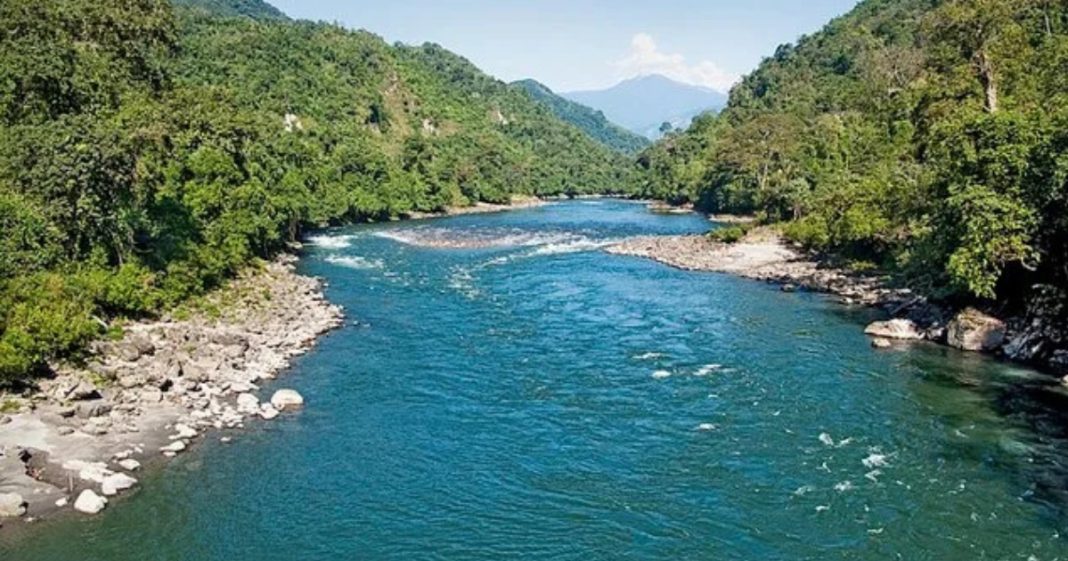
The ambitious vision of harnessing the turbulent waters of the Subansiri River to light up the Indian subcontinent has transformed into a complex saga of fiscal strain, regulatory pushback, and regional reluctance. Once conceived as India’s premier hydel achievement, the 2000 MW Subansiri Lower Hydro-Electric Project (SLHEP) is currently navigating a stormy landscape where the primary beneficiaries are becoming its most vocal critics. The recent developments at the North Eastern Regional Power Committee (NERPC) forum highlight a significant shift in the energy dynamics of the region, as Assam and Meghalaya have formally signaled their refusal to absorb any power beyond their strictly allocated quotas. This resistance is rooted in a fundamental economic reality: the projected tariff for Subansiri power has spiraled so high that state utilities believe it would unnecessarily inflate power purchase costs, ultimately passing an unmanageable financial burden onto the end consumers.
The fiscal trajectory of the project serves as a cautionary tale regarding the long-term consequences of construction delays. When the project was initially envisioned, the tariff was projected to remain under 2 Indian Rupees per unit as recently as 2009. However, the latest estimates presented by Rakesh Kumar, the Managing Director of the Assam Power Distribution Company Limited (APDCL), suggest a staggering climb to approximately 7.70 Indian Rupees per unit. This figure stands in sharp contrast to the national average tariff for hydel power generated by the National Hydroelectric Power Corporation (NHPC), which was recorded at 3.15 Indian Rupees per unit during the 2023-24 fiscal year. The NHPC attributes this dramatic surge to a project cost that skyrocketed from 6,285 crore Indian Rupees at 2002 price levels to an eye-watering 26,000 crore Indian Rupees today. This fourfold increase is primarily driven by an extended construction period, massive escalation charges, and the compounding interest accrued during the long years of inactivity.
The historical timeline of the Subansiri Lower project is marked by nearly a decade of paralysis. While work officially commenced in 2005, the site saw a total suspension of activity between December 2011 and September 2019. This hiatus was the result of intense local resistance and protracted legal battles centered on dam safety and the potential ecological fallout in downstream areas. Even as work has resumed and three of the eight 250 MW units have entered commercial operation, the project remains entangled in unresolved compliance issues. Environmental safeguards, such as the restriction of hydro peaking or water discharge to protect the migratory paths of elephants and other regional wildlife, continue to impose operational constraints that complicate the project’s ability to provide steady, affordable power. These environmental and social externalities have become inseparable from the project’s financial viability, creating a scenario where the cost of ecological preservation is reflected in the high tariff.
The refusal of the northeastern states is not an isolated incident but part of a broader trend of state-level fiscal prudence. In January 2026, the Punjab State Power Corporation Limited (PSPCL) also declined to procure its allotted share of 16 MW from the project. The Punjab State Commission was categorical in its assessment, disallowing the procurement because the tariff was deemed provisional, excessive, and fundamentally unaligned with the principles of economical procurement. This precedent from Northern India reinforced the stance of Assam and Meghalaya, who argue that they have already secured adequate long-term arrangements to meet their energy demands. During the 37th meeting of the State Advisory Committee of the Assam State Electricity Regulatory Commission (SERC), it was clarified that APDCL has already entered into multiple Power Purchase Agreements (PPAs) with upcoming plants to ensure a steady supply without relying on high-cost unallocated power from Subansiri.
The specific mechanics of power allocation from the Subansiri Lower project further complicate the negotiations. The project is designed so that half of its total generation is earmarked for the northeastern states through a combination of 22 percent firm allocation, 13 percent free power, and 15 percent through an unallocated central share. While Assam and Meghalaya acknowledge they have no choice regarding the firm allocation, they are drawing a hard line at the unallocated central pool. Currently, of the 750 MW already being generated, Assam’s firm share is 78 MW with an additional 7.5 MW as free power. Meghalaya, while receiving no free power, holds a firm allocation of 19 MW. The contention lies with the additional 49.65 MW and 36.75 MW offered to Assam and Meghalaya respectively from the central pool. Both states maintain that forced absorption of this surplus would be a disservice to their citizens, as their internal energy portfolios are becoming increasingly self-sufficient.
Meghalaya’s refusal is bolstered by its own burgeoning hydroelectric sector, which promises more competitive pricing. Sanjay Goyal, the Commissioner and Secretary of Power for Meghalaya, has stated that the state will soon benefit from its own 210 MW Myntdu Leshka Hydro Electric Project Stage-II. Expected to be commissioned in 2027, this run-of-the-river project serves as an expansion of the existing infrastructure operated by the Meghalaya Power Generation Corporation Limited (MePGCL) in the West Jaintia Hills. With such local assets coming online, the state perceives little logic in purchasing expensive power from a project plagued by cost overruns. The Meghalaya Power Distribution Company Limited has formally submitted to the NERPC that the state possesses surplus hydro power, rendering the additional Subansiri allocation redundant for their current and projected needs.
The NERPC, established under the Electricity Act of 2003 as a statutory body for the planning and operation of the regional power sector, now finds itself in a difficult mediating position. It has directed both Assam and Meghalaya to provide detailed justifications for their refusal to the Central Electricity Authority (CEA) and the Ministry of Power. However, until a revised directive is issued by the central government, the current scheduling of power will persist, creating a potential financial standoff between the generators and the distributors. The situation underscores a growing tension in India’s federal energy structure, where the central government’s push for massive infrastructure projects occasionally clashes with the states’ mandates to provide affordable electricity to their populations. As the 2026 deadline for full project completion approaches, the Subansiri Lower project stands as a monument to the necessity of timely execution in the energy sector, proving that in the world of infrastructure, time is quite literally money.
(the writer can be reached at dipakkurmiglpltd@gmail.com)