
By Satyabrat Borah
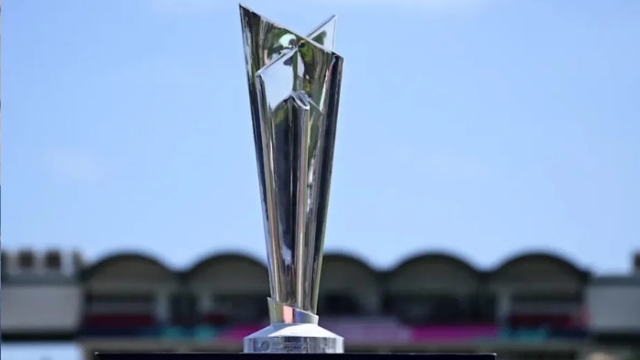
The Twenty20 World Cup was born as cricket’s great experiment, a format meant to be short, sharp, noisy and joyful. It was designed to bring new audiences, blur old hierarchies and allow skill and imagination to matter more than patience and pedigree. Over time it has succeeded on many of those counts. Stadiums fill up faster, television ratings soar and younger fans find a version of cricket that fits their lives. Yet beneath the fireworks and the sixes, the modern ICC Twenty20 World Cup now carries a weight it was never meant to bear. Politics, once a distant background hum, has moved closer to the pitch, shaping decisions, narratives and even emotions in ways that sit uneasily with the spirit of the game.
Cricket has never lived in a vacuum. From colonial tours to boycotts during apartheid, the game has always reflected the world around it. But there is a difference between history leaving its mark and present day politics actively steering the course of a tournament. In recent editions of the T20 World Cup, that steering has become hard to ignore. Choices about venues, scheduling, security, participation and even broadcasting are increasingly influenced by diplomatic relationships, regional tensions and power struggles within the sport’s own governing structures. The result is a competition that often feels less like a festival of cricket and more like a mirror of an uneasy global neighbourhood.
One of the most visible ways politics enters the T20 World Cup is through hosting rights. On paper, the decision should be about infrastructure, experience and the ability to stage a smooth tournament. In reality, it is also about alliances, influence and economic leverage. Wealthy boards wield enormous power within the International Cricket Council, and their preferences often prevail. Smaller nations, even when enthusiastic and capable, find themselves sidelined or offered co-hosting roles that limit their autonomy. This imbalance creates resentment and feeds the perception that the World Cup is not truly global but rather controlled by a few dominant players whose political and financial clout outweighs sporting considerations.
The issue becomes sharper when geopolitical tensions intrude. Matches involving certain countries are no longer just games. They are loaded events watched through the lens of history, conflict and national pride. Fans bring baggage that has little to do with cricketing rivalry and everything to do with unresolved disputes and political narratives. Media coverage amplifies this, framing encounters as symbolic battles rather than sporting contests. Players are expected to carry the weight of national sentiment, even when they would rather focus on line, length and strategy. In such an atmosphere, a dropped catch or a heated exchange can quickly be interpreted as something far larger than it is.
Security concerns, often rooted in political realities, also shape the tournament. Decisions about where teams can travel, how freely fans can move and what precautions are necessary can alter the entire feel of a World Cup. While safety must always come first, the uneven application of security measures raises questions. Some teams travel with heavy restrictions while others move with relative ease. Some fans face visa hurdles and travel bans that effectively shut them out of the experience. The World Cup, which should bring people together across borders, instead highlights how borders can harden under political pressure.
Broadcasting and sponsorship add another layer. Major commercial partners often have their own political sensitivities and market priorities. This can influence scheduling to suit prime time audiences in specific countries, even if it means inconvenient hours for players or fans elsewhere. Advertising narratives are carefully curated to avoid offending powerful interests, resulting in a sanitised version of global unity that feels hollow. The language of togetherness rings false when the underlying structures favour a narrow set of stakeholders aligned through money and influence rather than shared love for the game.
The players themselves are caught in the middle. Modern cricketers are more aware than ever of their public image and the political interpretations that can be attached to their actions. A gesture of solidarity, a social media post or even silence can be scrutinised and politicised. Some players are praised as brave voices, others are criticised for speaking out or for not doing so. The T20 World Cup, with its intense spotlight, magnifies this pressure. What should be a career highlight can turn into a tightrope walk where every move is judged beyond the boundary rope.
For associate and emerging nations, the political dynamics are particularly harsh. The T20 format has given these teams a chance to compete and occasionally to shock the establishment. But their journey to the World Cup is often riddled with obstacles that have little to do with cricketing ability. Funding disparities, limited access to high quality competition and administrative decisions influenced by power politics restrict their growth. When they do make it to the tournament, they are sometimes treated as filler rather than equals, scheduled in less favourable slots and given minimal exposure. This undermines the claim that the World Cup is a celebration of global cricket.
Fans, too, feel the strain. For many, the World Cup is an emotional investment, a chance to celebrate identity and community through sport. When politics intrudes, that joy is diluted. Online spaces become battlegrounds of abuse and misinformation. Nationalistic fervour tips into hostility. Instead of debating tactics and talent, discussions spiral into arguments about flags, anthems and historical grievances. The unfriendly neighbourhood becomes visible not just in boardrooms but in comment sections and living rooms across the world.
The role of the ICC in all this is deeply contested. As the governing body, it is meant to rise above national interests and safeguard the integrity of the sport. Yet its structure, heavily influenced by a few powerful boards, makes true neutrality difficult. Decisions are often perceived as compromises shaped by politics rather than principles. Transparency is limited, communication is cautious and trust is fragile. When controversies arise, responses can seem reactive rather than rooted in a clear moral or sporting framework. This fuels cynicism and the belief that the ICC is managing politics rather than resisting it.
At the same time, it would be simplistic to argue that politics can or should be entirely removed from the World Cup. Cricket reflects the societies in which it is played, and those societies are political by nature. Expecting the tournament to exist in a bubble is unrealistic. The challenge lies in balance. When political considerations overshadow sporting ones, the essence of the competition is compromised. The goal should be to acknowledge reality without allowing it to dominate the narrative and the decision making.
There are moments when the T20 World Cup still reminds us of what it can be at its best. An underdog team upsetting a giant. A young player announcing themselves on the world stage. Fans from different cultures sharing laughter and tension in the stands. These moments cut through the noise and show the power of sport to connect. They also make the political overhang feel even more frustrating, because they hint at what is being lost.
The future of the ICC Twenty20 World Cup depends on choices made now. Will the tournament continue to drift towards becoming a stage where geopolitical rivalries play out under the guise of sport, or will there be a conscious effort to reclaim its original spirit. That would require structural reform within the ICC, fairer distribution of resources and a willingness to make decisions that prioritise the game over short term political or financial gains. It would also require media and fans to resist the temptation to reduce every match to a proxy war of national narratives.
In an increasingly polarised world, the T20 World Cup sits at a crossroads. It can either reflect the unfriendly neighbourhood it inhabits or offer a rare space where competition does not have to mean conflict beyond the boundary. The format, with its emphasis on flair and unpredictability, is perfectly suited to joy and inclusion. Whether it can fulfil that promise depends on how courageously the cricketing community confronts the oversized role that politics now plays.
The question is not whether politics will touch the World Cup, but how deeply it will be allowed to shape it. Cricket has survived and evolved through many political storms before. The T20 World Cup, still relatively young, has the chance to learn from that history. If it does, it may yet become not a symbol of an unfriendly neighbourhood, but a reminder that even in divided times, a game can bring people together, if those who govern it choose that path.