
By Dipak Kurmi
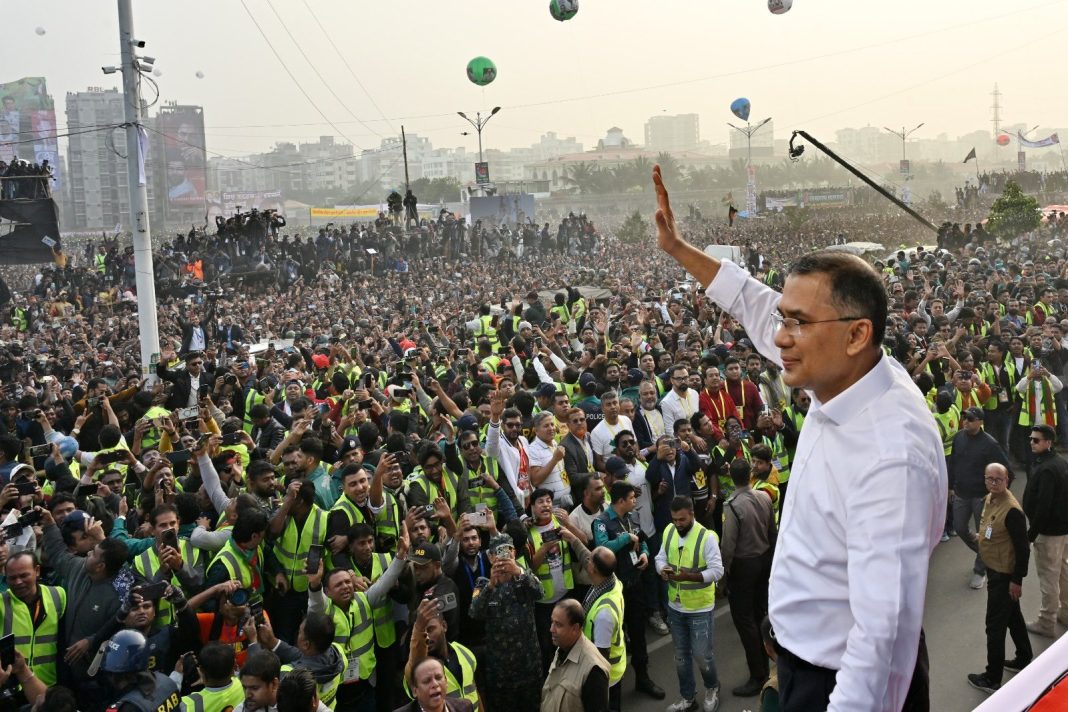
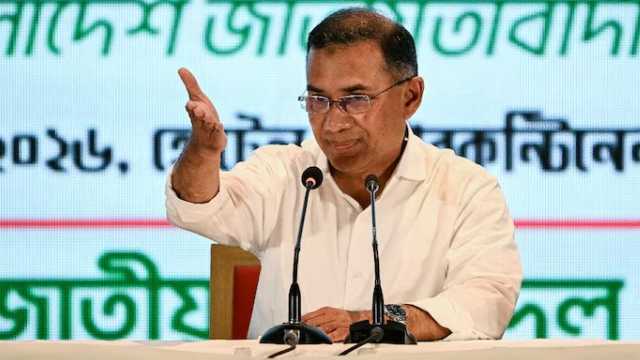
Eighteen months after the dramatic ouster of Sheikh Hasina and her subsequent exile to India, Bangladesh has delivered a decisive political verdict that may well recalibrate the trajectory of its fragile democracy. The sweeping victory of the Bangladesh Nationalist Party under the leadership of Tarique Rahman marks not merely a change of guard but a reassertion of the country’s enduring political architecture. Voters have not only entrusted the BNP with a commanding parliamentary majority but have also endorsed constitutional reforms through a referendum held alongside the elections. In a nation weary of turbulence, economic drift, and creeping extremism, this mandate carries the promise of stability. Yet it also imposes immense responsibility on a leadership long positioned in opposition and now confronted with the burdens of governance.
The high-stakes election unfolded against a troubled backdrop. During the interim phase overseen by Nobel laureate Muhammad Yunus, Bangladesh grappled with mounting extremism, a weakening economy, and visibly strained relations with India. Yunus, globally celebrated for pioneering microfinance, found himself presiding over a deeply polarised polity where the institutions of the state appeared stretched and uncertain. The economy, once lauded for its garment exports and resilient growth, experienced contractionary pressures, dwindling foreign exchange reserves, and investor anxiety. Simultaneously, sporadic outbreaks of violence and radical mobilisation generated unease at home and abroad. The election, therefore, was not simply a contest for power; it was a referendum on the direction of the republic.
One of the most closely watched aspects of the polls was the performance of the Jamaat-e-Islami, widely perceived as one of the principal beneficiaries of the 2024 Gen-Z uprising that convulsed the streets of Dhaka and other urban centres. While Jamaat emerged as a distant second, its inability to secure enough seats to shape governance has tempered domestic and regional anxieties about the ascendance of radical forces. The electorate’s verdict suggests a preference for mainstream political formations over ideological experimentation. In reaffirming the BNP’s primacy, voters have effectively signalled that the long-standing Awami League–BNP duopoly, though battered, remains the fundamental axis of Bangladeshi politics. However, the ban on the Awami League cast an undeniable shadow over the electoral process, raising questions about inclusivity and the long-term health of pluralism.
The new government’s most urgent task lies in containing extremism and safeguarding minorities, particularly the Hindu community, whose vulnerability has become a matter of international concern. In December last year, Randhir Jaiswal, spokesperson of India’s Ministry of External Affairs, noted that more than 2,900 incidents of violence against minorities had been documented by independent sources during Yunus’s tenure. Such figures underscore the fragility of communal harmony in a country whose founding narrative in 1971 was rooted in linguistic nationalism rather than religious identity. Tarique Rahman has pledged to uphold religious freedom and foster communal concord, yet pledges alone will not suffice. The credibility of his administration will hinge on robust enforcement, visible accountability for perpetrators, and a demonstrable commitment to equal citizenship under the law.
Equally critical is the question of reconciliation. In the aftermath of Hasina’s departure, members and supporters of the Awami League reportedly faced widespread violence and intimidation. While few would dispute that Hasina’s tenure had grown increasingly authoritarian, with allegations of electoral manipulation and suppression of dissent eroding her legitimacy, retribution cannot become a substitute for justice. A winner-takes-all approach would corrode the very democratic renewal that the BNP now claims to embody. Rahman would do well to recognise that sustainable governance demands magnanimity. Crafting a consensus on the terms under which the Awami League can re-enter the political fold, perhaps through negotiated reforms and guarantees of fair competition, would signal maturity and strengthen institutional resilience.
The regional dimension of Bangladesh’s political transition is equally consequential. New Delhi has long maintained close ties with the Awami League, viewing Hasina as a reliable partner in counterterrorism cooperation and connectivity initiatives. The change of guard in Dhaka presents both uncertainty and opportunity for India. Rahman has thus far struck a conciliatory note, emphasising the importance of stable and constructive ties. During the visit of S. Jaishankar to Dhaka for the funeral of Rahman’s mother, former Prime Minister Khaleda Zia, he reiterated his desire for a pragmatic partnership. Such gestures matter in a region where symbolism often precedes substance.
Nonetheless, recent developments have complicated the bilateral atmosphere. The expulsion of cricketer Mustafizur Rahman from the Indian Premier League and Bangladesh’s exclusion from the ICC T20 World Cup have been perceived in Dhaka as affronts, deepening popular resentment. While sporting controversies should not define statecraft, in South Asia cricket is entwined with national pride and public sentiment. Moreover, the issue of Hasina’s extradition, should it be formally pursued by Dhaka, is likely to become a diplomatic flashpoint. India’s response will have to balance legal obligations, strategic interests, and humanitarian considerations, all while avoiding the perception of interference in Bangladesh’s internal affairs.
For New Delhi, the transition offers a chance to broaden its engagement beyond entrenched alignments. Prime Minister Narendra Modi has extended warm congratulations to Tarique Rahman, signalling openness to a forward-looking partnership. India’s stakes in Bangladesh are profound, encompassing border management, river water sharing, energy trade, and connectivity corridors linking the Northeast to the Bay of Bengal. A stable and cooperative government in Dhaka would enhance regional integration initiatives such as BIMSTEC and subregional transport frameworks. Conversely, estrangement would create strategic vacuums potentially exploitable by other powers seeking influence in the Bay of Bengal.
Domestically, the constitutional reforms endorsed in the referendum could redefine the balance of power between executive and legislature, recalibrate judicial oversight, and address long-standing grievances regarding electoral processes. If implemented with transparency and inclusivity, these reforms may fortify democratic institutions that have too often been subordinated to partisan imperatives. However, constitutional engineering is no panacea. The deeper challenge lies in cultivating a political culture that respects dissent, tolerates opposition, and privileges national interest over factional rivalry. Bangladesh’s demographic dynamism, with a large youth population that animated the Gen-Z uprising, demands participatory governance and economic opportunity rather than perpetual confrontation.
The BNP’s mandate, therefore, is both an endorsement and a warning. It affirms the electorate’s faith in mainstream politics and its impatience with drift and disorder. At the same time, it cautions against hubris. Bangladesh’s history since independence has been punctuated by coups, assassinations, and cycles of polarisation. The consolidation of democracy requires restraint from victors and responsibility from the vanquished. If Rahman can translate his rhetoric of religious freedom, communal harmony, and regional cooperation into tangible policy outcomes, his government may indeed stabilise a polity shaken by upheaval.
Ultimately, the election represents a moment of reckoning for Bangladesh. The architecture of Dhaka’s politics endures, but its foundations must be reinforced with accountability and inclusiveness. Stability achieved at the expense of pluralism would prove illusory. Conversely, reconciliation anchored in constitutional reform and regional engagement could inaugurate a more mature democratic phase. As Bangladesh stands at this crossroads, the choices made in Dhaka will reverberate across South Asia, shaping not only its own future but also the strategic landscape of the region.
(the writer can be reached at dipakkurmiglpltd@gmail.com)