
By Dipak Kurmi
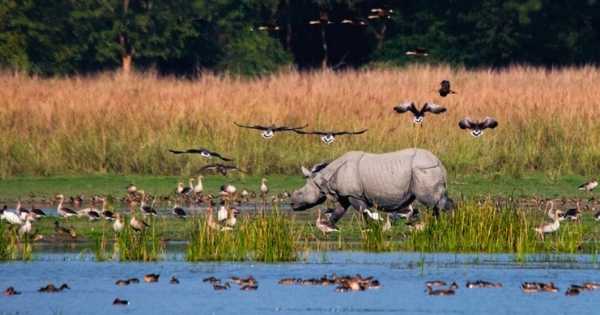
The historical trajectory of environmental literature in Assam finds a profound and structured manifestation in the annual indices of Pobitora, a seminal publication dedicated to ecological discourse, wildlife conservation, and regional environmental challenges. Spanning nearly a decade of intellectual contributions from 2012 to 2018, these tables of contents delineate a critical transition in how regional scholars, scientists, and literary figures conceptualized the fragile ecosystems of Northeast India. Initially emerging as a localized platform to discuss the immediate surroundings of the Pobitora Wildlife Sanctuary, famed for its dense population of the Indian one-horned rhinoceros, the publication quickly matured into a comprehensive compendium addressing global anxieties such as climate change, anthropogenic degradation, and biodiversity loss through a distinctly indigenous lens. By analyzing the thematic distribution of these writings, one can discern the shifting priorities of the Assamese intelligentsia as they grappled with the dual pressures of infrastructural development and ecological preservation.
The foundational discourse captured in the 2012 edition establishes an essential baseline, focusing heavily on the immediate geography of Pobitora and the broader mandate of habitat protection. Early contributions by prominent figures such as Dipanka Hazarika and the legendary cultural icon Dr. Bhupen Hazarika underscore the deep intertwining of Assamese identity with its natural heritage, particularly the symbolic resonance of the rhinoceros and the riverine ecosystems of the Brahmaputra valley. This period of literature was characterized by foundational calls for afforestation, pioneered by national figures like Sunderlal Bahuguna, alongside granular examinations of local wetlands like Deepor Beel and the adjacent areas of Pobitora. The early writings effectively laid the groundwork for a more systemic critique of environmental policy by documenting the rich biodiversity of Assam while simultaneously introducing community responsibilities and legal frameworks, such as the Indian Forest Act of 1927, to a general readership eager for structured conservation paradigms.
As the publication progressed into 2013 and 2014, the editorial scope expanded significantly beyond localized conservation to incorporate rigorous scientific assessments of global environmental phenomena and their regional ramifications. The discourse during these years began to feature critical appraisals of global warming, climate-induced hydrological shifts, and the specific vulnerabilities of the Brahmaputra’s wetlands, often described metaphorically as the kidneys of the landscape by scholars like Banikanta Goswami. This era also witnessed an intellectual bridging between traditional folklore and scientific inquiry, particularly through explorations of Mayong, the traditional land of magic adjacent to Pobitora, where the historical coexistence of human communities and dense forests was analyzed for sustainable insights. Authors like Dr. Pradip Sharma and Dr. Buljit Buragohain contributed pieces that elevated the publication from a celebratory nature magazine to a serious forum for environmental advocacy, dissecting the impact of plastic pollution, the necessity of energy sustainability, and the critical role of environmental education in mitigating civilian apathy.
The mid-decade volumes of 2015 and 2016 reflect a heightened urgency, marked by an increasing focus on specific ecological crises such as the alarming rise in rhino poaching, habitat fragmentation in the Amchang Wildlife Sanctuary, and the vulnerability of avian populations across the state. The prose in these editions grew more analytical and urgent, with contributors like Mubina Akhtar and Dr. Dinesh Chandra Goswami examining the profound systemic failures that allow wildlife trafficking to persist despite stringent legal protections. It was during this phase that the publication diversified its linguistic and stylistic presentation, incorporating formal English essays alongside Assamese commentaries to reach a broader academic audience. This period also highlighted the global interconnectedness of local conservation efforts, referencing international frameworks like United Nations declarations, the themes of World Environment Day, and the interventions of global bodies like UNESCO, thereby positioning the conservation of Assam’s floodplains within the larger matrix of international biosphere preservation.
By 2017 and 2018, the compilation exhibited a highly sophisticated understanding of socio-ecological systems, directly confronting the complexities of modern development, urban expansion in Guwahati, and the degradation of rural commons. The articles from these final years, written by an array of specialists including Dr. Sabda Kanto Sarma and Dr. Hrishikesh Baruah, moved past mere problem identification to offer systemic critiques of groundwater depletion, river pollution, and the eco-centric philosophies required for genuine sustainable development. The threat of plastic became a dominant theme during this twilight period of the reviewed collection, with multiple essays exploring the biochemical threats of microplastics and celebrating innovative community-led movements toward a clean neighborhood paradigm. The literature evolved to recognize that wildlife protection cannot occur in isolation from human welfare, thus advocating for sustainable eco-tourism as a tool for economic empowerment and environmental stewardship, while warning against the commercial exploitation of fragile habitats like the Barail range.
Ultimately, the chronological evolution of the Pobitora indices serves as a mirror to the broader environmental movement within Assam, illustrating a transition from romanticized nature appreciation to an adversarial, data-driven critique of ecological neglect. The wealth of data contained within these documents reveals a community of writers, scientists, and citizens who refused to view nature as a passive backdrop to human progress, choosing instead to document its rhythms, its wounds, and its resilience. Through decades of changing climates and shifting political landscapes, these records remain invaluable archives of regional environmental history, demonstrating that the salvation of unique species like the great Indian rhinoceros is irrevocably linked to the preservation of the smallest wetland, the education of the youngest citizen, and the continuous cultivation of a rigorous, ecologically informed public discourse.
(the writer can be reached at dipakkurmiglpltd@gmail.com)