
By Satyabrat Borah
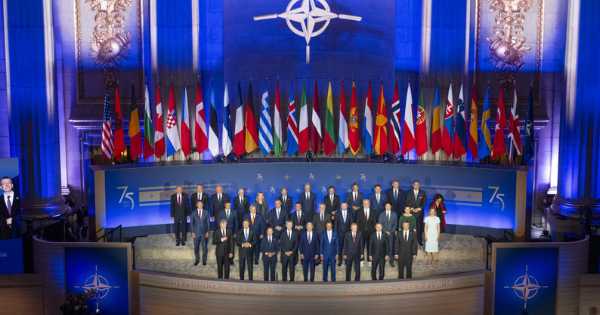
The shift in the geopolitical landscape of the modern world has reached a point where the once unbreakable bond between the United States and its European allies is fraying at the edges. For over seven decades, the North Atlantic Treaty Organization served as the ultimate shield for Western democracy, a collective promise that an attack on one would be met by the might of all. That promise felt like a permanent fixture of the international order, a constant in an ever changing world. But the political climate in Washington has undergone a radical transformation, and the rhetoric coming from the highest levels of American power suggests that this long standing partnership is no longer a certainty. The shadow of a potential American withdrawal from the alliance looms large, driven by a philosophy that views global commitments through the narrow lens of a balance sheet rather than a shared history of values and defense.
When Donald Trump speaks about the alliance, he does not describe it as a pillar of global stability but as a burden that the American taxpayer should no longer be forced to carry alone. He has used blunt language to describe the organization, calling it a paper tiger and questioning the very logic of its existence in the twenty first century. This frustration is not merely about old disagreements over defense spending, although those remain a significant part of the tension. The immediate friction stems from a perceived lack of support from European allies in specific regional conflicts, particularly in West Asia. The White House has expressed deep disappointment that European nations did not move more quickly to provide military support for operations involving Iran. The security of the Strait of Hormuz, a vital artery for the global oil trade, became a flashpoint when Washington felt that its partners were happy to benefit from American protection while hesitating to contribute their own resources to the fight. This led to the accusation that the alliance has become a one way street where the United States provides the muscle and the money while everyone else watches from the sidelines.
The implications of this rhetoric are profound. If the United States were to step back, the vacuum left behind would be massive. For generations, European nations have built their societies under the assumption that they did not need to be massive military powers because the American nuclear umbrella and conventional forces were always there as a deterrent. This allowed for the growth of robust social safety nets and peaceful economic integration. If that umbrella is folded up and taken home, the continent faces a sudden and terrifying realization that it must start from scratch. The Russian leadership is keenly aware of these cracks in the foundation of Western unity. There is a growing sense that Moscow sees the hesitation in Washington as an invitation to test the boundaries of the alliance, especially in the Baltic states and along the borders of Eastern Europe. The ongoing conflict in Ukraine has already shown that the post Cold War peace is fragile, and without a unified front, the risk of further military adventurism increases daily.
At the center of this debate is a fundamental disagreement about what it means to be a partner. Washington has long complained that Europe does not spend enough on its own defense, falling short of the agreed upon targets for military budgets. While some nations have increased their spending in response to recent threats, the pace of change is too slow for a White House that demands immediate results. The legal hurdles to a total withdrawal are significant, as American law now requires a high level of congressional approval to leave the alliance. Even with those legal safeguards, the damage to the spirit of the treaty might already be done. Trust is a currency that takes decades to earn but can be spent in a single afternoon of hostile tweets and public insults. Once the doubt is planted in the minds of allies and enemies alike, the deterrent effect of the alliance begins to wither.
This shift represents a broader movement toward a kind of isolationism that seeks to put American interests above all else, even at the cost of the stability that has allowed the American economy to thrive for so long. It is a pursuit of dominance that rejects the idea of cooperation. For the rest of the world, this is a signal that the rules of the game are changing. If the most powerful nation on earth decides that its signatures on treaties are temporary, then every other nation must recalibrate its own strategy. We are moving into an era where middle powers might try to assert themselves in the gaps left by a retreating superpower. This could lead to a more fractured world where local arms races replace collective security agreements.
The economic consequences of this instability cannot be ignored. Global growth relies on the predictable flow of goods and the safety of trade routes. If the guarantee of security is removed, the cost of doing business goes up. Uncertainty leads to market volatility and a decline in investment. Europe finds itself in a position where it must reimagine what it means to be secure. This will require a massive shift in political will and a restructuring of how European nations interact with one another. The idea of a truly independent European defense force, once a fringe concept, is now a necessity of survival. They must look at their own industries, their own technology, and their own borders with fresh eyes, knowing that the help they once took for granted might never arrive.
The story of the next few years will be defined by how these nations respond to the crumbling of the old order. It is a moment of reckoning for the West. The bond that was forged in the aftermath of a devastating world war is being tested by the pressures of modern populism and a changing sense of national identity. If the alliance fails, it will not just be a military loss but a collapse of a certain vision of the world where nations work together for a common good. The world is watching to see if the United States will remain a leader or if it will choose to stand alone, leaving its oldest friends to navigate a dangerous new reality on their own. The transition to a post Pax Americana world is underway, and the path ahead is filled with shadows and difficult choices for every nation involved in this historic partnership.