
By Dipak Kurmi
The atmospheric trajectory of our planet is no longer a matter of distant speculation but a visceral, suffocating reality manifesting in the premature searing of Northern India. While the calendar indicates that peak summer is still months away, the mercury is already soaring to heights that were once reserved for the solstice, a trend that exacerbates with every passing year. We are currently witnessing a world heating at an unprecedented velocity, with scientific projections indicating a rise of approximately 1.5 to 2.0 degrees Celsius above pre-industrial levels by the year 2050. This is not merely a statistical shift in meteorological data; it is a fundamental reconfiguration of the Earth’s habitability. The warming of the globe represents a natural calamity unfolding before our eyes, albeit at a slow, insidious pace that often eludes the urgent response required for such an existential threat. As the climate shifts, the disparity between those who can escape the heat and those who are consumed by it becomes the defining moral and logistical challenge of the twenty-first century.
A harrowing report by the Climate Impact Lab underscores the lethal nature of this atmospheric shift, projecting that by 2050, ten times more deaths will occur in the Global South due to rising temperatures than in the Western world. This staggering mortality gap highlights a grim reality: the developing nations are destined to be the worst affected by a crisis they did not primarily create. The geographic vulnerability of these nations is the first pillar of this crisis, as a significant majority of the countries constituting the Global South are situated within the tropical regions of Africa and Asia. In these zones, ambient temperatures have already ascended to alarming levels, pushing the limits of human physiological endurance. When additional warming is layered upon an already intense seasonal heat, it transforms what was once a period of manageable discomfort into a full-scale public health emergency that threatens to overwhelm the social fabric of these regions.
The second pillar of this catastrophe is rooted in economic fragility. Due to lower Gross Domestic Product (GDP), developing nations lack the financial resilience to provide the essential mitigations that separate survival from fatality. The infrastructure required for better work conditions—ranging from widespread air conditioning and climate-controlled environments to robust hydration protocols and specialized trauma care—is economically out of reach for millions. In countries like India, the heat is not merely an environmental factor but a socio-economic executioner. The lack of adaptive capacity turns heat into a killer; the vast majority of the population lacks the purchasing power to afford climate control devices, leaving them entirely exposed to the elements. This creates a growing cooling divide, a critical fault line in the global climate crisis that separates those who can purchase a comfortable internal climate from those who must endure the brutal external reality.
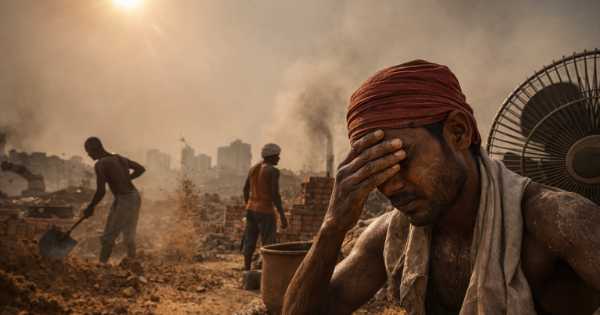
For those laboring in the primary and secondary sectors, the rising temperatures are not just traumatic but life-threatening. Farming, construction, and pavement vending are occupations defined by their exposure, yet they are the backbone of the developing world’s economy. Even more perilous are the conditions in heat-intensive environments such as brick kilns, bakeries, and metal furnaces, where workers are subjected to ambient temperatures that far exceed safe thresholds. In these sectors, basic heat safety is often a foreign concept, silenced by weak labor protections and the prevalence of informal employment. Without institutional oversight or mandated cooling breaks, the most vulnerable segments of the workforce are left to face heat-overexposure health disorders with zero systemic defense. This lack of protection ensures that the heat-related death toll is not a byproduct of the weather alone, but a result of systemic neglect.
The crisis is further compounded by the degradation of the urban landscape. As cities evolve into sprawling concrete jungles, the natural cooling mechanisms of the earth are stripped away, and trees are becoming increasingly extinct in the urban sprawl. This transformation creates a heat-trap effect, where thermal energy is absorbed by concrete and asphalt during the day and radiated back at night. In small, ill-ventilated houses, the heat becomes unbearable during peak hours, leading to a silent epidemic of dehydration and sunstroke. These living conditions, coupled with a healthcare system that is often ill-equipped to handle the specific burden of heat-related illnesses, create a perfect storm. Many regions lack heat-specific response protocols, and a general lack of awareness regarding the early symptoms and treatment of heat exhaustion often leads to cases becoming fatal before medical intervention can even be sought.
This situation represents what American Professor Michael Greenstone describes as one of climate change’s cruelest ironies: the populations that have contributed the least to global carbon emissions are the ones destined to suffer the most severe consequences. The carbon footprints of the Global South are negligible compared to the industrial history of the West, yet the former faces a ten-fold increase in mortality. This disparity is deeply moral and raises urgent, uncomfortable questions regarding global responsibility and climate justice. It is no longer sufficient to discuss mitigation in terms of distant carbon targets; we must address the immediate necessity of survival for billions of people. The international community has a moral obligation to bridge the cooling divide through targeted investments and a radical shift in global priorities toward the protection of the most vulnerable.
Addressing this impending calamity requires a two-pronged strategy focusing on localized adaptation and international finance. On a local level, investments must be channeled into heat-resilient infrastructure and the development of sophisticated early warning systems that can significantly reduce mortality by providing timely information to the public. However, the scale of this challenge exceeds the domestic budgets of developing nations. At the global level, climate finance must become the primary priority. This involves not just loans, but direct grants and technology transfers that allow for the implementation of sustainable cooling solutions and the fortification of healthcare systems. If the world fails to act on this thermal inequity, the rising temperatures will not just be a matter of weather, but a testament to a global failure of empathy and justice.
(the writer can be reached at dipakkurmiglpltd@gmail.com)