
Meghalaya, Assam border residents protest against dam
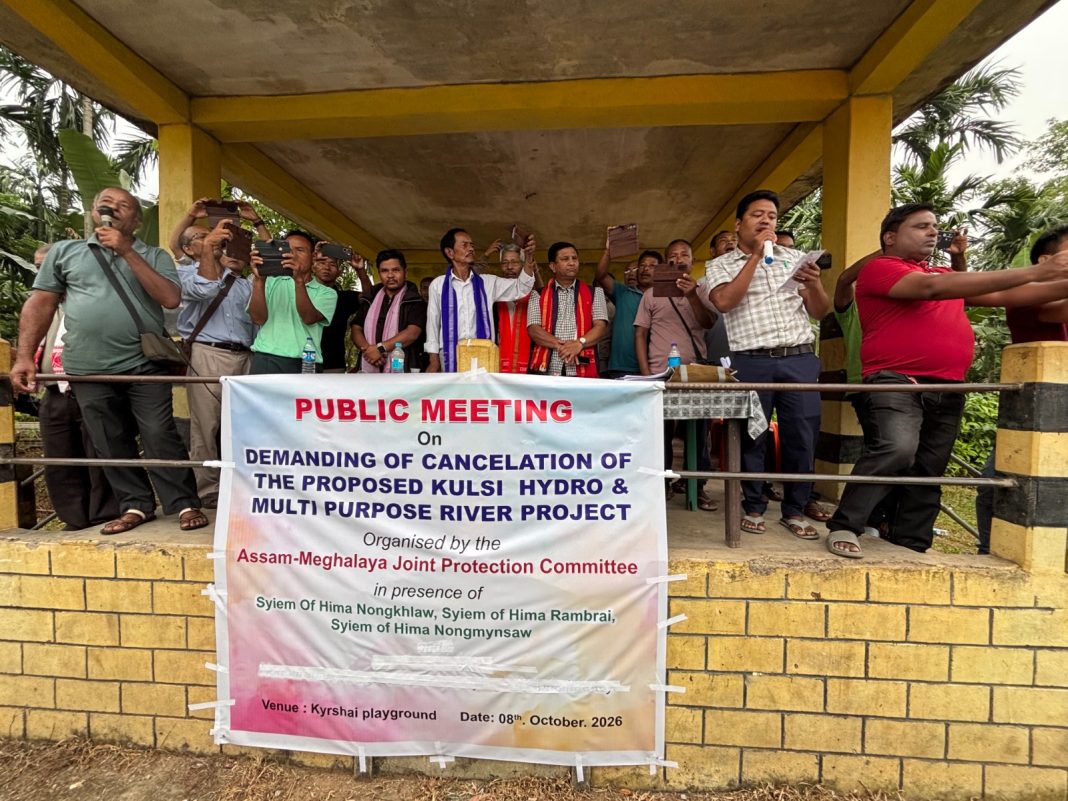
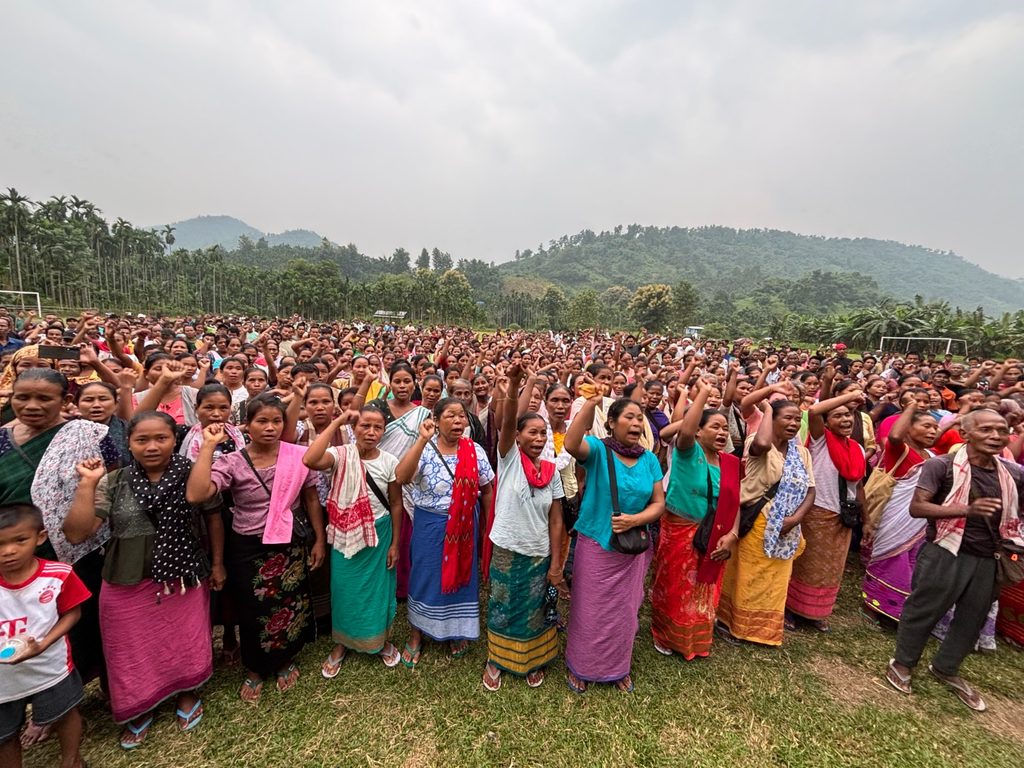
Boko (Kamrup, Assam), Oct 9: In a massive show of unity for a purpose, over 2,000 Meghalaya-Assam border residents, including Khasi traditional chiefs, on October 8 rallied against a proposed dam near Ukiam on Kulsi river.
The protesters from Rabha, Bodo, Garo, and Khasi indigenous communities from both the states converged at Kyrshai playground near the inter-state border.
Kulsi river flows through Ukiam and Kyrshai villages from Meghalaya to Assam.
The rally organiser, Assam-Meghalaya Joint Protection Committee (JPC), was formed in 2025 to spearhead a united front against the proposed mega dam.
Traditional Khasi chiefs — Kestor Manik Syiem Iich, Syiem of Hima Nongkhlaw; Phlowing Syiem Nongbak, Syiem of Hima Nongmynsaw; and Order Syiem Sad, Syiem of Hima Rambrai – attended the rally.
Their participation added significance to the continuing opposition to the project on both sides of Meghalaya-Assam border.
The JPC president Albert Nonglang said construction of the dam would adversely affect approximately 46 villages across Assam and Meghalaya.
The government compensation for the project can never provide a permanent solution for the displaced indigenous communities, he said.
He observed that the 62-metre-high dam would have a devastating ecological and social impact on West Khasi Hills and Kamrup districts.
Biswajit Rabha, president of Assam-Meghalaya Youth JPC, reminded that since Meghalaya part of the dam area falls under the purview of Sixth Schedule, the government cannot forcibly construct the dam without consent of the local populace.
In this context, he highlighted that the stance of the three traditional Meghalaya chiefs would be absolutely crucial in safeguarding the people’s land and interests.
Speaking to reporters, Nongkhlaw Syiem Kestor Manik Lich said no NOC has so far been given by the traditional bodies of Meghalaya to the dam project.
He asserted no such consent would be granted for the project while Syiems of Nongmynsaw and Rambrai echoed the former’s position.
They said they had withheld their NOCs for the proposed dam and assured the people of standing by their side in opposing the project.
They also appealed to people from Assam and Meghalaya to remain united on the issue, describing the two neighbouring states as “brothers”.
The JPC, meanwhile, maintained that the dam project cannot be considered merely as an infrastructure initiative, arguing that its implications would extend to the traditional lands, livelihoods and social fabric of communities residing along the Kulsi basin.
According to Union Ministry of Jal Shakti, the Kulsi dam envisages generation of 55 MW of hydropower, irrigation benefits for approximately 26,000 hectares and incidental flood-management benefits.
The project’s estimated cost in the DPR is around Rs 1,455 crore at the June 2017 price level.
The Brahmaputra Board formally handed over the DPR and related records to the Assam Power Generation Corporation Limited (APGCL) on July 30, 2026, marking an important step towards taking the project forward.