
Festival commemorates 127 years of Seng Khasi movement
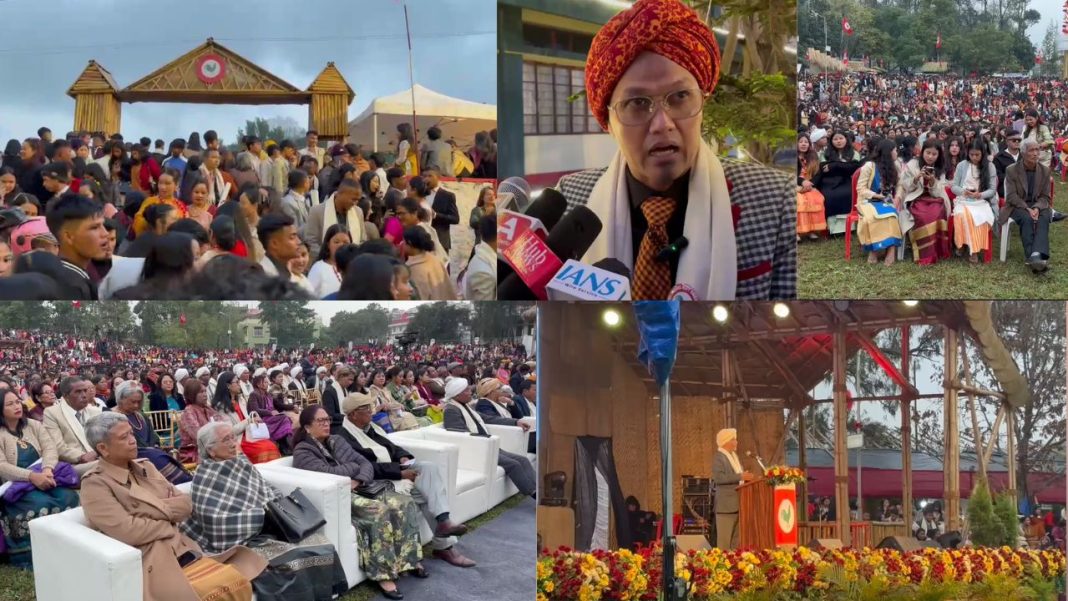
Shillong, Nov 24: The followers of indigenous Khasi faith on Monday celebrated Seng Kut Snem commemorating 127th foundation day of the Seng Khasi movement.
During the annual celebration on November 23, the community reaffirmed its commitment to preserving the indigenous Khasi faith, traditions and cultural identity on the occasion.
Chief Minister Conrad K Sangma extended greetings to the Khasi community on the occasion, emphasising the importance of preserving indigenous faith, traditions and cultural identity and passing the community’s rich heritage on to future generations.
The Seng Khasi Movement started in 1899 when 16 Khasi youth came together to form the Khasi Young Men’s Association in response to growing challenges faced by the indigenous faith and traditional way of life during British rule.
The organisation subsequently came to be known as Seng Khasi, emerging as a movement dedicated to safeguarding the indigenous Khasi religion, customs, language and cultural heritage.
The celebration in Shillong began with the hoisting of the Seng Khasi flag at Iing Seng Khasi, Mawkhar, at 8 am, followed by traditional prayers conducted by the elders of Seng Khasi Kmie and the release of the organisation’s Almanac.
A colourful cultural procession, known as Ïaid Pyni Riti, commenced from Madan Ïewrynghep (Fire Brigade Ground) at 10.30 am, showcasing different aspects of Khasi life, customs and traditional practices.
The procession culminated at Lympung Weiking, Jaiaw, where the main celebration began at 1.30 pm.
The programme included addresses by Seng Khasi Kmie vice-president Rgh DL Nongbri and Seiñ Raij Jowai assistant general secretary Rgh Wyraiki Kharbuki.
A cultural programme featuring traditional songs, music, performances and short skits by members of various Seng Khasi branches and Seiñ Raij also took place in the afternoon.
Beyond the festivities, Seng Kut Snem represents a significant expression of the Khasi community’s cultural awakening and collective resolve to protect its indigenous identity.
The celebration also serves as an occasion for younger generations to reconnect with their ancestral beliefs, customs and traditions through cultural performances, community participation and the sharing of traditional knowledge.
The state government has recognised November 23 as a state holiday in its official holiday calendar for 2026.