
By Dipak Kurmi
When the French Enlightenment thinker Voltaire observed that mass killing often escapes moral condemnation when conducted under the pomp of war, he could scarcely have imagined how accurately his words would echo in the twenty-first century. Yet the protracted conflict in Ukraine, now grinding through its fourth year, seems to embody precisely that bitter irony. What began on February 24, 2022, when Russian President Vladimir Putin launched what he termed a “special military operation,” has hardened into one of the most consequential and exhausting wars of the modern era. The campaign that Moscow apparently expected to conclude swiftly has instead metastasised into a costly stalemate, defined less by decisive victories than by endurance, attrition, and the mounting human toll. Far from delivering a quick geopolitical realignment, the war has entrenched divisions, drained resources, and inflicted suffering on a scale that underscores Voltaire’s enduring cynicism about organised violence.
Four years into the conflict, the central reality is that neither side has achieved its original objectives. Russia has succeeded in seizing and holding significant portions of eastern and southern Ukraine, consolidating control over strategically valuable territories. Yet it has conspicuously failed to subdue the Ukrainian state or topple the government in Kyiv, outcomes widely believed to have been among Moscow’s early ambitions. Ukraine, under the wartime leadership of President Volodymyr Zelenskyy, has demonstrated remarkable resilience, reclaiming some occupied areas with sustained Western military assistance. Still, these gains have come at a staggering cost in lives, infrastructure, and economic stability. The battlefield today reflects a grim equilibrium in which progress is measured in kilometres and months rather than decisive breakthroughs.
The humanitarian toll alone reveals the scale of the tragedy. Estimates by the United Nations suggest that more than 15,000 civilians have been killed and over 40,000 injured since the invasion began, figures that likely understate the full extent of the suffering in heavily contested regions. Military casualties on both sides have climbed into the hundreds of thousands, with some assessments suggesting the combined total could range between 1.8 million and 2 million. Behind these numbers lies a landscape of shattered families, displaced populations, and traumatised communities. Cities that once bustled with ordinary life have been reduced to rubble-strewn frontlines, while millions of Ukrainians have been forced to seek refuge abroad, creating Europe’s largest displacement crisis since the Second World War.
The economic devastation has been equally severe and, in many respects, more enduring. Direct damage to Ukraine’s infrastructure and property has already exceeded $195 billion, encompassing destroyed housing, crippled power grids, ruined transport networks, and battered industrial facilities. When the broader economic losses are factored in, including lost productivity, disrupted trade, and long-term reconstruction needs, the overall cost of the war is assessed at more than $2 trillion. For a country of Ukraine’s size, this represents a generational setback. Even Russia, despite its larger economic base and energy revenues, has faced mounting financial strain under sanctions, military expenditures, and the long-term costs of sustaining a high-intensity conflict.
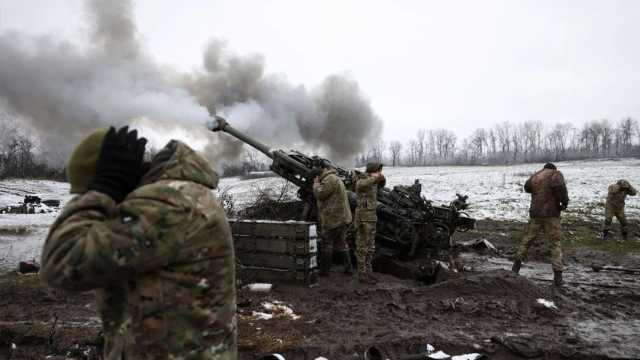
What makes the war particularly grinding is its evolution into a classic war of attrition. The early phase, marked by rapid armoured thrusts and dramatic territorial manoeuvres, has given way to a slower and far more punishing form of combat. Today’s battlefield is dominated by relentless artillery exchanges, dense trench networks reminiscent of early twentieth-century warfare, and the pervasive use of drones that have transformed surveillance and targeting. Missile and drone strikes on urban centres have become routine instruments of pressure, blurring the line between frontline and rear areas. In many sectors, gains are measured not by sweeping offensives but by incremental advances purchased at heavy human cost, reinforcing the sense that this is a conflict defined by exhaustion rather than manoeuvre.
The geopolitical reverberations have been profound. The war has effectively buried the post-Cold War assumption that large-scale interstate conflict in Europe was a relic of history. Instead, it has redrawn the continent’s security architecture and injected fresh urgency into military planning across the Western alliance. The expansion and renewed cohesion of NATO stand as one of Moscow’s most consequential unintended outcomes. Countries that once hedged between engagement and deterrence have moved decisively toward defence preparedness, while defence budgets across Europe have surged after decades of relative decline. The conflict has thus reshaped not only the map of Ukraine but also the strategic psychology of the broader international system.
Energy and food markets have felt the shockwaves with particular intensity. The weaponisation of gas supplies and the disruption of Black Sea grain exports transformed what might have remained a regional conflict into a global economic stressor. Wheat shipments from one of the world’s key breadbaskets became bargaining chips in high-stakes diplomacy, while gas pipelines evolved into instruments of geopolitical leverage. Developing nations, far removed from the battlefields, have borne a disproportionate share of the pain through higher food prices, fuel shortages, and inflationary pressures. For many countries in Africa and Asia, the Ukraine war has translated into tighter household budgets and increased fiscal strain, underscoring how interconnected the global economy has become.
Political dynamics in the West have also begun to reflect signs of fatigue. Sustaining military and financial support for Kyiv has tested the unity and resources of Ukraine’s partners, particularly as domestic economic pressures mount. After returning to the presidency, Donald Trump has reportedly pressed Kyiv to consider territorial concessions as part of a possible pathway to peace. Such suggestions, however, run headlong into Ukraine’s core strategic and emotional calculus. For Kyiv, the war is not merely about land; it is fundamentally about sovereignty, national identity, and the right to exist free from external domination. This divergence between battlefield realities and diplomatic pressures illustrates how difficult any negotiated settlement may prove.
Yet amid the devastation, Ukraine’s national resilience has emerged as one of the defining features of the conflict. Zelenskyy’s now-famous bunker address in the early days of the invasion signalled to the world that Ukraine would not collapse quickly, as many had predicted. That message of defiance helped galvanise domestic morale and secure sustained international backing. In modern warfare, psychological endurance often proves as decisive as military hardware, and Ukraine’s ability to maintain national cohesion under extraordinary pressure has complicated Russia’s strategic calculations. The country’s civil society, volunteer networks, and decentralised defence efforts have all contributed to a war effort that has consistently exceeded external expectations.
The broader lesson of the Ukraine war may lie in its stark demonstration of the limits of military power in achieving swift political outcomes. Despite its overwhelming conventional advantages at the outset, Russia has found that occupying territory is far easier than pacifying a determined population. Conversely, Ukraine’s spirited defence has shown that smaller states, when backed by national resolve and external support, can deny victory to far larger adversaries. This dynamic carries implications far beyond Eastern Europe, serving as a cautionary signal to any power tempted by territorial revisionism in an era where nationalism and modern technology can combine to stiffen resistance.
Four years on, the conflict stands as a sobering reminder that wars rarely unfold according to the scripts imagined by their architects. What was once framed in Moscow as a limited operation has evolved into a grinding confrontation with global consequences. It is a war in which neither side is clearly winning, yet all involved are paying a mounting price. Voltaire’s centuries-old observation therefore feels less like philosophical abstraction and more like contemporary diagnosis. The trumpets continue to sound, the trenches remain filled, and the human tragedy deepens by the day, with no decisive end yet visible on the horizon.
(the writer can be reached at dipakkurmiglpltd@gmail.com)