
By Dipak Kurmi
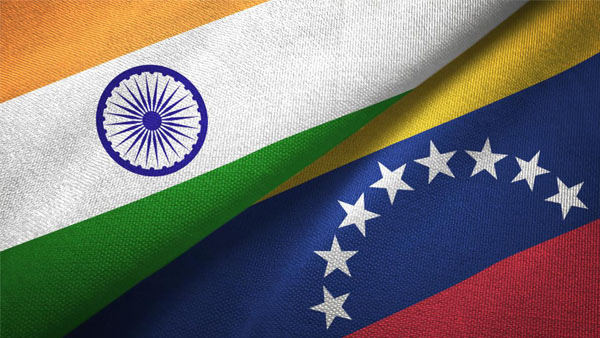
India and Venezuela appear, at first glance, to inhabit entirely different political, cultural, and geographical universes. New Delhi lies more than 14,250 kilometres from Caracas, a distance that seems to insulate India from the turmoil unfolding in South America. Yet history repeatedly demonstrates that geography offers little protection from bad ideas. The sudden and unsettling developments in Venezuela, now thrust into the global spotlight by the latest United States strike, carry lessons that resonate far beyond Latin America. They reveal uncomfortable truths about global power, economic policy, populism, and the hollow promises often wrapped in the language of morality, democracy, and social justice. For India, these lessons are neither abstract nor optional; they are urgent and deeply relevant.
The first and perhaps most sobering lesson is that the lofty vocabulary of international politics often bears little relationship to reality. Words such as democracy, human rights, international law, and enlightened governance are frequently deployed as rhetorical shields rather than genuine principles. In practice, they serve to obscure territorial ambition, ideological expansionism, and the raw exercise of power. The recent US strike on Venezuela is not an anomaly but a reaffirmation of an old and brutal doctrine that has governed global affairs for centuries: might is right. Civil society, predictably, responds with statements urging restraint, dialogue, and peace, while the machinery of coercion grinds on uninterrupted. The gap between moral posturing and geopolitical action has rarely been wider, and Venezuela is merely the latest stage on which this drama has been performed.
Equally instructive is the illusion that global institutions or international opinion can restrain the powerful. The twentieth century began with the hopeful belief that humanity had evolved beyond the barbarism of war. That illusion was shattered by the First World War between 1914 and 1918, which devastated entire civilizations. The League of Nations, created to prevent a recurrence, collapsed under the weight of its own impotence. The Second World War followed with even greater ferocity, forcing the creation of the United Nations in 1945, ostensibly to prevent future global conflicts. Yet decades later, the UN remains largely irrelevant where real power is concerned. It functions more as a glorified debating club than an effective guarantor of peace. Venezuela’s plight underlines a harsh reality: when powerful nations decide to act, international institutions are spectators, not referees.
The Venezuelan tragedy, however, is not solely the product of external intervention. Its roots lie deeply embedded in domestic economic and political choices, particularly the seductive appeal of redistribution without production. There is no substitute for scholarship, discipline, and sustained hard work when it comes to eradicating mass poverty and sharing prosperity. Policies that prioritise wealth redistribution while undermining wealth creation do not correct inequality; they institutionalise poverty. What makes such policies especially dangerous is their moral absolutism. When redistribution is framed as an unquestionable moral good and inequality is portrayed solely as evidence of theft and corruption by entrepreneurs, economic rationality collapses. Making money becomes morally suspect, enterprise is delegitimised, and markets are demonised as instruments of exploitation.
This moral framing has predictable consequences. Those who argue for fiscal prudence, productivity, and market discipline are branded as elitists or agents of capital. Defending economic freedom is equated with serving modern Shylocks. Gradually, and often legally, democracies drift towards economic chaos as incentives for innovation and production are dismantled. Venezuela’s descent followed precisely this path, beginning not with tanks on the streets but with ideas that sounded compassionate, just, and revolutionary.
Hugo Chávez, who ruled Venezuela from 1999 until his death in 2013, built his political project on a powerful moral narrative. He spoke eloquently about inequality, oligarchs, imperialism, and the misappropriation of national wealth. Oil revenues, he argued, belonged to the people and not to private enterprises or foreign partners. Redistribution became the organising principle of the state. What followed is now a textbook example of economic self-destruction. More than 1,000 private enterprises were seized, often without compensation, transforming competitive markets into bureaucratically controlled systems. Price and profit controls strangled commerce, while currency restrictions criminalised entrepreneurship and rewarded proximity to power.
The central bank, stripped of independence, was reduced to a printing press used to fund short-term government spending without regard for monetary stability. Oil wealth, instead of being invested in long-term infrastructure, diversification, and human capital, was squandered on immediate consumption and prestige projects. Institutions were systematically hollowed out, frequently under the guise of responding to popular will, but in reality their core functions were eroded beyond repair. The results were catastrophic. Living standards collapsed by 74 per cent, hyperinflation rendered the national currency virtually worthless, mass starvation spread across large swathes of the country, and 7.7 million Venezuelans fled as refugees in what became the most severe peacetime economic collapse in modern history.
The damage was not confined to macroeconomic indicators. Domestic production across agriculture and manufacturing was crippled, forcing Venezuela to import even basic food items such as rice, which it had once exported in abundance. When the state becomes the primary distributor of wealth, citizens seeking advancement stop cultivating skills, innovation, and productivity. Instead, they chase bureaucrats and politicians. Rent-seeking replaces entrepreneurship, loyalty supplants merit, and identity-based claims overshadow serious political and economic debate. Redistribution, when driven by identity rather than productivity, entrenches grievance as a permanent political resource.
This trajectory has uncomfortable parallels closer to home. Rahul Gandhi’s renewed call for wealth redistribution in India, framed around the slogan jitni abadi, utna haq, has sparked intense national debate. Presented as a moral crusade against inequality, the proposal seeks to reposition economic policy as a question of entitlement arithmetic rather than productivity and growth. The demand for a caste census linked to redistribution shifts the focus from expanding the economic pie to dividing it, from wealth creation to wealth allocation. This is not merely a policy disagreement; it is a philosophical divergence with profound implications.
History offers little support for such an approach. No society has ever redistributed its way to prosperity. Successful welfare states such as Germany and Japan redistribute surpluses generated by productive economies. Chávez redistributed revenue while systematically destroying the source of that revenue. India has its own cautionary precedent. Indira Gandhi’s experiment with excessive state control and redistribution led to economic stagnation, political backlash, and long-term institutional damage. The ideas being repackaged today are neither new nor untested; they are time-worn failures dressed in contemporary moral language.
Venezuela’s collapse is not a one-off tragedy but a recurring pattern visible wherever irresponsible populism overrides economic logic. Corruption, external meddling, and internal mismanagement thrive in environments where institutions are weakened and policy is driven by moral absolutism rather than empirical evidence. Any nation naive enough to prioritise identity-based redistribution over genuine wealth creation risks a similar fate. The warning is not ideological but empirical, written in the lived suffering of millions.
For India, the lesson is clear and unavoidable. Economic justice cannot be achieved by dismantling the mechanisms that generate prosperity. Moral rhetoric cannot substitute for institutional competence, and global platitudes cannot protect nations from the consequences of bad ideas. Venezuela’s story is not merely about a distant country brought to ruin; it is a mirror reflecting the dangers of confusing compassion with coercion, and justice with redistribution untethered from production. In a world governed not by ideals but by power, the only durable defence lies in strong institutions, productive economies, and policies grounded in reality rather than rhetoric.
(the writer can be reached at dipakkurmiglpltd@gmail.com)