
New study unveils the optimal time for maximum yield
By Roopak Goswami
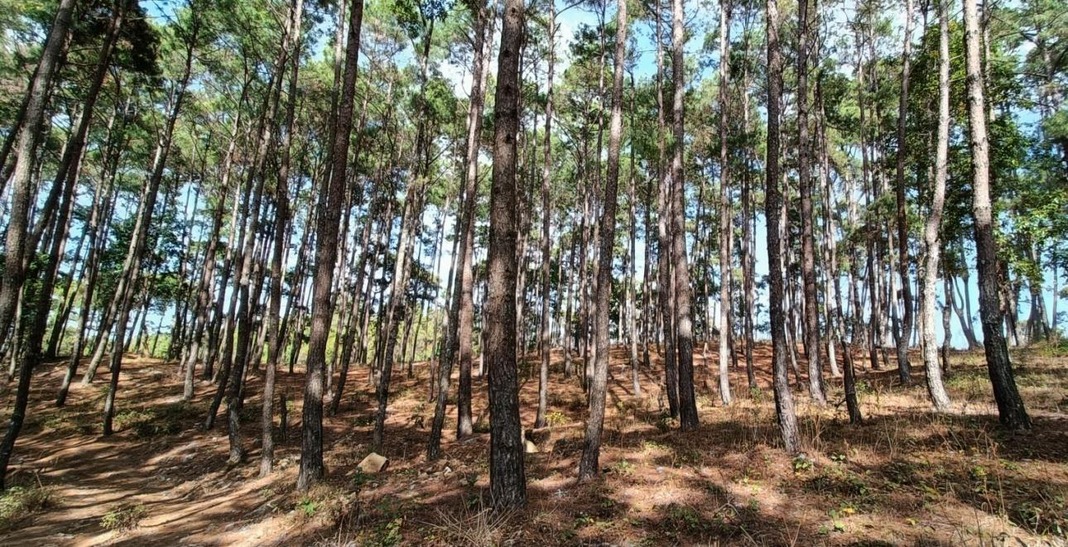
Guwahati, Sep 16: Forests are indispensable ecosystems, providing essential ecological, economic, and social benefits. In Meghalaya, Pinus kesiya, commonly known as the Khasi Pine, which covers about 8% of the state’s forest area plays an indispensable role.
Khasi Pine is commercially important, utilized in various industries such as construction, furniture making, and paper production. Its multifaceted contributions underscore its importance in various sectors, making it a key component of sustainable forest management in the regions it inhabits. However, unsustainable harvesting practices are not helping the state to reap the benefits of Khasi Pine’s ecological and economic significance.
The question is at what time the trees should be felled and new crops of pine should be planted to utilize the maximum potential of forest land. This is where a study done by Working Plan, Research & Training and District Council Affairs Wing of the Forest and Environment Department, in collaboration with the Indian Council of Forestry Research and Education-Rain Forest Research Institute, Jorhat, comes in handy as it tells about the rotation age of Khasi pine- the age at which a tree should be felled. The findings, now published in a comprehensive guide, highlight the complex relationship between soil quality, tree growth, and economic returns.
The study’s findings reveal that the growth performance of Khasi pine is not uniform. In areas having deep fertile soil it grows faster, while in areas having shallow soil depth with presence of boulders, it grows slower.
Based on the soil quality, the pine growing areas in the West Khasi hills district were divided into Site Quality-I(good sites with faster growth) and Site Quality-II(poor sites with slower growth but better wood quality). Site Quality-I was treated as good sites due to faster growth, while Site Quality-II was treated as poor sites due to slower growth.
For Site Quality-I, the rotation age is at 27 years and for Site Quality-II it is 48 years. Trees should be felled at this age and new crops of pine should be planted to utilize the maximum potential of forest land.
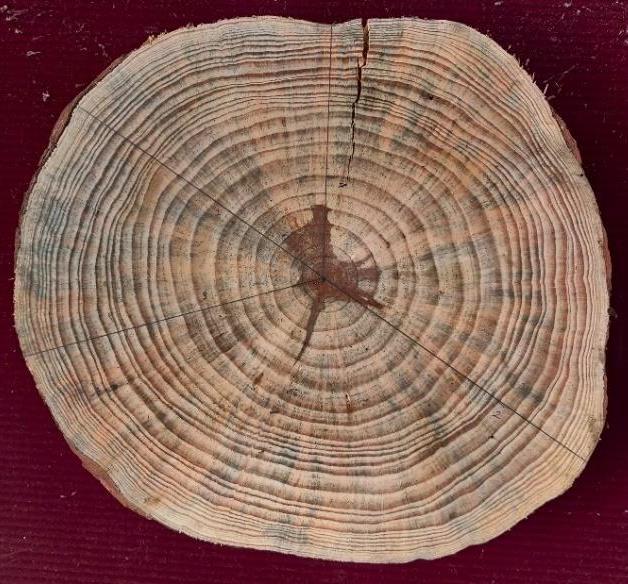
The rotation girth at breast height was also estimated, with good sites showing a higher rotation girth of 127 cm compared to poor sites’ 118 cm. The estimated mean annual increment at the rotation age for good sites was 1.55 cubic foot (cft) per tree per year, and for poor sites, it was 0.67 cft per tree per year. When converted to yield at rotation age, this equates to 41.95 cft and 32.21 cft per tree, respectively. Assuming a tree stock density of 600 trees per hectare in a natural stand, the total yield per hectare in one rotation cycle would be 25,172 cft for good sites and 19,317 cft for poor sites.
Economically, the study presents compelling data: timber from good sites commands a market rate of Rs 200 per cft, while timber from poor sites fetches a higher price of Rs 400 per cft.Thus, the estimated annual economic return for good sites and poor sites would be Rs 1,86,462 and Rs 1,61,035 respectively. However, the total economic return at rotation age from good sites and poor sites would be Rs 50,34,464 (in 27 years), and Rs 77,29,682 (in 46 years) respectively.
The study emphasizes the critical role of understanding growth dynamics and optimal rotation age—crucial for balancing timber production and ecological preservation.
Experts say these findings offer a blueprint for sustainable forestry practices in Meghalaya. The study advocates for a balance between economic gain and ecological stewardship, ensuring that future generations can continue to reap the benefits of the Khasi Pine’s ecological and economic significance.
“This publication marks a significant step towards sustainable forest management in Meghalaya, ensuring that the economic and ecological benefits of Khasi Pine are preserved for future generations” a senior state forest department official said.