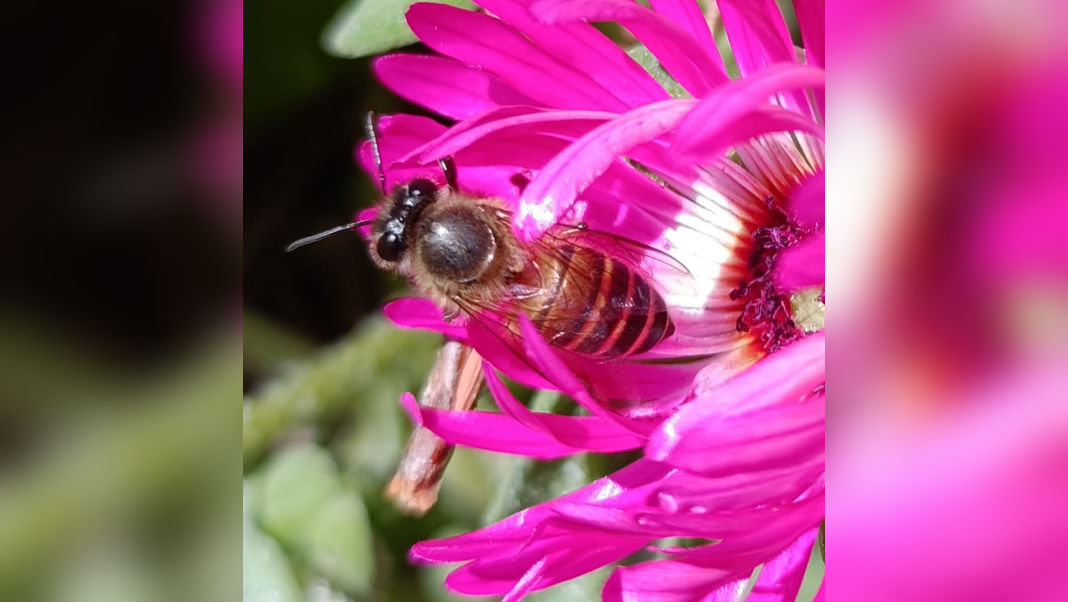

Shillong, March 25: Meghalaya has emerged as a significant bee diversity hotspot in Northeast India, hosting 62 pollinator species, according to a report released by the Ministry of Statistics and Programme Implementation (MoSPI) under its Environmental Accounting Explainer Series on Pollination Services.
Pollination—the transfer of pollen by bees and other insects—is a critical ecological process that underpins agricultural productivity, biodiversity conservation, and overall ecosystem stability. While many crops depend partially or entirely on animal pollinators, their contribution has often remained unaccounted for in conventional agricultural statistics. The report highlights how pollination accounting helps quantify and recognise the economic value of these ecosystem services.
The data shows that Meghalaya supports 48 free-living bee species and 14 cleptoparasitic species, reflecting a rich and diverse pollinator ecosystem. With this, the state contributes 7.49% of India’s total recorded bee diversity, a notable share for its size and geography.
Bee pollinators are broadly classified into two categories—free-living species, which build their own nests and collect pollen and nectar, and cleptoparasitic species, which lay eggs in the nests of other bees and rely on stored provisions for their larvae.
The findings further underline the ecological significance of the Northeast. Sikkim leads the region with 122 species, accounting for 14.75% of the country’s recorded bee diversity, while Assam (49 species) and Arunachal Pradesh (38 species) also contribute substantially, forming a strong regional cluster of pollinator richness.
At the national level, Himachal Pradesh tops the list with 183 species, followed by Uttarakhand (152), Maharashtra (142), and Sikkim (122). In contrast, lower diversity has been recorded in states such as Tripura (10 species), Telangana (11), Nagaland (12), and Mizoram (12), as well as Union Territories like Lakshadweep and Chandigarh.
The report also notes that the composition of bee pollinators in the Northeast closely resembles Southeast Asian fauna, reflecting shared ecological characteristics and biogeographic linkages.
Beyond biodiversity, the findings carry significant ecological and economic implications. Bees play a crucial role in crop pollination, forest regeneration, and maintaining ecosystem balance, making their conservation vital for both agriculture and environmental sustainability in Meghalaya and the wider region.