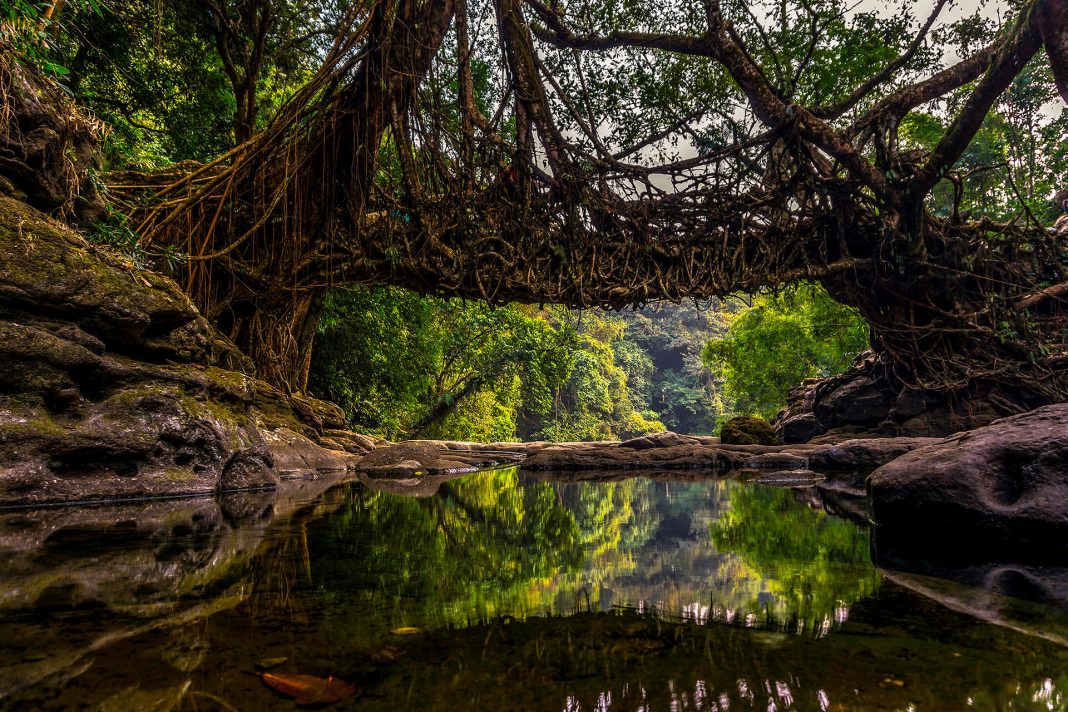

Shillong, June 11: Meghalaya’s famed living root bridges have moved a step closer to securing UNESCO World Heritage status, with India’s nomination of the Jingkieng Jri / Living Root Bridge Cultural Landscape being accepted for evaluation by the World Heritage Committee in 2027.
According to a document released by the UNESCO World Heritage Centre, the Meghalaya nomination was among 34 complete nominations received from around the world that will be examined at the Committee’s 49th session in 2027. The nomination was submitted by India in January this year under cultural criteria (i), (iii) and (v).
Locally known as Jingkieng Jri, Living Root Bridges (LRB) are Ficus-based rural connectivity and livelihood solutions within the dense subtropical moist broadleaf forest eco-region of Meghalaya in the eastern extension of the Indian Peninsular Plateau. Grown by indigenous Khasi tribal communities, these structural ecosystems have performed in extreme climatic conditions for centuries, and encapsulate a profound harmony between humans and nature. The underlying knowledge and skills have evolved through generations and continue to be practised today, affirming their exceptional value and relevance. Facilitating connectivity and disaster resilience in more than 75 remote villages in and near the wettest region on Earth, LRB validates the outstanding ingenuity and resilience of an ancient culture, where collective cooperation and reciprocity were the fundamental building blocks of life.
Early 19th-century published accounts of Living Bridges confirm an exceptional tradition of India rubber tree-based bridge construction near Cherrapunji. Validating their increasing strength and ingenious use of root inosculation, these records highlight important engineering and botanical attributes, which contribute to overall structural robustness.
The listing marks a significant milestone in Meghalaya’s long campaign to secure global recognition for its living root bridges—remarkable structures created by training and weaving the aerial roots of rubber fig trees across rivers and streams, a practice refined by Khasi and Jaintia communities over generations.
UNESCO’s document identifies the nomination as a cultural landscape comprising three component parts, reflecting the close relationship between local communities and the natural environment that has produced one of the world’s most distinctive examples of living architecture.
The nomination will now undergo detailed technical evaluation by UNESCO’s advisory bodies before being placed before the World Heritage Committee for a final decision in 2027.
Of the 46 nominations submitted globally before the January 2026 deadline, only 34 cleared the completeness check and were accepted for further examination. The inclusion of the Meghalaya site in that list keeps India’s bid firmly on track.
If approved, the living root bridges would join the ranks of UNESCO World Heritage sites recognised for their outstanding universal value, while bringing international attention to Meghalaya’s indigenous engineering traditions and community-led conservation practices.