
By Manoranjana Gupta
There are moments in the moral history of nations when silence acquires the weight of speech, and omission becomes more consequential than commission. Bangladesh, a country born in blood and sanctified by pluralist promise, finds itself at such a moment today. So does South Asia.
The images that emerge from Bangladesh in recent months are not ambiguous. Mobs gather with alarming speed. Minority homes are set ablaze. Women are assaulted. Journalists are threatened into quiet compliance. Fear is no longer episodic; it is ambient. And yet, the global response to this violence has been curiously uneven — animated in some cases, conspicuously restrained in others.
This is not because Bangladesh has escaped international attention. Western governments, international media, and global human-rights organisations have repeatedly demonstrated urgency when Bangladeshi political figures, activists, or journalists aligned with familiar liberal narratives have been harmed or killed. Statements are released within hours. Accountability is demanded. Diplomatic pressure follows.
But when Hindu civilians are lynched, when minority women are raped or assaulted, when homes and temples are destroyed following religious accusations, the world’s moral voice falters. The language softens. The spotlight dims. Violence is reframed as “local unrest” or “communal tension,” formulations that obscure asymmetry and evacuate responsibility.
This is not happenstance. It is moral asymmetry — the quiet recalibration of universal principles into selective concern.
Human rights, when applied conditionally, cease to be universal. They become ideological instruments, responsive to narrative convenience rather than human suffering. Lynching is reduced to disorder. Targeted persecution is dissolved into misunderstanding. Over time, what should shock is normalised; what should provoke outrage is absorbed into the background noise of instability.
Nowhere is this asymmetry more stark — or more troubling — than in the conduct of UN Human Rights.
The UN Human Rights Silence — and the Dipu Das Case
The UN Human Rights office has shown commendable urgency when Bangladeshi political actors or activists have been killed. On July 29, 2023, following the killing of an opposition-linked activist, UN Human Rights issued a public statement calling for an “independent and transparent investigation” and stressing the need for accountability. Again, on November 12, 2023, after the death of a political organiser during unrest, the organisation publicly urged Bangladeshi authorities to uphold rule of law and protect democratic space.
Yet when Dipu Das, a young Hindu civilian, was lynched after a religious accusation — an act that squarely constitutes extrajudicial violence, minority persecution, and failure of state protection — UN Human Rights issued no specific public statement, no urgent appeal, no communication from a Special Rapporteur, and no visible follow-up.
The silence has persisted for months
This omission is not explicable by lack of information. The Dipu Das lynching was reported by Bangladeshi media, covered by Indian outlets, acknowledged by civil-society organisations, and discussed publicly within Bangladesh. Police cases were registered. The facts were not in dispute.
What is in dispute is why the UN’s premier human-rights body did not consider this case worthy of public intervention, even as it mobilised language, law, and visibility for other Bangladeshi deaths.
Under the International Covenant on Civil and Political Rights, to which Bangladesh is a party, the killing of a civilian by a mob engages obligations relating to the right to life, equal protection, and effective remedy. Under the UN’s own Special Procedures mandates — including those on extrajudicial executions, minority issues, and violence against women — a lynching following religious accusation falls squarely within remit. There is no legal ambiguity here. Lynching is not “communal tension.” It is unlawful killing. Targeted violence against a religious minority is not an internal disturbance. It is persecution.
The failure of UNHR to publicly take up the Dipu Das case, therefore, cannot be explained as procedural caution or jurisdictional restraint. It reflects a selective application of concern — one in which certain categories of victims fail to trigger the same institutional reflexes as others.
When the UN’s premier human-rights body chooses silence in such cases, it does not merely fail a victim. It signals to perpetrators that some crimes will not internationalise, some deaths will not matter, and some minorities can be brutalised without global consequence.
This is not bureaucratic oversight. It is institutional abdication.
Mob Violence as Governance Failure
The Dipu Das case is not an aberration. It is emblematic.
A familiar script now plays out with chilling regularity. An allegation framed in religious terms circulates. A crowd assembles. Violence precedes verification. Homes are vandalised. Families flee. Police cases are filed. Justice stalls. Over time, the incident recedes from public memory, leaving behind a residue of fear and a lesson in impunity.
This pattern reveals a deeper governance failure. Mob violence in Bangladesh is no longer episodic; it is structural. It thrives where the state appears reluctant or constrained in enforcing equal protection, and where consequences for collective violence remain uncertain.
Impunity, once normalised, becomes contagious.
The Shield of Moral Capital
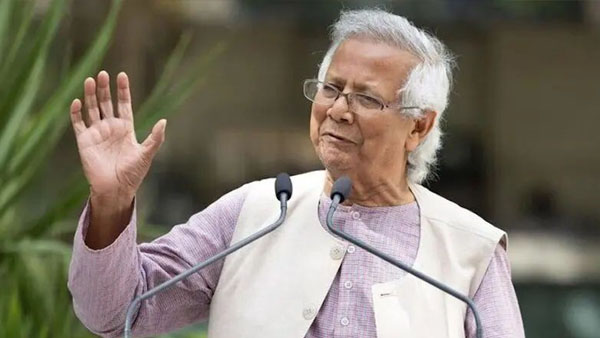
Hovering above this grim landscape is the reassuring global image of Muhammad Yunus — Nobel Peace Prize laureate, icon of ethical capitalism, and the most recognisable moral symbol Bangladesh offers to the world.
Yunus does not govern Bangladesh. But moral authority does not require office. It requires voice — especially when silence enables harm.
Instead, the moral capital of the Peace Prize has functioned, intentionally or otherwise, as a reassurance mechanism. It allows international observers to believe that Bangladesh’s ethical compass remains intact, even as evidence on the ground suggests otherwise. The Prize, conceived as a beacon of peace, risks becoming a veil — softening scrutiny, dampening urgency, and insulating discomfort.
The Nobel Peace Prize was never intended to serve as a lifetime moral indemnity. Yet in practice, it often does. When symbolic honour coexists comfortably with systemic violence, the honour corrodes itself.
Comparative Outrage and Global Hypocrisy
The contrast with other global crises is instructive. In Ukraine, civilian suffering is documented meticulously, perpetrators named, legal language deployed with forensic precision. In Gaza, civilian casualties dominate international discourse, with daily invocations of proportionality, humanitarian law, and moral responsibility
No such sustained analytical generosity is extended to Bangladesh’s minorities.
International law does not recognise geopolitical fashion. Civilisational memory should not either.
Why India Is Watching Closely
For India, this crisis is not an abstract moral debate. It is immediate, historical, and strategic.
Bangladesh is central to India’s eastern security architecture, its connectivity ambitions, and its neighbourhood-first policy. Communal violence in Bangladesh has never remained neatly contained within its borders. The memory of 1971 — when targeted violence against Hindus precipitated one of the largest refugee flows in modern history — remains embedded in Indian strategic consciousness.
Today, New Delhi watches developments in Bangladesh with growing unease. Rising mob violence, shrinking civic space, and the possibility of elections being derailed by law-and-order failures inevitably trigger contingency planning. Instability across the eastern border has direct implications for border management, refugee pressures, and communal equilibrium in India’s eastern states, particularly West Bengal, where linguistic, cultural, and familial ties with Bangladesh are deep and porous.
With democratic elections approaching in India, sustained disorder next door is not merely a regional concern. It is a national one.
A Warning from History & the Cost of Silence
Bangladesh was born in 1971 amid genocide, with Hindus disproportionately targeted, displaced, and killed. That trauma is not a footnote; it is foundational.
Today’s violence is not identical in scale, but it echoes in form. When religious accusation precedes violence, when minorities flee, when silence becomes a survival strategy, history is not repeating itself — it is warning.
Responsibility does not rest solely with Dhaka. Global institutions must confront their own inconsistencies. UN Human Rights must reckon with its selective silences. The Nobel Committee must reflect on the consequences of moral elevation without moral engagement.
Peace is not the absence of criticism. It is the presence of consistency. Human rights cannot be selective without becoming ideological. Silence, especially when cloaked in prestige, is not neutrality; it is abdication.
Bangladesh’s minorities deserve protection, not euphemism. India deserves stability, not uncertainty along its eastern frontier. And global moral institutions owe the world something more than curated concern.
History will not judge awards.
It will judge who spoke — and who chose silence — when speaking mattered most.
Manoranjana Gupta is a Journalist, TV opinion leader, and a Special Advisor for GDKP in India, at the Center for Digital Future, Annenberg School of Communication and Journalism under the University of Southern California.