
By Satyabrat Borah
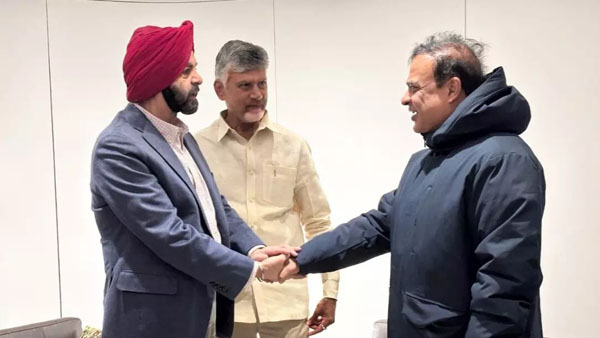
The journey from Dispur to Davos embodies a profound shift in how Assam perceives its place in the world. On January 18, 2026, Assam Chief Minister Dr Himanta Biswa Sarma departed for Switzerland to participate in the World Economic Forum Annual Meeting, held from January 19 to 23 in the alpine town of Davos. This marks the first time Assam has sent an official state-led delegation to this prestigious gathering, making Sarma the inaugural Assamese leader to represent the state on such a platform. Far from being a ceremonial trip, this engagement reflects Assam’s determined push to emerge from decades of relative obscurity in global economic discourse and assert itself as a region of promise, reform, and strategic relevance.
The World Economic Forum has grown into much more than an annual conference. It serves as a crucible where influential figures from governments, corporations, academia, and civil society converge to shape ideas on pressing issues like economic growth, technological advancement, climate resilience, geopolitical stability, and inclusive development. In a world marked by fragmentation, trade uncertainties, rapid innovation, and environmental pressures, the forum provides a space for dialogue that often influences policy directions and investment flows long after the sessions conclude. For a leader from India’s Northeast to join this assembly signals an intentional break from historical patterns of marginalization, where the region was frequently viewed through the lens of challenges rather than contributions.
Assam arrives at this moment carrying a rich yet underleveraged inheritance. The state boasts abundant natural resources, including oil and natural gas reserves, vast tea estates that produce some of the world’s finest varieties, fertile alluvial plains, dense forests teeming with biodiversity, and an intricate network of rivers that sustain life and agriculture. Geographically, it stands as the gateway to Northeast India, sharing borders with Bhutan, Bangladesh, and proximity to Myanmar and the broader Southeast Asian region. This location positions Assam advantageously within emerging connectivity corridors and supply chain realignments, as global companies seek alternatives amid disruptions and diversification strategies.
Yet this wealth has coexisted with persistent underdevelopment. For generations, factors such as challenging topography, historical infrastructure deficits, periods of political unrest, and slower industrialization kept Assam’s economy trailing behind many other Indian states. The narrative around the Northeast often emphasized untapped potential rather than realized achievements, fostering a sense of disconnection from national and international mainstreams. Recent years under Sarma’s administration have sought to rewrite this story through decisive governance reforms, accelerated project execution, and a focused drive to improve law and order, streamline bureaucracy, and build modern infrastructure. New highways, expanded airports, medical institutions, urban renewal efforts, and digital initiatives have become visible markers of change, projecting an Assam in motion.
Participation in Davos amplifies these domestic efforts on a world stage. The Chief Minister’s agenda includes engaging with global CEOs, policymakers, investors, and multilateral institutions to highlight Assam’s investment climate, governance improvements, and sector-specific opportunities. Discussions are expected to cover workforce readiness for future industries, global partnerships, tourism development, healthcare advancements, sustainable practices, and technology integration. Sarma has emphasized the state’s impressive growth trajectory, including reports of a 13 percent economic expansion in recent periods, as evidence of momentum that merits international attention. With a packed schedule of bilateral meetings, roundtables, and potential memorandum signings, the visit aims to translate conversations into concrete commitments, with ambitions reportedly targeting agreements worth significant sums to catalyze projects on the ground.
Attracting investment stands central to this outreach. Assam faces the urgent task of generating quality employment for its youthful demographic, where traditional sectors like agriculture and tea can no longer fully meet the scale of aspirations among new entrants to the labor market. Diversification into manufacturing, services, renewable energy, digital economy, tourism, and healthcare emerges as essential. Davos offers direct access to decision-makers in multinational firms searching for emerging destinations with cost advantages, skilled labor, and strategic access. Beyond financial incentives, today’s investors prioritize governance stability, regulatory clarity, environmental stewardship, and social cohesion. A Chief Minister’s direct participation builds personal credibility, allowing nuanced explanations of reforms and assurances of political commitment.
Assam’s strategic positioning adds another layer of appeal. As supply chains evolve toward resilience and regional integration, locations bridging South Asia and Southeast Asia gain prominence. Initiatives like enhanced connectivity with neighboring countries through roads, waterways, and trade protocols align with broader discussions at the forum on global trade dynamics and economic corridors. Assam’s role as a potential logistics and trade hub could attract interest from industries eyeing proximity to ASEAN markets and India’s growing consumer base.
Environmental concerns form an equally vital dimension. Assam grapples daily with climate impacts, from devastating annual floods and river erosion that displace communities and destroy farmland to biodiversity loss and ecological strain. These are not abstract threats but immediate realities affecting millions. The World Economic Forum has elevated climate action, sustainable finance, renewable energy transitions, and disaster resilience as core themes. Assam’s presence allows it to articulate these vulnerabilities while seeking collaborative solutions, such as funding for adaptation measures, green technologies, and resilient infrastructure that balance development with ecological protection. Framing local challenges within global priorities opens doors to partnerships that might otherwise remain closed.
Tourism represents another promising avenue. The state’s national parks harbor iconic wildlife like the one-horned rhinoceros, alongside pristine rivers, rolling tea gardens, and vibrant cultural traditions rooted in indigenous communities. Sustainable, community-led tourism models could generate livelihoods while safeguarding heritage and nature. Global exposure at Davos helps position Assam as an authentic destination offering experiences distinct from conventional circuits, appealing to travelers seeking meaningful, low-impact engagement.
Symbolically, this Davos appearance carries weight beyond economics. For many Assamese citizens who have long perceived their region as sidelined in national and international stories, seeing their Chief Minister among world leaders fosters pride and a renewed sense of agency. It counters narratives of perpetual backwardness, affirming that Assam can hold its own in elite forums. This psychological boost matters in building collective confidence and motivating younger generations to envision futures tied to home rather than distant migrations.
Skepticism naturally accompanies such high-profile engagements. Critics often question whether Davos yields measurable results or serves primarily as public relations. The concern is valid: photographs and speeches hold little value without follow-through. True success will depend on translating dialogues into implemented projects, realized investments, refined policies, and improved living standards. Transparency about outcomes, accountability in execution, and regular updates to citizens will determine whether this moment endures as transformative or fades into symbolism.
This visit also mirrors evolving federal dynamics in India. Economic diplomacy has expanded beyond the central government’s domain, with states increasingly acting as direct players in global investment attraction and innovation ecosystems. Assam’s initiative complements national efforts, contributing to a more decentralized approach where regional strengths enrich the country’s overall narrative. As India asserts itself as a leading economic force, inclusive growth across geographies, including the Northeast, becomes indispensable. Assam’s global step reinforces that the national development story gains depth when peripheral regions advance.
Inclusivity must remain at the forefront. Economic gains from international partnerships should extend to rural populations, indigenous groups, tea estate workers, and other vulnerable sections. Strategies forged in Davos need tailoring to Assam’s diverse social fabric to avoid exacerbating inequalities or disrupting communities. Growth that overlooks these realities risks eroding harmony and sustainability.
For Assam’s youth, the stakes are particularly high. A demographic dividend turns into a challenge without sufficient opportunities, often driving outward migration. Engagements at Davos around skill development, technology transfers, and industry collaborations hold potential to foster local ecosystems that retain talent and nurture entrepreneurship. Aligning these with regional needs and capacities will prove crucial.
Cultural dimensions add nuance to the economic focus. Assam’s heritage of literature, performing arts, festivals, and traditions enriches its identity. While WEF centers on policy and business, subtle projections of soft power through cultural storytelling can enhance attractiveness to investors and visitors alike, portraying a state that blends economic vitality with depth of soul.
The broader global backdrop in 2026 heightens the visit’s relevance. Amid geopolitical strains, economic volatility, technological upheavals, and climate imperatives, regions demonstrating adaptability, clear vision, and reliable governance stand out. Assam’s outreach positions it to align with these trends, learning from international best practices while offering its own perspectives.
In essence, the passage from Dispur to Davos represents a convergence of ambition, timing, and duty. It opens channels for Assam to link local assets with worldwide opportunities, absorb insights from diverse experiences, and establish itself as a dependable collaborator. Yet the visit’s ultimate significance rests not in the alpine setting but in subsequent actions. The measure of success lies in investments materialized, jobs generated, infrastructure strengthened, services enhanced, and resilience built against environmental threats. When these translate into better lives across Assam’s villages, towns, and tea gardens, the bridge between Dispur and Davos will prove enduring. This global moment becomes meaningful only when it deepens responsibilities at home, ensuring progress remains inclusive, sustainable, and rooted in the dignity of every citizen. As conversations in Davos conclude, the real work begins in Assam, where aspirations meet action to shape a future of promise fulfilled.