
BY Satyabrat Borah
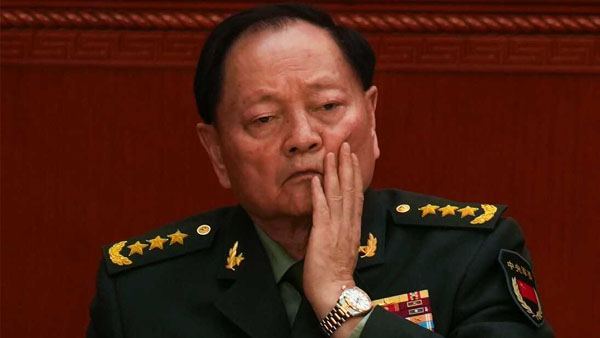
The news that China’s top general has been accused of passing nuclear secrets to the United States has sent shockwaves through strategic circles, not only because of the seriousness of the allegation but also because of what it suggests about trust, discipline, and internal cohesion inside the world’s largest armed forces. Reports indicating that Gen. Zhang Youxia, one of the most influential figures in China’s military establishment, is facing accusations linked to bribery and the transfer of highly sensitive information have immediately raised questions about the credibility of the claims, the political motivations that may surround them, and the broader implications for China’s military readiness at a time of heightened global tension.
In any country, allegations of espionage at the highest level are treated as an existential threat. But in China, where the ruling Communist Party places the military under strict political supervision and where loyalty to the party is considered inseparable from national security, such accusations carry a unique weight. If a senior leader is suspected of betraying state secrets, it is not simply a personal scandal. It becomes a symbol of systemic vulnerability and a potential challenge to the narrative of centralized control that Beijing works hard to project. It also sends a chilling message through the ranks, where career advancement, personal safety, and political survival can become intertwined in ways that are difficult for outsiders to fully understand.
The nuclear dimension makes the story even more alarming. Conventional military secrets can be damaging, but nuclear secrets are in a different category entirely. Nuclear forces are designed around deterrence, which depends on uncertainty, survivability, and the credibility of retaliation. If an adversary gains detailed insight into how a nuclear force is structured, how it is commanded, where it is positioned, and how it might be used in a crisis, the very logic of deterrence can be weakened. Even partial information can be dangerous. It can shape an opponent’s calculations, encourage risk-taking, and create a perception that one side has an advantage in a first strike or a counterforce scenario. That is why nuclear secrecy is guarded with extraordinary measures in every nuclear-armed state.
China’s nuclear strategy has traditionally been framed around a relatively restrained posture, with an emphasis on maintaining a credible second-strike capability rather than matching the United States or Russia warhead for warhead. In recent years, however, open-source analysis and satellite imagery have fueled widespread discussion about a significant expansion of China’s nuclear infrastructure, including new missile silos and modernization efforts across delivery systems. Beijing has not been transparent about the full scope of these developments, and much of the global debate has been driven by estimates rather than official data. In such an environment, the idea that an insider might have provided detailed information to a rival power becomes a strategic nightmare, because it would reduce uncertainty and potentially give an opponent a clearer picture of Chinese capabilities, weaknesses, and operational doctrine.
The accusations against Gen. Zhang Youxia also touch on another critical area, corruption. Corruption in military institutions is not unique to China, but in China it has been treated as both a practical and political threat. Over the past decade, Beijing has pursued high-profile anti-corruption campaigns that have reached deep into the People’s Liberation Army. Several senior figures have been removed, investigated, or punished, with the leadership presenting these actions as necessary to strengthen discipline and ensure that the military remains loyal and effective. Yet corruption cases also have a political dimension, because they can be used to remove rivals, consolidate authority, and reshape institutional power networks. When a figure as senior as Zhang is linked to bribery allegations, it inevitably triggers speculation about whether the accusations are purely about wrongdoing, or whether they reflect deeper struggles inside the system.
Military readiness is not just a question of equipment and training. It is also a question of confidence, stability, and organizational integrity. When senior leaders are accused of betrayal or corruption, the institution can enter a period of uncertainty. Officers may become cautious, decision-making may slow down, and internal trust can erode. In some cases, fear of being associated with the wrong faction or of being caught up in an investigation can paralyze initiative. In other cases, a leadership purge can be followed by a renewed push for discipline and loyalty, which might strengthen control but also reduce flexibility. Either way, the short-term disruption can be significant, especially in a military that is attempting to modernize rapidly and prepare for complex contingencies.
The broader geopolitical context makes this story even more consequential. China and the United States are engaged in a strategic rivalry that spans trade, technology, diplomacy, military posture, and competing visions of global order. Tensions have risen over Taiwan, the South China Sea, export controls on advanced technology, and alliances in the Indo-Pacific. Both sides have accused each other of espionage and covert influence operations. In such a climate, a claim that a top Chinese general passed nuclear secrets to Washington would be interpreted not only as a security breach but as a dramatic escalation in the shadow war that often accompanies great power competition. It could intensify suspicion, harden positions, and create new barriers to dialogue at a time when crisis management mechanisms are already under strain.
At the same time, it is important to approach such allegations with caution. Information about internal Chinese political and military affairs is often incomplete, filtered, or shaped by competing interests. Rumors can spread quickly, and narratives can be amplified by media outlets with different agendas. Without verified evidence, it is difficult to know whether the accusations reflect a real case of espionage, an internal power struggle, or a mix of both. High-level accusations sometimes emerge during moments when leadership reshuffles are underway or when a regime is trying to demonstrate strength through discipline. The truth may only become clear through official announcements, which themselves can be selective, or through long-term patterns that emerge over time.
Still, even the existence of such allegations has consequences. Perception matters in international politics. If foreign governments and analysts believe that China’s military leadership is facing internal turmoil, they may adjust their assessments of China’s capacity to act decisively in a crisis. Some may see instability as a sign of weakness, while others may see it as a reason to be more cautious, fearing that internal pressure could push leaders toward aggressive external actions to reinforce legitimacy. Both interpretations can affect regional security dynamics. Allies and partners of the United States might use such developments to argue for stronger deterrence measures, while China might respond by demonstrating resolve through military exercises or political messaging.
Inside China, the implications could be profound. The People’s Liberation Army is not just a fighting force. It is also a political instrument. The party’s control over the military is central to the stability of the Chinese system. If senior leaders are suspected of disloyalty, the leadership may intensify ideological education, loyalty campaigns, and internal surveillance. That can strengthen political control, but it can also create tension within the institution, particularly among professionals who want to focus on operational competence rather than political signaling. The balance between political loyalty and military effectiveness is a challenge that many authoritarian systems face, and China is no exception.
The nuclear aspect also raises questions about command and control. Nuclear forces require highly reliable procedures, strict authorization protocols, and secure communication networks. Any hint that sensitive information has been compromised forces a reassessment of those systems. Even if no secrets were actually transferred, the suspicion alone could trigger internal reviews and changes. China might tighten access to nuclear-related data, rotate personnel, restructure certain departments, or introduce new layers of oversight. Such measures can improve security, but they can also add complexity and slow response times in a crisis. In nuclear strategy, where minutes can matter, that trade-off is significant.
The story also highlights the human factor in national security. Governments invest enormous resources in technology, encryption, counterintelligence, and physical security, yet individuals remain a potential weak link. Espionage often relies on personal motivations such as money, resentment, ambition, or ideological disagreement. Bribery allegations in this case suggest a financial motive, but high-level cases are rarely simple. Senior officials may have access to extraordinary privileges, but they may also face intense pressure and political risk. In systems where loyalty is enforced and dissent is dangerous, personal grievances can be hidden until they erupt in unexpected ways. That is why counterintelligence is not only about preventing foreign penetration, but also about managing internal morale and preventing vulnerabilities from developing at the top.
For the United States, the implications would be complicated as well. If Washington had indeed gained access to sensitive Chinese nuclear information, it might be tempted to adjust its own strategic planning, missile defense posture, or regional deployment patterns. But such gains also carry risks. If China believes its nuclear deterrent has been compromised, it could respond by expanding its arsenal more rapidly, changing its alert status, or adopting more aggressive operational postures. In nuclear strategy, actions taken to gain advantage can provoke counteractions that ultimately make everyone less secure. That is why nuclear stability is often described as fragile, dependent on mutual restraint and the avoidance of destabilizing surprises.
There is also the risk of escalation through misperception. If China concludes that the United States is conducting deep penetration of its nuclear establishment, it may assume that Washington is preparing for a scenario in which Chinese nuclear forces could be neutralized. That perception could push China to adopt a more launch-ready posture or to diversify its delivery systems even further. Such changes could increase the risk of accidents, false alarms, or rapid escalation during a crisis. Even if the original allegation is exaggerated or politically motivated, the downstream effects could still be real.
Bribery allegations, meanwhile, point to another vulnerability: the way corruption can undermine military effectiveness. Corruption can distort procurement, weaken training standards, and promote incompetent leadership. It can also create networks of patronage that compete with formal command structures. In a modern military, where joint operations require coordination between services and where high-tech systems require specialized expertise, corruption can be especially damaging. If officers gain positions through favoritism rather than merit, the institution may look strong on paper but perform poorly under pressure. That is why many militaries treat corruption as a national security issue, not just a moral failing.
China’s leadership has repeatedly emphasized the need for a strong, modern, and loyal military. President Xi Jinping has spoken about building a “world-class” armed force capable of fighting and winning wars, and he has pushed reforms aimed at improving joint operations, streamlining command structures, and upgrading technology. At the same time, he has stressed ideological loyalty and the party’s absolute control. The allegations against a top general, whether proven or not, strike at the heart of this agenda. They suggest that despite reforms and campaigns, the system may still face deep-rooted challenges.
The implications for Taiwan are particularly sensitive. Taiwan is widely seen as the most dangerous flashpoint in the U.S.-China relationship. Any assessment of China’s military readiness is closely watched, because it shapes deterrence calculations on all sides. If China’s military leadership is distracted by internal investigations or purges, it could affect planning and readiness in ways that matter in a crisis. But it could also lead to the opposite outcome: a desire to demonstrate unity and strength through external actions. History shows that regimes facing internal uncertainty sometimes use external pressure to rally support and distract from domestic problems. That does not mean conflict is inevitable, but it adds another layer of complexity.
Regional actors such as Japan, South Korea, India, Australia, and Southeast Asian states will also watch closely. Many of these countries are already balancing economic ties with China and security partnerships with the United States. News of instability or scandal in China’s military leadership could influence their threat perceptions and policy choices. Some might see it as evidence that China is less capable than feared, while others might see it as a reason to strengthen defenses, worrying that unpredictability is increasing. In international security, uncertainty often drives caution, but it can also drive arms buildups.
Another important angle is how information warfare and narrative shaping will play out. In the modern era, major powers compete not only with weapons and alliances but also with stories. If the allegation is widely believed, it can damage China’s image of internal strength and discipline. China may respond with denial, silence, or counter-accusations. It may portray the story as foreign propaganda designed to sow discord. It may also emphasize its anti-corruption efforts as proof that it is cleaning up the system. Meanwhile, foreign audiences may interpret events through their own biases, either seeing the story as confirmation of systemic flaws or as evidence of internal resistance within China’s elite. The truth can be overshadowed by the strategic value of the narrative itself.
The most important takeaway is not simply whether one general is guilty or innocent, but what this episode reveals about the pressures inside a rising military power. China is modernizing at an extraordinary pace. It is expanding naval capabilities, improving missile forces, investing in cyber and space assets, and seeking to integrate advanced technologies such as artificial intelligence into command systems. This transformation requires not only money and technology but also institutional trust and competent leadership. Allegations of espionage and bribery at the top suggest that modernization is happening in an environment where political loyalty, personal networks, and the temptation of corruption still play major roles.
If the accusations are proven, the consequences could be severe. China would likely respond with harsh punishment, sweeping investigations, and intensified counterintelligence measures. It might also accelerate changes in its nuclear posture and security protocols. If the accusations are not proven, or if they are exaggerated, the damage may still be significant, because the mere existence of the allegations can weaken confidence and increase suspicion. In either scenario, the story underscores how fragile military institutions can be when power, secrecy, and politics intersect.
For the world, the story is a reminder that great power competition is not only about visible military deployments and official statements. It is also about hidden struggles, internal vulnerabilities, and the constant battle to protect secrets in an age where information can be weaponized. Nuclear stability depends not only on missiles and warheads but also on the integrity of institutions and the trustworthiness of individuals who manage them. When that integrity is questioned at the highest level, the ripple effects can extend far beyond one country’s borders.
As global tensions continue to rise, the international community will be watching for signs of how China handles the situation, what reforms or purges may follow, and whether this episode leads to greater caution or greater assertiveness in Beijing’s strategic behavior. Whether the allegation turns out to be a major espionage case, a politically charged internal struggle, or something in between, it has already served as a powerful signal of the high stakes and deep uncertainties shaping the world’s most consequential rivalry.