
By Satyabrat Borah
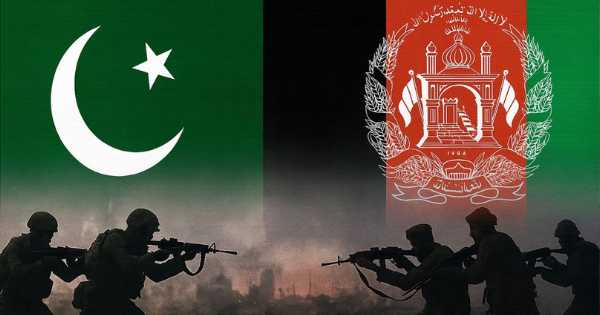
The conflict between Pakistan and Afghanistan has once again drawn attention to a region that has long lived with instability, fear, and uncertainty. For many people living along the border, violence is not a rare event but a recurring reality that shapes everyday life. The recent escalation, marked by deadly airstrikes and rising political tension, shows how fragile the situation remains and how quickly it can spiral into tragedy.
Reports of Pakistani airstrikes killing hundreds of civilians at a rehabilitation centre in Kabul have shocked many across the world. The scale of loss is painful to imagine. Families who were already struggling with addiction, recovery, and survival suddenly became victims of a violent act that has raised serious questions. Pakistan has denied targeting civilians and claims that only military locations were attacked. But images and accounts from the ground suggest that a civilian facility was destroyed. Such incidents deepen mistrust and anger, making any chance of peace more distant.
For Afghanistan, which has already faced decades of war, such attacks bring back memories of suffering that people hoped were behind them. The country has gone through invasions, internal conflict, and economic hardship. The return of the Taliban to power in 2021 had created uncertainty, but many people still hoped for some level of stability. Incidents like this airstrike shake that hope and remind people that peace remains uncertain.
Pakistan, on the other hand, argues that it faces constant threats from groups like Tehreek e Taliban Pakistan. These groups have carried out attacks inside Pakistan, targeting soldiers, civilians, and public places. For the Pakistani government and military, these attacks are seen as a serious challenge to national security. They believe that some of these groups operate from Afghan territory and receive protection there. This belief has shaped Pakistan’s aggressive approach toward Afghanistan.
The Durand Line, which separates the two countries, has always been a sensitive issue. It is not just a border but a line that divides communities, tribes, and families. Many people living in this region do not see it as a real boundary. Movement across this line has been part of life for generations. When tensions rise, it is these ordinary people who suffer the most. Border clashes, restrictions, and military actions disrupt daily life and create fear.
The recent escalation did not happen suddenly. For more than a year, tensions have been building. Pakistan has carried out operations against what it calls militant hideouts, while Afghanistan has accused Pakistan of violating its sovereignty. Each side blames the other, and trust continues to weaken. When trust disappears, even small incidents can turn into major confrontations.
India’s reaction to the latest developments adds another layer to the situation. India strongly condemned the airstrikes and called for an international inquiry. It described the attack as a cowardly act and rejected Pakistan’s explanation. India’s statement reflects its long standing concerns about Pakistan’s actions in the region. India has often accused Pakistan of supporting cross border terrorism, and this incident has reinforced its position.
India’s relationship with Afghanistan has grown in recent years. Even after the Taliban returned to power, India has maintained contact and provided humanitarian aid. This has not gone unnoticed by Pakistan. Islamabad sees closer ties between India and Afghanistan as a threat. It fears losing influence in a country where it once had strong control. This concern shapes Pakistan’s political and military decisions.
The accusation that Afghanistan is becoming an Indian colony may sound extreme, but it shows the level of suspicion and rivalry in the region. For Pakistan, any increase in Indian presence near its western border creates anxiety. For Afghanistan, building relations with different countries is a way to reduce dependence and gain support. These competing interests make the situation more complicated.
Global events also play a role in how this conflict unfolds. The ongoing war involving major powers has shifted international attention away from South Asia. When the world focuses on other crises, smaller conflicts often receive less scrutiny. This can create a sense of freedom for countries to act without fear of strong international reaction. Pakistan’s recent actions may be influenced by this situation.
The response from powerful countries has also been mixed. Statements supporting Pakistan’s right to defend itself can be interpreted in different ways. While every country has the right to protect its citizens, such support can also be seen as encouragement for aggressive actions. This creates a difficult balance where security concerns and humanitarian issues collide.
For ordinary people in Afghanistan, the consequences are immediate and severe. Loss of life, destruction of homes, and fear of future attacks create a sense of helplessness. Many families are already dealing with poverty and lack of basic services. Violence adds another burden to lives that are already difficult. Children grow up in an environment where safety is never guaranteed.
In Pakistan, the fear of militant attacks also affects daily life. People worry about security in public places, schools, and places of worship. The memory of past attacks remains strong. This fear drives public support for strong action against militant groups. But when such actions lead to civilian casualties in another country, it raises ethical and political questions.
The situation highlights a larger issue about how countries deal with threats. Military action may provide a sense of control or immediate response, but it often leads to unintended consequences. Civilian casualties create anger and resentment. They can also lead to more conflict, as affected communities seek justice or revenge. This cycle of violence is difficult to break.
Diplomacy offers an alternative path, but it requires patience and trust. Both Pakistan and Afghanistan need to engage in dialogue to address their concerns. This includes sharing intelligence, controlling borders, and finding ways to prevent militant groups from operating freely. Such steps are not easy, especially when trust is low, but they are necessary for long term peace.
India’s role in this situation is also important. As a regional power, India has the ability to influence international opinion and build support for accountability. Calling for an inquiry into the airstrikes is one way to push for transparency. India can also work with other countries to ensure that humanitarian concerns are not ignored.
At the same time, India must be careful in how it approaches the situation. Strong statements may reflect genuine concern, but they can also increase tensions if not handled carefully. The goal should be to promote peace and stability, not to deepen divisions. Building partnerships with other countries and international organizations can help create a balanced approach.
The people of the region deserve a future where they are not constantly living under the threat of violence. This requires effort from all sides. Governments must prioritize human life and avoid actions that harm civilians. International organizations must step in to provide aid and monitor the situation. The global community must pay attention and not allow such incidents to fade into silence.
Education, economic development, and social stability are also important in reducing conflict. When people have opportunities and hope for a better future, they are less likely to be drawn into violence. Investing in these areas can create long term change. It may not provide immediate results, but it builds a foundation for peace.
Media also plays a role in shaping public understanding. Accurate reporting and responsible coverage can highlight the human impact of conflict. It can also hold governments accountable. When stories of suffering are told with honesty and compassion, they remind the world that behind every statistic are real lives.
The recent events between Pakistan and Afghanistan serve as a reminder that unresolved issues can quickly turn into crises. Borders, politics, and security concerns are important, but they should not overshadow the value of human life. Every action taken by a government has consequences, and those consequences are often felt by the most vulnerable.
As the situation continues to evolve, there is a need for calm and thoughtful decision making. Emotional reactions and aggressive responses may satisfy immediate demands, but they rarely lead to lasting solutions. Dialogue, cooperation, and respect for human rights offer a better path.
India’s call for international attention and inquiry reflects a growing concern about accountability in global conflicts. It is not enough to condemn actions after they occur. There must be systems in place to prevent such incidents and to ensure that those responsible are held accountable. This requires cooperation between countries and strong international institutions.
The story of this conflict is not just about two countries. It is about a region that has faced repeated cycles of violence and is still searching for stability. It is about people who continue to hope for peace even when faced with hardship. It is about choices made by leaders and the impact of those choices on ordinary lives.
As the world watches, the actions taken in the coming days and months will shape the future of this region. There is an opportunity to step back from the path of conflict and move toward understanding. It will not be easy, and it will require courage from all sides. But the cost of continuing on the current path is far greater.
The suffering caused by conflict does not end when the fighting stops. It leaves lasting scars on individuals and communities. Rebuilding lives takes time, resources, and support. Preventing such suffering should be a priority for every nation.
In moments like this, it becomes clear that peace is not just the absence of war. It is the presence of justice, security, and dignity for all people. Achieving this requires more than words. It requires action, commitment, and a willingness to see the humanity in others.
The events along the Pakistan Afghanistan border are a call for reflection and responsibility. They remind us that decisions made at the highest levels can have devastating effects on those who have little control over their circumstances. They also remind us that change is possible when there is a genuine effort to seek peace.
The path forward will depend on how leaders respond to this crisis. Will they choose escalation or dialogue. Will they prioritize power or people. These choices will determine not only the future of their own countries but also the stability of the entire region.
For now, the voices of those affected must not be forgotten. Their stories, their pain, and their hopes should guide the response to this conflict. Only then can there be a chance for a future where such tragedies no longer occur.