
By Satyabrat Borah
The shifting sands of India’s strategic relationship with China tell a story that is far more complex and perhaps more troubling than the polished speeches delivered at global summits would suggest. For years, the world was sold a vision of India as the ultimate democratic counterweight to China, a rising titan ready to reclaim its historical place as a peer competitor in the heart of Asia. This wasn’t just a dream for the Indian middle class; it was a geopolitical necessity for a West increasingly wary of Beijing’s shadow. But as we look at the reality on the ground today, that vision feels less like a roadmap and more like a fading memory. What we are seeing now is a quiet, almost resigned pivot toward accommodation. The fire of competition hasn’t been extinguished by a single grand defeat, but rather by the slow, grinding weight of economic reality and a decade of policy choices that favored the immediate optics of power over the difficult, unglamorous work of building it from the floor up.
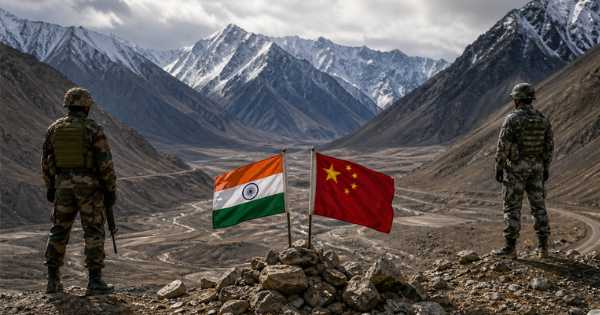
When Prime Minister Narendra Modi and Xi Jinping met in 2024 to signal a normalization of ties, the news was greeted with a sense of relief in some diplomatic circles. After the brutal clashes in the Galwan Valley in 2020, the two nuclear-armed neighbors had been locked in a cold, high-altitude standoff that drained resources and kept the threat of war constantly hovering in the background. But this return to a tactical calm feels fragile because it is built on a foundation of silence. It is a peace bought by ignoring the very causes of the friction. While New Delhi talks about a return to the status quo, Beijing continues to assert its presence along the border through the steady, bureaucratic aggression of renaming villages and landmarks in territories India calls its own. These aren’t just names on a map; they are markers of intent. By allowing these actions to pass with only the most perfunctory of diplomatic protests, India is signaling a new kind of tolerance. The priority has shifted from defending every inch of sovereign dignity to ensuring that nothing disrupts the economic engine that remains so deeply reliant on Chinese fuel.
This shift is most visible in the way the domestic conversation is managed. There is a palpable fear within the halls of power that the truth of the border situation could derail the delicate diplomatic reset currently underway. Take the curious case of the cinematic treatment of the Galwan clash. A film intended to honor the sacrifice of the twenty Indian soldiers who died in that freezing valley found itself caught in the gears of government sensitivity. Reports indicate that the project, starring one of the country’s biggest icons, Salman Khan, was subjected to intense scrutiny and eventually forced into a massive overhaul.
More than forty percent of the footage was supposedly scrapped and reshot to turn a historical tragedy into a fictionalized, sanitized tale. This is not just about movie business; it is about the state deciding which facts the public is allowed to digest. When a government feels the need to rewrite the recent past to protect its current diplomatic standing, it reveals a profound lack of confidence in its own strategic position.
The economic numbers provide a cold, hard explanation for this timidity. We have lived through a decade of slogans like Self-Reliant India and calls to decouple from the Chinese supply chain. These were popular on the campaign trail and made for stirring television, but the actual ledgers tell a different tale. Trade between the two nations has not shrunk; it has exploded. In 2025, the bilateral trade volume climbed to over $155 billion, and the trade deficit reached a staggering $99 billion. This is not just a gap; it is a structural dependency. The Indian economy is not pulling away from China; it is becoming more tightly woven into its fabric every single day. Recent shifts in policy, such as the easing of investment norms and the welcoming back of Chinese technicians, are a quiet admission of this reality. The government has realized that its own industrial ambitions are stuck in the mud without the very expertise and capital it once tried to banish.
This dependency goes right to the heart of India’s future. Think about the sectors the country is pinning its hopes on. The pharmaceutical industry, often called the pharmacy of the world, relies on Chinese active ingredients to make the generic drugs that fuel India’s exports. The solar revolution, which is supposed to lead the country into a green future, is built almost entirely on Chinese-made cells and modules. Even the push for electric vehicles is stuck at the starting line without Chinese battery technology and the minerals that Beijing has spent decades securing. By failing to build a local manufacturing base for these critical components, India has effectively handed the keys to its energy and healthcare security to its primary rival. This creates a situation where any move toward a truly independent or aggressive foreign policy can be instantly neutralized by the mere threat of a supply chain disruption.
The failure to turn the manufacturing sector into a global powerhouse is perhaps the greatest missed opportunity of the last decade. India’s share of global manufacturing has hovered around three percent for years, while China commands nearly a third of the world’s factory output. The government’s flagship incentive programs have certainly brought in investment, but look closer and you see that most of it is focused on low-end assembly.
We see millions of iPhones being put together in Indian factories, which looks great in a press release, but those factories are still importing the high-value components from China. It is a circular trap. Every time India exports a finished high-tech product, it often has to import more from China to make it possible. Instead of replacing the Chinese factory, India is becoming its final assembly line, often using taxpayer subsidies to pad the margins of these operations. This is not the behavior of a peer competitor; it is the behavior of a secondary player in a system designed by someone else.
India’s focus on the low-value end of the chain is a path toward long-term stagnation. While Beijing pours billions into artificial intelligence, advanced semiconductors, and quantum computing, India remains a consumer and an assembler of that innovation. The indigenous base required to compete on a technological level simply hasn’t materialized. This creates a disconnect between the official narrative of a rising global power and the reality of a nation that is increasingly tethered to the very hegemony it claims to oppose. Other countries in the Indo-Pacific are watching this very closely. They once looked to New Delhi as a reliable partner that could help balance out Beijing’s weight, but as they see India making concessions and deepening its economic ties with China, they are forced to recalibrate their own strategies. If the supposed balancer is herself being pulled into the orbit of the hegemon, the regional balance of power shifts irrevocably.
It is easy to blame outside forces for this turn of events. The unpredictable nature of global politics and the shifting priorities of various administrations in Washington have certainly made the environment more challenging. But the truth is that India’s drift toward a subordinate position is largely a result of internal weaknesses. For years, domestic political optics have been given priority over the slow, difficult work of state-building. It is far easier to win an election with a catchy slogan about self-reliance than it is to fix the underlying issues in education, infrastructure, and bureaucracy that actually make a country self-reliant. When national interest is defined by the immediate political needs of the moment rather than a calculated, multi-generational strategy, the result is a slow and steady decline.
The exceptionalism that defined Indian foreign policy after independence is being replaced by a much more transactional and subservient reality. For a nation with such vast potential and such grand ambitions, this is a profound strategic miscalculation. The window to establish India as a distinct, competitive global power is closing. In its place is a country that manages its own decline while trying to maintain a facade of strength for the benefit of a domestic audience. The hard truth is that being a great power requires more than just a large population and a fast-growing GDP; it requires an industrial and technological independence that India has simply failed to build. We have reached a point where the choice between being a leader or a follower has effectively been made, not through a single decision, but through a thousand small surrenders to the easy path of dependency.