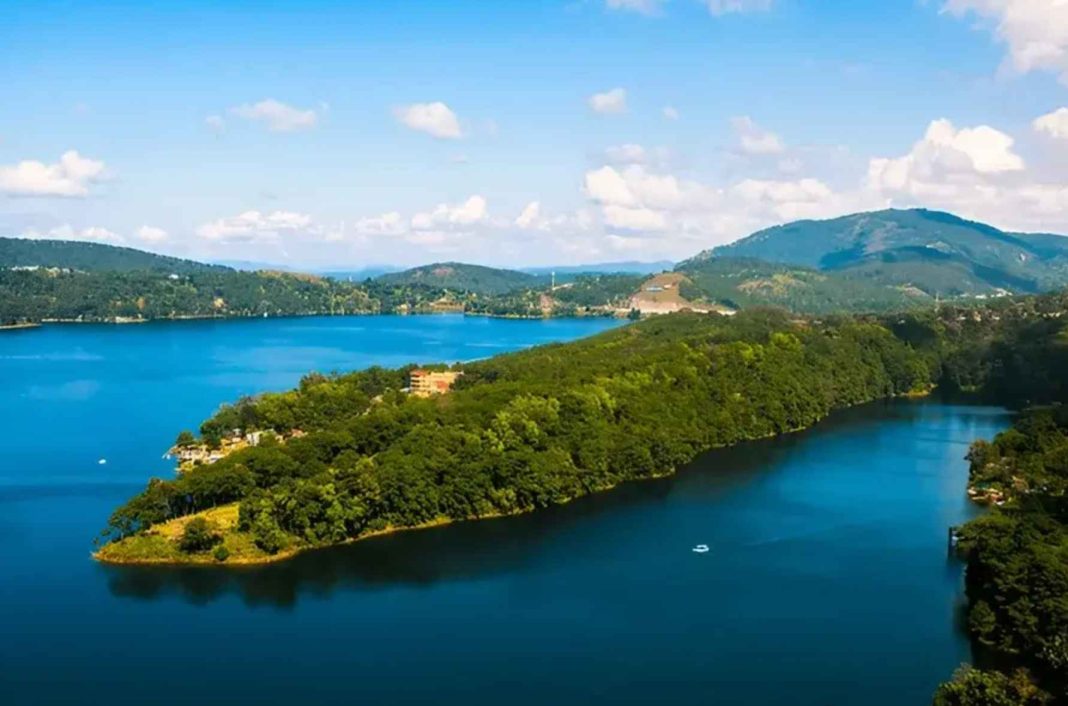

Shillong, March 31: The state government has assured of ecological protection while refuting allegations of “adverse impact” of the upcoming Taj Umiam Resort & Spa at Umiam.
In a statement, the Tourism department termed “unfounded” and “misleading” the reports on social media claiming that the upcoming facility would harm Umiam Lake and Lumpondeng Island in the lake.
“The concerns suggesting that the project is environmentally unsustainable or would adversely impact the ecology of Umiam Lake and particularly Lumpondeng Island are misinformed and misleading,” said the statement issued by the Commissioner & Secretary of Tourism on Tuesday.
The project covers 66 acres — 36.10 acres of Lumpondeng Island and 29.64 acres of the existing Orchid Lake Resort.
The project follows “a carefully considered planning process specifically aimed at promoting high-value, low-impact tourism while ensuring absolute ecological protection”, according to the statement.
Umiam Hotels Pvt Ltd, the approved SPV, has obtained Consent to Establish and signed an MoU with IHCL to operate the property as Taj Umiam Resort & Spa.
The department noted IHCL’s sustainability framework, including participation in the EarthCheck Certified Program since 2008 and the Taj Madikeri Resort & Spa, developed in a 180-acre rainforest with minimal land use, as a benchmark.
“All construction and operational activities shall be undertaken strictly in accordance with IHCL’s Taj brand specifications, which mandate rigorous compliance with design, safety, quality and sustainability standards.”
It added that the project will comply with the Forest (Conservation) Amendment Act, 2023, Waterbodies Guidelines, 2023, and Meghalaya State Pollution Control Board norms, with priority to biodiversity conservation, pollution control, waste minimisation, and long-term ecological monitoring.
“The fragility of the local micro-ecosystem, including any potential impacts on avian and aquatic life, shall be accorded the highest priority through rigorous measures for biodiversity conservation, pollution control, waste minimisation, and long-term ecological monitoring, thereby ensuring that the development remains environmentally responsible and legally compliant.”