
Kolkata, May 7: Barely 48 hours after the West Bengal assembly elections delivered a verdict for a regime change, the killing of senior BJP leader Suvendu Adhikari’s close aide has pushed the state into a politically combustible phase, where post-poll violence threatens to overshadow the democratic transition.
What began as sporadic incidents of clashes after the BJP’s historic victory has now rapidly acquired the contours of a larger confrontation marked by fear, revenge narratives and a battle for territorial dominance across politically sensitive districts.
For the BJP, preparing to form its first government in Bengal, the murder is both a challenge and a political opportunity.
The challenge lies in preventing retaliatory violence by an emotionally charged cadre base. The opportunity lies in reinforcing the saffron camp’s long-standing allegation that Bengal’s political culture under the TMC rule was sustained through intimidation, targeted attacks and entrenched local power networks.
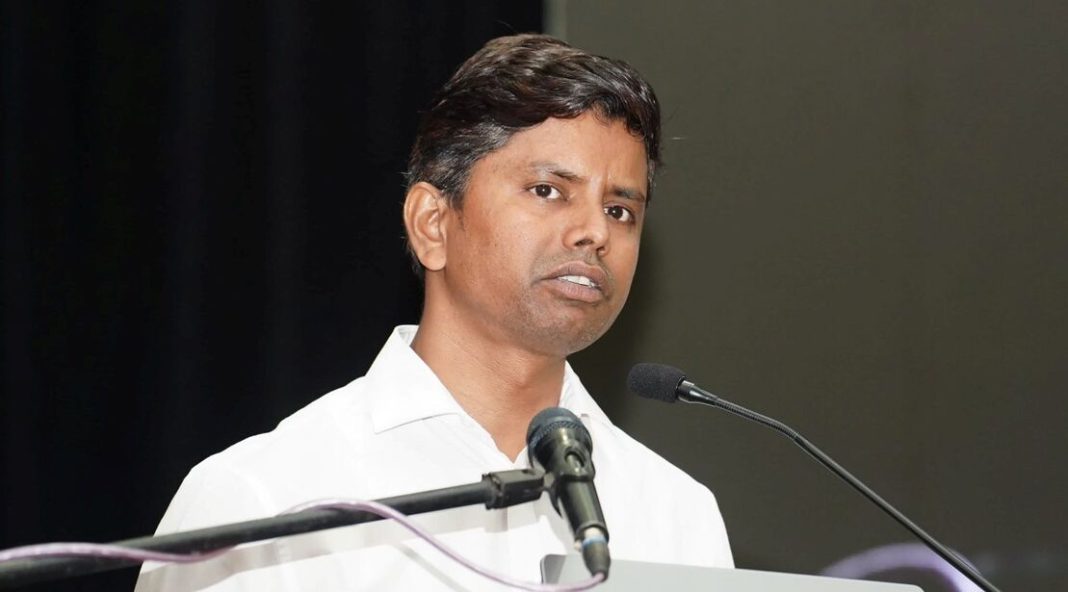
Calling the killing a “pre-planned murder”, Adhikari alleged that his close aide Chandranath Rath had been tracked for days before being shot dead in Madhyamgram.
“This is heart-wrenching. They followed him and executed him,” Adhikari reportedly told party workers after reaching the hospital late on Wednesday night, while simultaneously appealing to supporters not to “take the law into their own hands”.
That appeal itself reflected the scale of concern within the BJP leadership.
Within hours of the killing, anger spread rapidly through the party’s organisational network in districts, particularly in North 24 Parganas and Purba Medinipur, where Adhikari commands considerable influence.
Senior BJP leaders privately admitted fears that the murder could trigger spontaneous retaliation if not politically contained.
“This is not an isolated murder. This is political terrorism,” a BJP leader said, accusing the “old ecosystem” of trying to create fear before the new government assumes office.
Rath was not a peripheral worker but someone deeply involved in the BJP’s election machinery and closely associated with Adhikari, the party’s principal strategist in Bengal and its most combative anti-TMC face.
An attack on someone from his inner circle instantly raises the political stakes.
Political analysts said Bengal’s post-election violence has historically followed a recognisable pattern– isolated attacks escalating into cycles of reprisals, territorial assertion and political signalling.
“This is the most sensitive phase in Bengal politics – the period between the fall of one regime and the consolidation of another. Every violent incident during this phase acquires symbolic value,” political analyst Subhomoy Moitra said.
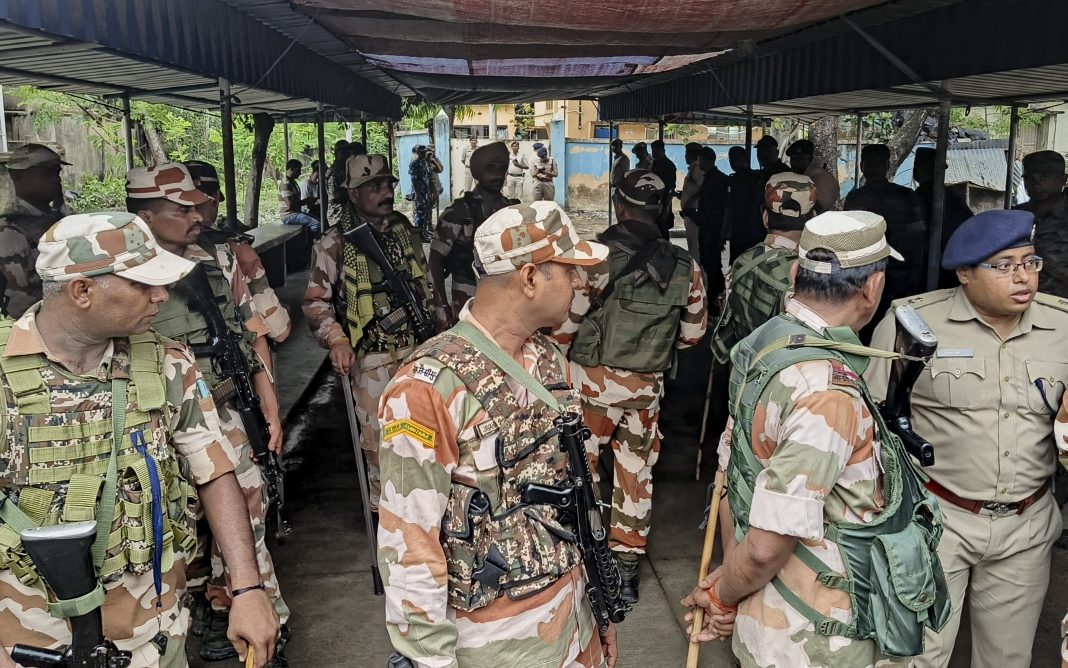
Reports of attacks on party offices, vandalism, intimidation and clashes have surfaced from several districts since the declaration of results. The killing in Madhyamgram is likely to intensify insecurity among grassroots workers and deepen polarisation in districts such as North 24 Parganas, Nadia, Hooghly and Purba Medinipur, where political loyalties have shifted sharply in recent years.
“The danger is that violence becomes self-sustaining. Every attack produces another justification for retaliation,” another analyst said.
The BJP is already seeking to project the incident not merely as a criminal act but as evidence that sections of the outgoing ruling ecosystem are unwilling to accept the transfer of power.
The killing may also strengthen voices within the BJP advocating swift police reshuffles, tighter security measures and aggressive crackdowns in politically volatile belts immediately after the swearing-in ceremony.
“The message from the BJP is clear; they want to portray this as the last resistance of a collapsing order,” a political observer remarked.
At the same time, the BJP leadership faces a delicate balancing act.
While publicly adopting a muscular posture, the party is aware that uncontrolled retaliation by local cadre networks could deepen instability before the new administration formally takes charge.
For the TMC, the episode presents a dangerous political trap.
The party condemned the killing and demanded a court-monitored CBI probe, while simultaneously alleging that several of its workers were attacked in post-poll clashes.
However, the optics remain politically damaging because the BJP has successfully consolidated a narrative of victimhood around the murder.
This is particularly problematic for the TMC at a moment when it is already battling perceptions of organisational erosion following its electoral defeat.
The incident has also sharpened the personal political battle between Adhikari and the TMC leadership.
Over the years, Adhikari has fashioned himself as the BJP’s principal street fighter in Bengal politics, building his image through relentless confrontation with the TMC establishment.
The killing of a close aide is likely to further harden that posture and intensify the BJP’s political messaging in the days ahead.
In a deeply polarised state where elections often redraw local power equations overnight, political murders rarely remain isolated crimes. They become emotional triggers, organisational signals and rallying points for mobilisation. (PTI)