
New Delhi, Nov 6: Expressing serious concern over the recurring air pollution crisis in Delhi-NCR, the Supreme Court on Friday termed vehicular emissions a major contributor to the deteriorating air quality and asked authorities why the air quality index continues to remain alarming despite several regulatory measures.
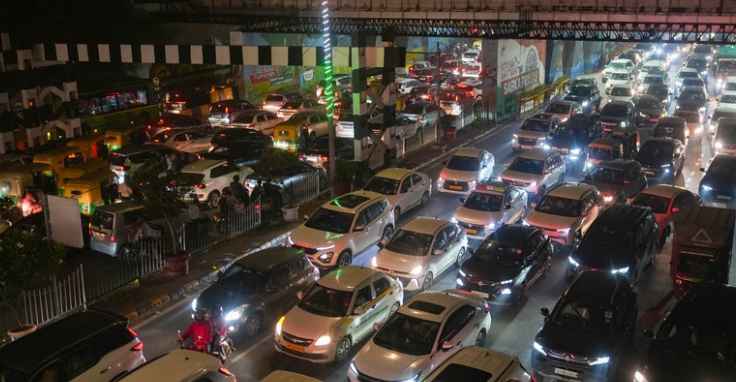
Hearing a suo motu case examining the regulatory framework governing air pollution, a bench comprising Chief Justice of India Surya Kant and Justices Joymalya Bagchi and V Mohana also expressed concern over “bumper-to-bumper” traffic in Delhi-NCR.
Observing that the national capital continues to witness bumper-to-bumper traffic, the CJI questioned the effectiveness of existing measures to control vehicular pollution.
“Look at the roads in Delhi. Look at the roads connecting Delhi with the NCR region, the Ghaziabad side, Greater Noida side, Gurgaon side and Faridabad side. Take a look at any road and the kind of vehicles moving on them. That is the major problem,” the bench said.
The bench highlighted the large number of vehicles plying on roads connecting Delhi with neighbouring areas, including Ghaziabad, Greater Noida, Gurugram and Faridabad.
“Despite all these measures, why is pollution recurring? Is it only because of the movement of vehicles, irrespective of the quality of fuel being used, whether petrol or diesel,” the CJI asked, adding that despite all the measures, the AQI is touching 400.
On being told that Delhi has the maximum number of vehicles, the bench said the national capital is “virtually free for all”.
“A vehicle registered in Haryana, Uttar Pradesh, Bihar, Madhya Pradesh or anywhere else can enter Delhi. You cannot monitor merely at the point of entry what kind of fuel it uses, how much pollution it generates or the overall condition of the vehicle.
“There is no such mechanism. Even if a vehicle enters Delhi for just two hours and then leaves, those two hours are enough to cause damage,” the CJI said.
The issue of stubble burning also came up during the hearing, with the bench emphasising that farmers needed to be encouraged through economic incentives and practical alternatives rather than relying solely on regulatory restrictions.
“We keep talking, sometimes making statements, sometimes making suggestions. Maybe eventually, in due course of time, things will improve. Ultimately, a kind of education among farmers is required.
“They will start understanding the economics of it. Once they understand that it is incentivised and beneficial for them, they will retain the stubble and not burn it,” the CJI said.
The Centre informed the bench that according to the Decision Support System for Air Quality Management prepared by the Ministry of Earth Sciences, stubble burning accounted for around 14 per cent of Delhi’s pollution contribution on November 5.
The CJI suggested developing a mechanism for purchasing agricultural residue from farmers at a predetermined rate so that they could earn from the stubble instead of burning it.
The bench said the poor people are the real sufferers, as they are on the roads, and moreover, the festival time is the only period when they earn a livelihood.
Roadside vendors, workers and other daily-wage earners travelled on bicycles or small vehicles to reach their workplaces and remained exposed to polluted air throughout the day, the bench said, adding, “They are the sufferers.”
After hearing Additional Solicitor General Aishwarya Bhati and senior advocate Aprajita Singh, who is assisting the bench as an amicus curiae, and other lawyers, the bench said that it will examine the status report and the chart and may issue some directions.
“Will call for compliance reports on the next date. We are proposing to list the matter immediately after the break… Meanwhile, we will pass an order seeking different kinds of reports and updates,” the bench said.
During the hearing, the Centre informed the bench that restrictions on the entry of vehicles below BS-VI standards were being implemented, while pollution under control certificates (PUCC) were being linked to the location where vehicle checks were conducted.
The additional solicitor general outlined the regulatory framework for controlling pollution, identifying five broad categories: industrial emissions, vehicular pollution, construction and demolition dust, road dust and stubble burning.
She said that considerable progress had been made in strengthening public transport infrastructure, developing ring roads and introducing long-term measures such as elevated roads, highways, corridors and peripheral roads.
However, the amicus curiae referred to gaps in the implementation of earlier judicial directions aimed at reducing congestion and emissions at Delhi’s borders. She submitted that commercial vehicles were continuing to remain stationary at border points, resulting in unnecessary idling and additional emissions.
The Centre opposed the submissions, saying that a Multi-Lane Free Flow (MLFF) system had been installed at nine major toll plazas, which account for nearly 90 per cent of traffic across the 126 toll points.
A thick layer of smog hung over the national capital on Friday as the air quality deteriorated sharply and edged closer to the ‘severe’ category, with the overall AQI settling at 391.
Of the 59 monitoring stations across the city, 30 recorded ‘severe’ air quality at 9 am, while the remaining were in the ‘very poor’ category.
Rohini recorded the worst AQI at 475, followed by IIT Delhi at 472, official data showed. (PTI)