
Roads, Anganwadi centres, school buildings prioritised under new Act
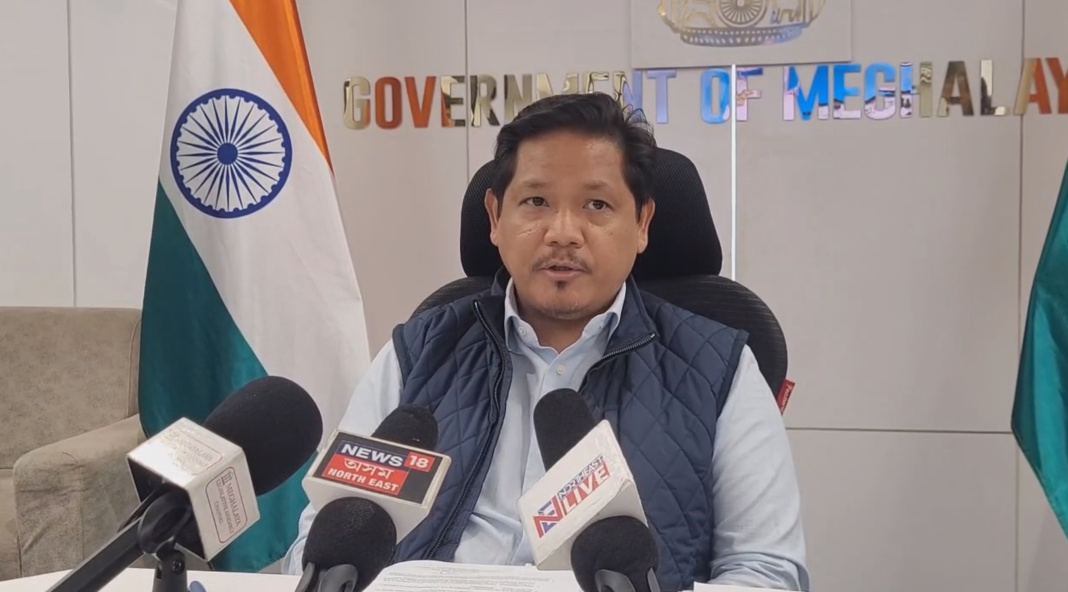
Shillong, June 30: The Centre has allotted Rs 1100 crore to Meghalaya for implementation of the Viksit Bharat-Guarantee for Rozgar and Ajeevika Mission (Gramin) (VB-G RAM G) Act, 2025, for the first nine months, Chief Minister Conrad K Sangma said on Tuesday.
The VB-G RAM G Act, which had replaced the MGNREG Act, took effect from July 1 this year and will run till March 31, 2027 in the current phase.
“For this period of nine months from July to March 31, the normative allotment given to Meghalaya is Rs 1100 crore,” the Chief Minister said.
In the first quarter – from April to June – was the Act was implemented under the old MGNREGS guidelines while implementation of the new Act will start from Wednesday.
“From July 1 till March 31, 2027 this will be implemented by Meghalaya… from tomorrow, the new guidelines and new Act will be applicable,” he said.
The Chief Minister stressed that while the Rs 1100 crore will be shared in a 90:10 ratio between the Centre and State, any spending beyond the sanctioned amount must be fully covered by Meghalaya.
“Suppose we end up spending Rs 1200 crore instead of Rs 1100 crore, the Rs 1100 crore is going to be shared at 90:10 ratio where 90 percent is paid by Centre and 10 percent by State. But when it comes to going beyond the normative allotment, the states will have to bear the full amount of the additional amount that you spend,” he said.
The VB-G Ram G Act enhances the earlier MGNREG Act by raising the minimum guaranteed workdays from 100 to 125 and expanding the list of permissible works from around 240-250 to over 320.
“As you are aware this is the new Act in place of MGNREG Act and this has been enhanced now and provisions like for minimum working days of 100 to increase them to 125,” Sangma said.
Projects such as roads and connectivity, which were not prioritised earlier, are now given priority. Anganwadi centres and school buildings, previously not allowed under MGNREGS, can also be constructed.
“Earlier, Aganwadi centres were not allowed to be built under the MGNREGS but under this new Act, you are allowed to build aganwadi centres also. Similarly, schools were not allowed to be built in the earlier MGNREGS but in the new guidelines, they have increased the number of projects… so now school buildings are allowed,” he said.
The Act also brings in specific livelihood programmes, along with works related to environment, water conservation and forest conservation.
“Different programmes for livelihoods which were not allowed in the beginning. Today specific livelihood programmes can also be taken up. Different programmes related to environment, water conservation, forest conservation – all of these programmes can now be taken up,” Sangma added.