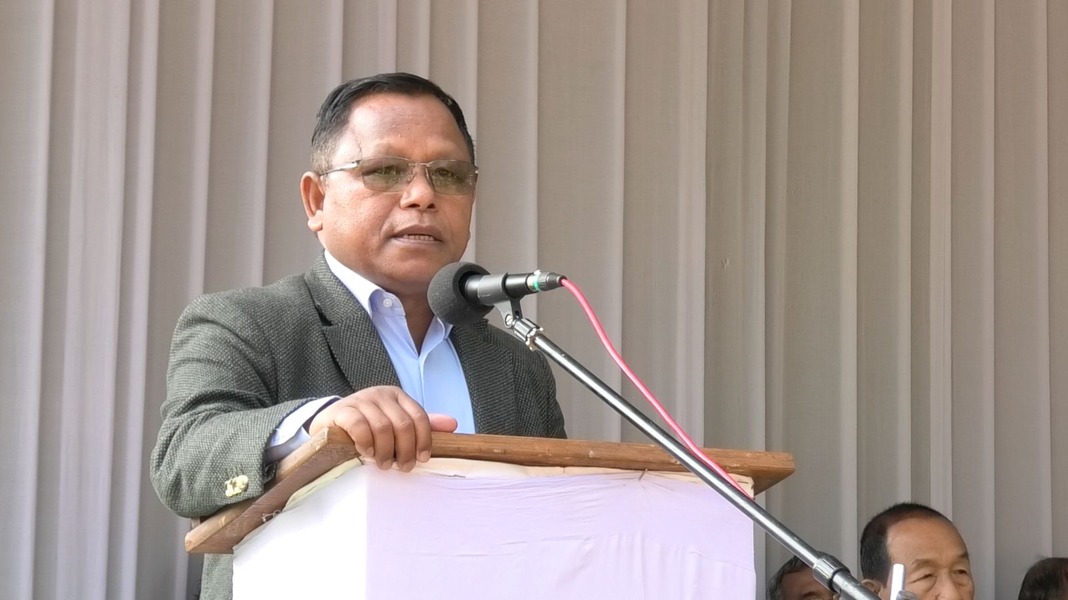

Shillong, July 24: Soil & Water Conservation Minister Marcuise N Marak on Thursday called on people to adopt scientific waste management practices and participate in making the Solid Waste Management Rules, 2026 a success.
The minister was addressing an awareness programme organised by the Department of Urban Affairs through the Office of the Chief Executive Officer, Williamnagar Municipal Board.
“The Solid Waste Management Rules are vital for the well-being of the society and require the active participation of every citizen,” Marak said.
He added that under the leadership of Chief Minister Conrad K. Sangma, the government has been working to translate development into better infrastructure, cleaner towns and improved public services across Meghalaya.

He also spoke of the preparations for the National Games 2027, Smart City initiatives and ongoing efforts to upgrade public spaces.
Urging people to adopt scientific waste management methods, the minister said proper segregation and disposal will not only ease waste processing but also help reduce flooding and protect the environment.
He pointed to steps already underway, including the operationalization of a biomedical waste incinerator, conservation efforts for the Simsang River and forest protection to prevent environmental degradation.Marak called the implementation of the 2026 Rules a necessity rather than an option for the state.
He warned that historic regional dumping sites are already under severe strain and the continued dumping of unprocessed waste on hillsides poses a serious ecological risk to water bodies, forests and river basins.
Protecting the environment and public health, he said, must now guide how waste is handled in every town.
Deputy Commissioner Raksin P Marak also spoke at the programme and appreciated the Williamnagar Municipal Board for taking the lead in promoting a cleaner and more sustainable town.
He noted that rapid urbanization and changing lifestyles have made effective waste management even more critical, as improper disposal can lead to water pollution, blocked drains and the spread of diseases.
East Garo Hills, he said, is endowed with a rich ecological heritage and it is the responsibility of every citizen to safeguard it for future generations.
RN Sangma, ADC and CEO of the Williamnagar Municipal Board, informed that the town generates around 12.5 tonnes of waste each day.
Door-to-door collection is currently functional in 8 of the 10 wards and awareness drives have been extended to the remaining areas.
She stressed that achieving full coverage will require greater cooperation from residents.Under the Solid Waste Management Rules, 2026, she explained, every household and establishment must segregate waste at source into wet, dry, sanitary and special care categories and use the colour-coded bins provided for the purpose.
Wet waste includes kitchen scraps and food leftovers, dry waste covers paper, plastic, glass and metal, sanitary waste includes diapers and pads, while special care waste comprises e-waste, medicines, batteries and chemicals.
People were urged to hand over only segregated waste to authorized collectors and to store garden and construction debris separately.
The programme also underlined the duties of street vendors and event organizers to ensure waste generated during business and large gatherings is collected and disposed of scientifically in coordination with local authorities. Special attention was drawn to bulk waste generators such as apartments, hotels, restaurants, schools, hospitals and markets.
These establishments will be required to register with the urban local body, process wet waste on site, hand over the remaining waste to registered collectors, and submit annual reports by the 30th of June each year.
User fees will be levied in accordance with local byelaws.Officials said the Rules, 2026 lay out a comprehensive framework for segregation at source, scientific treatment and environmentally sound disposal, and place clear responsibility on households, institutions, commercial establishments and bulk generators to ensure the system works.