
By Satyabrat Borah
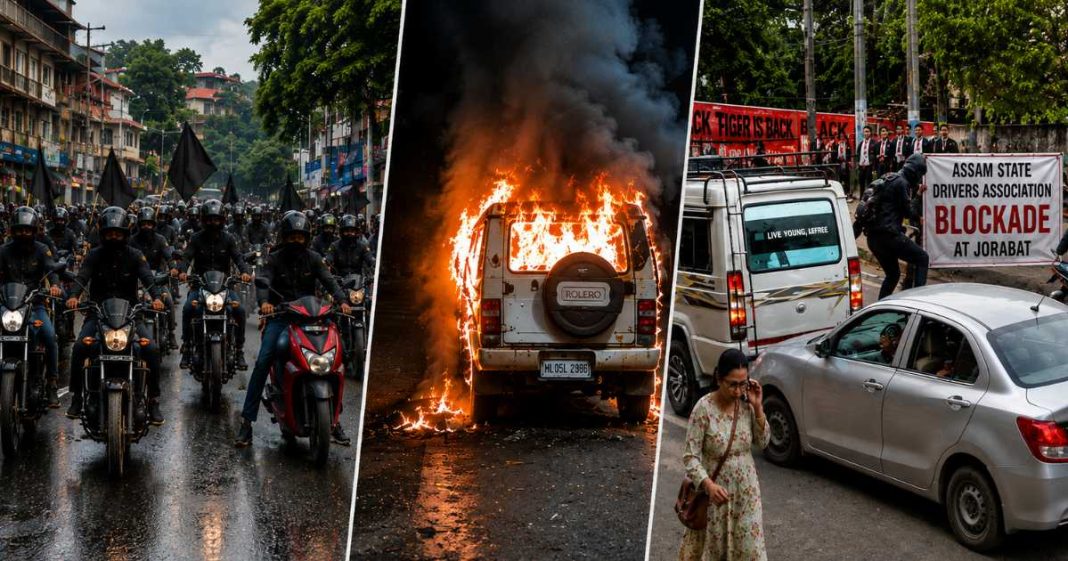
The recent outbreak of violence in Shillong and the subsequent blockade enforced by transporters along the Assam border at Jorabat mark a deeply troubling escalation in a long standing pattern of regional friction. What began as a black flag motorcycle rally organized by the Khasi Students Union quickly descended into widespread vandalism, targeted assaults, and property destruction. Masked participants riding motorcycles with concealed registration plates swept through the streets of the Meghalaya capital, leaving a trail of smashed windshields, burnt property, and injured bystanders. The explicit targeting of vehicles registered in Assam, alongside non local residents, highlights an unsettling strain of xenophobic aggression that periodically disrupts the social fabric of the hill state.
The swift retaliatory action by the Assam State Drivers Association along the crucial Guwahati Shillong highway illustrates how quickly civil unrest in one state can paralyze vital transport arteries connecting the broader region. By halting Meghalaya registered transport, while responsibly allowing medical emergencies through, the drivers sent a strong signal that the repeated targeting of non local transport workers will no longer be tolerated without consequence. This economic chokehold hits at the very lifeline of Meghalaya, which relies heavily on seamless transit through Assam for its daily commerce, food supplies, and tourism influx.
At the heart of the original rally was a long standing demand surrounding the enforcement of travel permits and residence security laws designed to restrict the movement and settlement of non tribal populations. While the protection of indigenous identity and demographic balance remains an important political discourse across the North East, the method chosen by agitators on the ground abandoned all democratic norms. Attacking tourists, thrashing commercial drivers, and vandalizing local heritage symbols like statues of national figures does nothing to advance a political cause. Instead, it breeds hostility, alienates neighboring communities, and severely diminishes public sympathy.
The police response in Meghalaya, culminating in the arrest of top student leaders following raids on their offices, is a step toward restoring judicial credibility. The administration had granted permission for the rally based on formal assurances that order would be maintained, assurances that were shattered within hours. When public gatherings degenerate into intimidation and arson, law enforcement must act decisively to uphold the rule of law. Failing to hold organizers accountable creates a dangerous culture of impunity, encouraging radical factions to hold entire cities hostage whenever their demands are not immediately met.
The immediate casualty of this lawlessness is the local economy, particularly the fragile tourism sector that sustains thousands of families across Meghalaya. Small business owners, homestay operators, taxi drivers, and local vendors rely heavily on visitors traveling up from the plains of Assam and other parts of the country. Images of burning cars and frightened tourists fleeing Shillong trigger massive accommodation cancellations and long term damage to the region’s reputation as a welcoming haven. Calls for economic boycotts from neighboring states serve as a stark reminder that regional safety is directly tied to local prosperity. Intimidating visitors effectively starves the local ecosystem of the revenue needed to support its own communities.
The joint condemnation issued by Meghalaya tour operators and hoteliers highlights a growing internal divide between peaceful citizens striving for economic progress and fringe groups resorting to mob tactics. Ordinary residents understand that a community cannot isolate itself while simultaneously seeking economic growth. Rebuilding trust will require more than formal apologies or temporary suspensions of protests. It demands a sustained, genuine commitment from state leaders, community elders, and student bodies to reject violence as an instrument of political persuasion.
Governments in both Meghalaya and Assam must establish clear, permanent communication protocols to manage border transit security and protect commuters. Ensuring the safety of transport workers and visitors on national highways is a fundamental duty of the state. If citizens cannot travel safely across state borders without fear of physical assault, the vision of an integrated, prosperous North East remains severely compromised. True security for any community comes from fostering mutual respect, robust law enforcement, and constructive dialogue, rather than relying on masked intimidation on public streets.