
Shillong, August 27: When the Khasi Students’ Union’s August 19 rally descended into violence, Meghalaya was suddenly confronting a crisis on several fronts. Within 48 hours, what began as a breakdown of public order in Shillong had spilled across the Assam border, disrupted transport at Jorabat and Khanapara, threatened fuel supplies and rattled a tourism industry central to the state’s economy.
For Chief Minister Conrad K. Sangma, the challenge had shifted from prevention to containment. The violence had already exposed a security gap. The task now was to ensure that it did not develop into a prolonged confrontation with Assam or the influential KSU.
Over the next eight days, Sangma combined arrests and security measures with inter-state coordination and political dialogue. The government pursued those accused of violence while resisting calls to halt the investigation, but simultaneously kept negotiations with the KSU open. The approach did not erase the original administrative failure, but it helped contain its political and economic fallout.
How the crisis escalated
The August 19 rally followed the expiry of a 15-day KSU ultimatum over five demands, with the union insisting that piecemeal concessions would not be enough.
Organisers had reportedly expected around 200 motorcycles. More than 800 eventually joined the procession, overwhelming arrangements as violence, vandalism and assaults broke out.
Sangma later told the Assembly that 31 vehicles were targeted and 18 people injured. The government registered 15 FIRs, constituted a Special Investigation Team and arrested senior KSU functionaries.
The KSU subsequently accepted moral responsibility, apologised and scaled down its next protest, blaming “negative elements” for infiltrating the rally.
But the government stopped short of treating the entire organisation as responsible for the violence. That distinction became central to Sangma’s strategy: pursue the criminal cases while continuing to engage with the political demands behind the agitation.
Seven days from violence to dialogue
August 19: The KSU rally turned violent in Shillong. Vehicles were vandalised and people assaulted. The KSU apologised and accepted moral responsibility. Three senior leaders were arrested late that night.
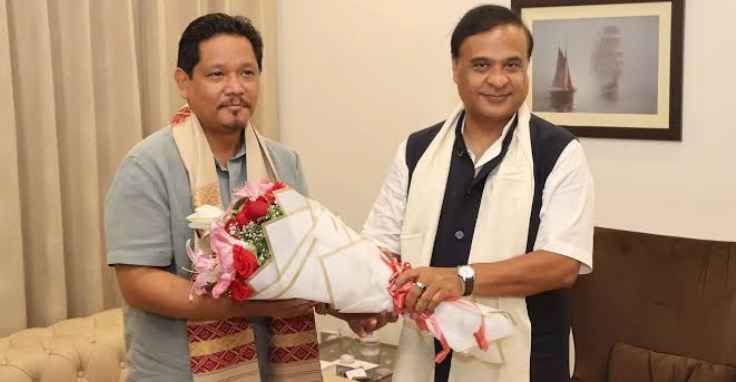
August 20: Assam-based drivers began stopping Meghalaya-bound traffic at Jorabat and Khanapara. Sangma spoke to Assam Chief Minister Himanta Biswa Sarma, and the two governments began coordinating efforts to restore movement.
August 21: Fresh arson and petrol-bomb attacks were reported at government properties, though there were no injuries. Five companies of central forces were approved for deployment. A warning by fuel transporters about suspending supplies triggered panic buying in Shillong.
August 22: Meghalaya Deputy Chief Minister Sniawbhalang Dhar and Assam minister Atul Bora held talks in Guwahati. Meghalaya expressed regret, promised compensation and said more than 3,770 Assam-registered vehicles had been escorted to safety. The states announced helplines, direct police coordination and a joint tourist-transport mechanism.
August 23: Transport associations agreed to allow tourist and commercial vehicles from both states to operate normally under an interim arrangement, easing pressure on transport and essential supplies.
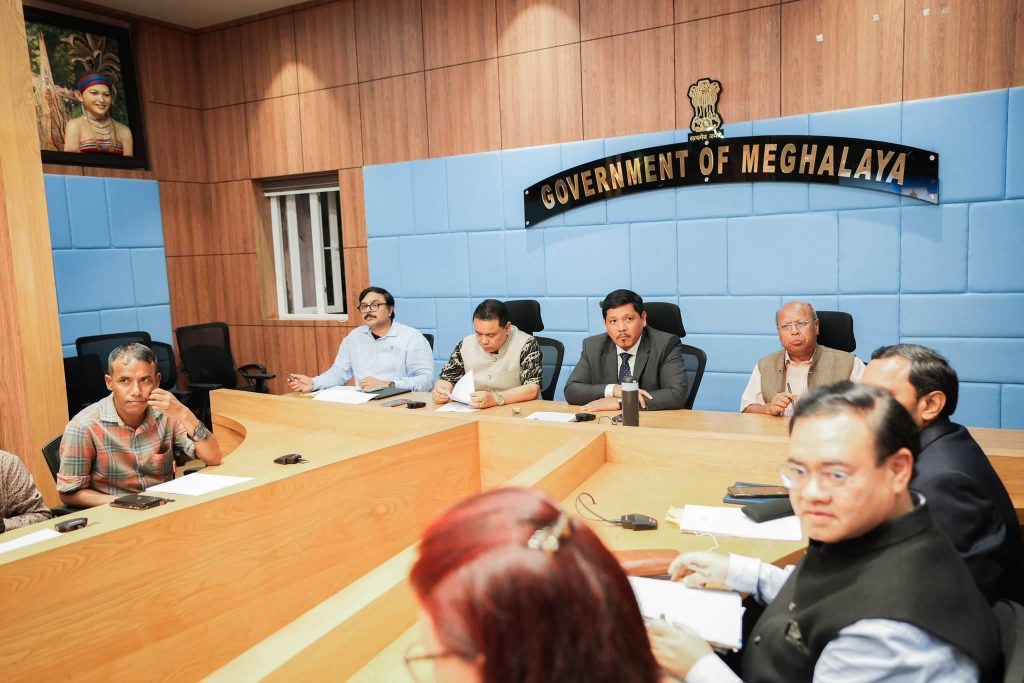
August 24: Sangma addressed the Assembly and formally invited the KSU for talks. A fourth KSU functionary was arrested, signalling that negotiations would not stop the investigation.
August 26: Sangma met KSU representatives. The union temporarily suspended its agitation, saying it was satisfied with the outcome to an extent while promising to monitor implementation of the assurances.
Three crisis, three remedies
Sangma’s response worked because the government treated the turmoil as three interconnected crises requiring different remedies.
The first was a criminal. Arresting senior functionaries demonstrated that allegations of violence would be investigated irrespective of organisational position. But the government avoided a blanket crackdown on the KSU, which could have transformed a law-and-order issue into a larger political confrontation.
The second was the crisis with Assam. Escorts, compensation, medical assistance, helplines and designated police officers provided practical reassurance to drivers and passengers. They also created channels through which officials could verify incidents before rumours triggered fresh blockades.
That mattered because the economic damage was spreading rapidly. Tourism stakeholders reported cancellations of 80–90% in Shillong, Sohra and nearby destinations, affecting hotels, drivers, guides, restaurants, vendors and small businesses.
The third challenge was political.
The KSU wanted the July 31 public hearing on the proposed Shree Cement project cancelled, alleging opponents had been prevented from participating. It also sought stronger implementation of the Meghalaya Residents’ Safety and Security Act, migrant-worker verification, changes in NEIGRIHMS recruitment and greater transparency in government appointments.
Negotiating a conditional truce
Rather than stonewalling, Sangma leveraged the August 26 meeting to translate these volatile demands into actionable, controlled commitments. He deftly agreed to constitute an independent fact-finding committee on the Shree Cement issue, suspending work pending its findings. He further neutralized tensions by promising joint inspections for resident registration, clearer migrant-worker verification protocols, and the abolition of interviews for non-technical Group C posts from January 2027. Crucially, he managed to highlight that his government had already implemented the vast majority of the KSU’s proposed reforms for the state public service commission.
While the resulting settlement remains conditional with KSU leadership stating they are satisfied only “to an extent” it bought the government crucial breathing room. The response after the violence followed two parallel tracks- the criminal investigation continued, while political dialogue remained open. Coordination with Assam helped prevent transport disruptions and public anger from developing into a prolonged inter-state confrontation, while the meeting with the KSU provided a way to suspend the agitation without requiring the government to abandon the cases.
The August 26 meeting did not resolve every dispute between the government and the KSU. It did, however, reduce the immediate risk of further escalation. Sangma’s calibrated mix of executive force and diplomatic restraint successfully defused a localized riot before it could trigger an economic and inter-state catastrophe.