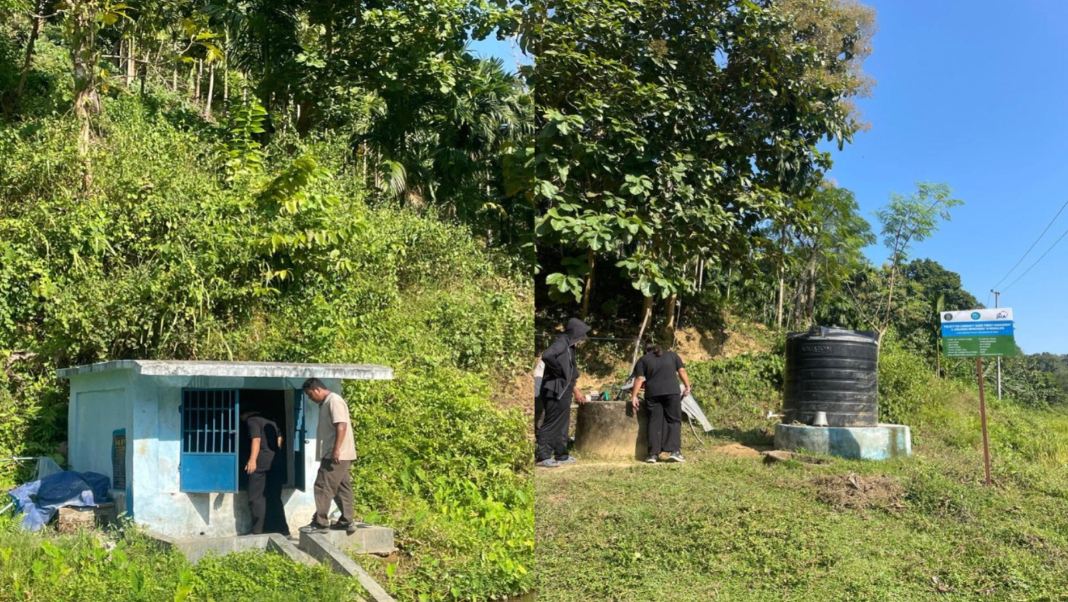

Shillong, Oct 28: Implementation of the Community-Based Forest Management and Livelihoods Improvement in Meghalaya (MegLIFE) project has made significant progress with evaluation teams conducting field inspections and community consultations in South West Garo Hills district.
The teams have assessed initiatives for forest restoration, livelihood development and community participation in Rongsang Abagre and Golmangre in Betasing block, and Torangpara and Ulubaripara under the Zikzak/Ampati area.
The Rs 838.16-crore project funded by the Japan International Cooperation Agency (JICA) and implemented by the Meghalaya Basin Development Authority (MBDA) covers 500 villages across 30 blocks in 12 districts of the state.
The evaluation teams inspected ongoing interventions and held discussions with Village Project Implementation Committees (VPICs) to gather feedback on implementation challenges, resource requirements and priorities for the remaining project period.
The field review focused on assisted natural regeneration (ANR), community plantations, soil and water conservation structures, forest fire management and village-level nurseries.
Teams also assessed community infrastructure and forestry initiatives to examine their role in restoring degraded landscapes, reducing soil erosion and improving natural resource management.
Livelihood interventions, including forest-based enterprises, non-timber forest product harvesting and other income-generation activities, were also reviewed.
These initiatives aim to create economic opportunities for rural households while encouraging communities to protect forests and manage natural resources sustainably.
The evaluation further examined village-level governance, capacity-building programmes, equipment distribution and community infrastructure to assess the effectiveness of community-led implementation and identify areas requiring additional support.
Focus group discussions formed a key part of the mid-term evaluation.
Members of self-help groups (SHGs) shared their experiences of nursery management, livelihood diversification, forest-based enterprises and income-generation activities.
VPIC members discussed operational challenges, resource needs and suggestions for improving project implementation.
The consultations are intended to ensure that local experiences and community priorities inform decisions during the remaining years of the project.
Participatory Land Use Planning (PLUP) is central to MegLIFE’s approach, encouraging communities to take part in decisions on land use, forest management and natural resource
The project seeks to address forest degradation, soil erosion and river sedimentation, which have affected forest productivity and rural livelihoods.
It aims to link environmental restoration with economic opportunities and stronger community participation in natural resource management.