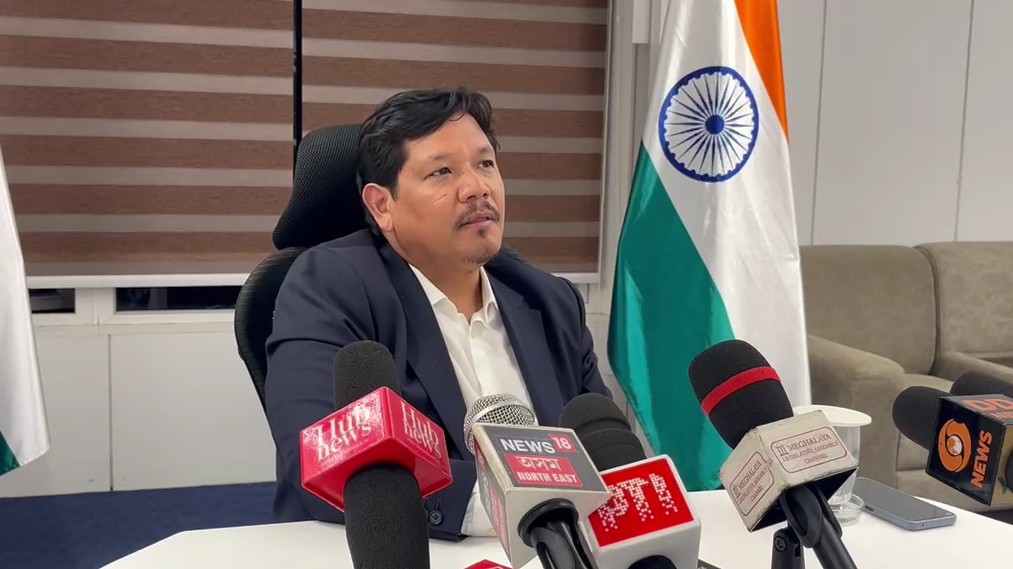
Shillong, Nov 19: The state government stands by the deficit teachers agitating under the banner of Khasi Jaintia Deficit Teachers’ Association (KJDSTA), Chief Minister Conrad K Sangma said on Thursday while advocating for such demands should also consider financial implications.
“I’m very much with the teachers, I understand their problems,” he added.
Explaining that there is deadlock on the issue, he said, “We are engaging and we want to solve, we want to find a way forward,” Sangma said.
He said the government has a record of engaging with teachers and taking tough decisions.
“This government has been one of the few governments that has engaged with all teachers at all levels,” he said.
“The ad hoc teachers we have brought them under SPF, which is again a very tough decision but it structures things for us.”
Sangma explained that deficit schools are private schools run by missions, churches or communities, where teachers are appointed by the Managing Committee but paid by the government.
“They are private school teachers but their salary is paid by the state government. Hence they are not really, technically fully government teachers,” he said.
He said the system, which began in British times, has created deep inequalities.
In deficit colleges, some teachers earn Rs 4.5 lakh a month — more than the Governor — while in the same institution, non-deficit teachers teaching the same subject earn as little as Rs 5,000 to Rs 20,000, he said.
“There are about 10 of them who get salary above Rs 4 lakh, that’s like about Rs 50 lakh per year,” he said.
“This has happened because of the system that has been created. It’s nobody’s fault,” he said.
Sangma said the government cannot indefinitely create new deficit posts when it also has to support government LP schools and other institutions.
“We can’t create more posts because we still have challenges, we have to help our own state government schools,” he said.
He warned that a decision for one group triggers demands from others.
“Once we start taking decisions related to one category, it has a domino effect on other categories,” he said. “It has a domino effect on other employees and other groups of employees or organisations that the government supports, like PSUs.”
“Every decision has got a multiplier effect and it opens up a lot of areas of complications for us and obviously, it has huge financial ramification,” he said.
Sangma said the government is engaging with the teachers to find a meeting point.
“We are trying to find out what is the best way to come to a meeting point,” he said. “It’s not as simple as it looks. There are many factors and stakeholders who play a role in this and we try to balance all of it out.”