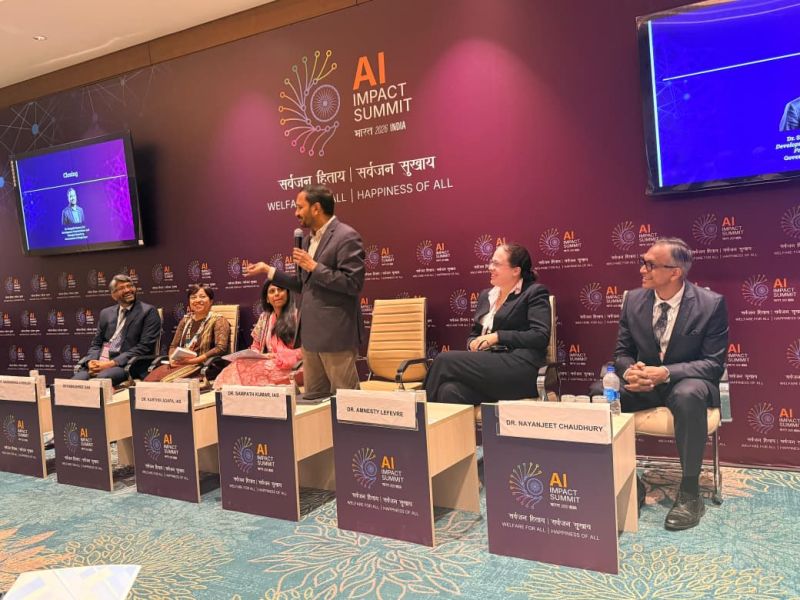

Shillong, Feb 20: Meghalaya has placed frontline health workers at the heart of India’s artificial intelligence ambitions, with the State Health Systems Resource Centre Meghalaya presenting its “people-first” digital strategy at the AI Impact Summit 2026 in New Delhi.
Representing the state on a national platform, State Health Systems Resource Centre (SHSRC) Meghalaya joined global partners including the Gates Foundation India, Johns Hopkins Bloomberg School of Public Health, Evidence for Digital Transformation (EDiT), University of Cape Town, and the World Health Organization South-East Asia to make a strong case: digital competency — not just technology — must form the foundation of any AI-driven health reform.
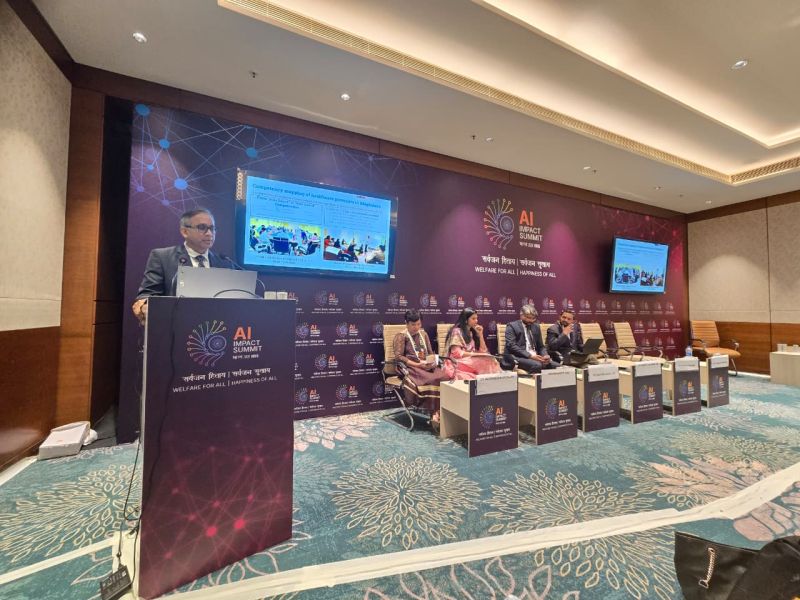
Opening the session, Valerie Laloo, State Nodal Officer, SHSRC, emphasised that the real strength of a health system lies not in advanced AI tools, but in frontline workers who are confident, competent, and ethically grounded in their use.
For Meghalaya, this philosophy has translated into a grassroots-focused approach. Rather than treating frontline workers as mere implementers of centrally designed programmes, the state is working to transform them into empowered problem-solvers who use data to make timely, life-saving decisions at the local level.
Sampath Kumar, Principal Secretary, Health and Family Welfare, highlighted how building state capability is central to this transformation. By shifting the identity of health workers and strengthening their ability to interpret and apply data, Meghalaya is positioning itself as a model for contextual, state-led digital health innovation.
A key insight shared by the Meghalaya team was the importance of designing digital tools around the competencies and real-life workflows of health providers.
Shyamashree Das, Senior Programme Officer, Gates India, stressed that AI investments often fall short when tools are deployed without aligning them to the day-to-day realities of health workers. Meghalaya’s approach focuses on ensuring that technology enhances — rather than complicates — clinical practice.
Amnesty LeFevre, Associate Professor at University of Cape Town, further clarified that digital literacy alone is not enough. While literacy means understanding technology, digital competency requires the practical application of knowledge, skills, and professional attitudes in real-world clinical settings — an area where Meghalaya has concentrated its efforts.
Dr Nayanjeet Chaudhury of SHSRC explained how Meghalaya is shifting from “rule-based” to “role-based” competencies. By simulating patient workflows, the state identifies exactly which digital skills are essential for providers in their specific roles, making training more targeted and effective.
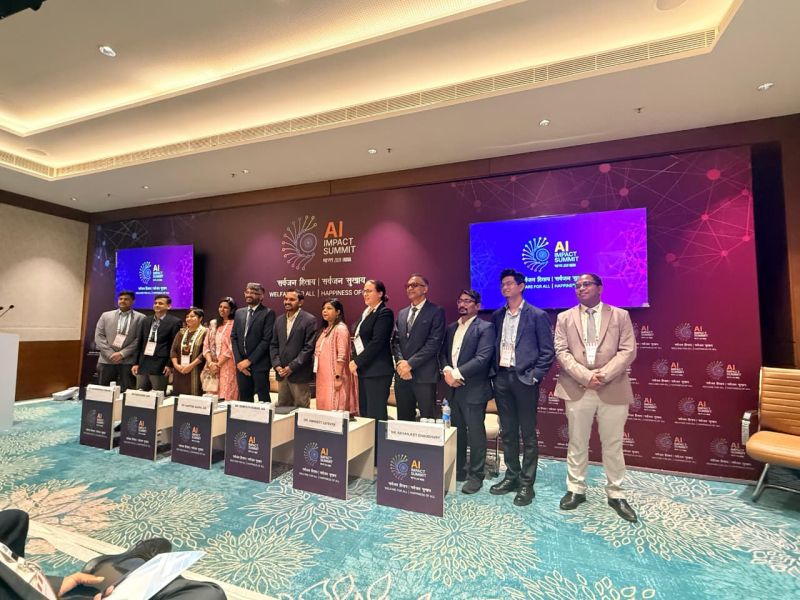
At the village health council level, Dr Marbabiang Syiemlieh spoke about embedding digital competency within Village Health Councils. Strengthening digital capacity at the grassroots, he noted, enhances community leadership and helps bridge the gap between citizens and the health system.
The Meghalaya team also demonstrated the importance of cognitive testing of digital assessment tools. Diwakar Mohan, Dr Osama Ummer, Mayank Date, Nishanlang K., and Mebanialam Tang highlighted that digital skill assessments must reflect local realities. Questions must be clearly understood in the local context to accurately measure real ability.
Concluding the discussion, Karthik Adapa, Regional Adviser, Digital Health and Artificial Intelligence, WHO-SEARO, praised Meghalaya’s “bottom-up” movement, calling it a foundational pillar for India’s national AI strategy. He noted that strengthening frontline digital health competencies ensures that AI investments translate into measurable health outcomes.
For Meghalaya, the message from the summit was clear: the future of AI in healthcare will not be defined by software alone, but by the skills, confidence, and ethical grounding of those who use it.’