
By Dipak Kurmi
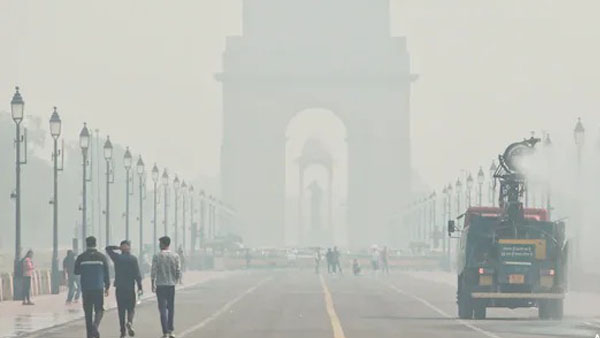
The description may sound clichéd, yet it remains painfully accurate: every winter, Delhi turns into a gas chamber. Thick smog blankets the city, stinging the eyes, choking the lungs, and forcing its residents to live under conditions more befitting an environmental disaster zone than a national capital. When doctors advise vulnerable patients to leave the city as a form of treatment, it reflects not merely a medical crisis but a profound failure of governance and planning. As Delhi’s Air Quality Index hovers around the 400 mark, the city once again finds itself trapped in a public health emergency that has, disturbingly, become routine. The normalisation of this crisis is perhaps its most dangerous aspect, as citizens have grown resigned to toxic air, and public outrage has faded into silence.
On Monday, Delhi recorded an average AQI of 427, marking its third consecutive day in the ‘severe’ category. Though there was a marginal improvement to 381 on Tuesday morning, air quality still remained firmly within the “very poor” bracket. Several localities crossed the 430 mark, with west and north Delhi reporting particularly alarming pollution levels. The consequences were visible across the city. Flights were disrupted due to poor visibility, schools were shut to protect children, and office attendance thinned as people avoided commuting in hazardous conditions. These disruptions underline the fact that air pollution is not merely an environmental concern but a systemic crisis affecting economic activity, education, healthcare, and everyday life.
Despite the annual recurrence of this catastrophe, the response from authorities has remained predictable and inadequate. Each winter follows the same script: pollution peaks, emergency measures are announced, restrictions are imposed for a few days, and once the air marginally improves, complacency returns. Temporary bans on construction, odd-even vehicle schemes, and advisories to stay indoors may offer short-term relief, but they fail to address the structural roots of the problem. The absence of sustained, year-round policy action ensures that Delhi is condemned to relive this nightmare every winter, turning governance into a cycle of reaction rather than prevention.
The causes of Delhi’s toxic air are well documented and widely understood. Vehicular emissions form a major contributor, with millions of cars, two-wheelers, buses, and trucks releasing nitrogen oxides and particulate matter into the atmosphere every day. Industrial pollution from factories in and around the National Capital Region adds to the burden, as does dust from relentless construction activity that coats roads and buildings alike. Biomass burning, including the burning of leaves and waste within the city, further contaminates the air. These man-made sources combine with unfavourable meteorological conditions during winter, when falling temperatures, low wind speeds, and temperature inversion trap pollutants close to the ground.
Crop residue burning in neighbouring states undeniably aggravates the situation, sending plumes of smoke drifting into Delhi and pushing pollution levels from bad to catastrophic. However, it would be misleading and intellectually dishonest to place the entire blame outside the city’s borders. The uncomfortable truth is that Delhi generates enough pollution of its own to make its winters unbreathable even in the absence of stubble burning. Explosive growth in private vehicle ownership, weak enforcement of emission norms, poorly regulated construction, and polluting industries operating on the city’s fringes have ensured that baseline pollution levels remain dangerously high throughout the year.
The health consequences of prolonged exposure to such air are severe, widespread, and deeply unequal. Studies have consistently linked high levels of particulate matter to respiratory illnesses, cardiovascular diseases, strokes, and reduced life expectancy. Children growing up in Delhi face impaired lung development, which can have lifelong implications for their health and productivity. Hospitals report spikes in asthma attacks, chronic obstructive pulmonary disease cases, and other respiratory complaints every winter. The elderly and those with pre-existing conditions suffer the most, while outdoor workers such as construction labourers, street vendors, and traffic police bear the brunt of exposure with minimal protection and little choice.
Beyond physical health, polluted air also takes a toll on mental well-being and quality of life. Living under a perpetual haze, unable to see clear skies or breathe freely, creates a sense of confinement and helplessness. Parents worry about sending children to school, joggers abandon outdoor exercise, and public spaces lose their vibrancy. Over time, this erodes not just individual health but the social fabric of the city, as people retreat indoors and normal civic life becomes constrained by environmental conditions.
Yet, despite the scale of the crisis, solutions are neither unknown nor unattainable. What has been lacking is political will, administrative coordination, and long-term commitment. Emergency responses such as construction bans, vehicle restrictions, and temporary industrial shutdowns must be implemented promptly and enforced strictly when pollution levels spike. Half-hearted measures and selective enforcement only undermine credibility and effectiveness. Real-time monitoring and transparent communication with the public are equally essential to ensure compliance and trust.
More importantly, Delhi requires deep structural reforms that go far beyond emergency firefighting. The expansion of clean, affordable, and reliable public transport is critical to reducing dependence on private vehicles. Buses, metro networks, and last-mile connectivity must be strengthened so that public transport becomes the default choice rather than an alternative of last resort. At the same time, policies must actively discourage excessive private vehicle use through congestion pricing, higher parking fees, and stricter emission standards that are enforced without exception.
Industrial pollution demands equally serious attention. Industries operating on the city’s periphery must transition to cleaner fuels and technologies, with strict penalties for non-compliance. Dust-control norms at construction sites must be enforced throughout the year, not merely during pollution peaks. Simple measures such as covering construction material, sprinkling water, and paving roads can significantly reduce particulate matter if implemented consistently. Waste management reforms are also essential to eliminate open burning, which remains a common and hazardous practice.
Biomass burning, particularly crop residue burning, must be addressed through a combination of incentives, technology, and cooperation with neighbouring states. Farmers need viable alternatives to burning, such as affordable machinery, financial support, and assured procurement mechanisms. A confrontational approach alone will not succeed; coordinated regional planning and shared responsibility are crucial for lasting results.
Above all, Delhi must stop treating severe air pollution as a seasonal inevitability. The crisis is the result of a deadly interaction between natural conditions and human negligence, not an unavoidable act of nature. While meteorology cannot be controlled, human behaviour, policy choices, and enforcement certainly can. Accepting toxic air as the cost of urban life is neither inevitable nor acceptable, especially when millions of lives are at stake.
Delhi’s polluted winters are a stark reminder that economic growth and urban expansion without environmental stewardship lead to self-destruction. Clean air is not a luxury but a fundamental right, essential for public health, dignity, and sustainable development. The city stands at a crossroads where inaction will only deepen the crisis, while decisive, sustained intervention can still reclaim blue skies and breathable air. The choice, ultimately, is one of priorities, accountability, and the collective will to change course before the gas chamber becomes permanent.
(the writer can be reached at dipakkurmiglpltd@gmail.com)