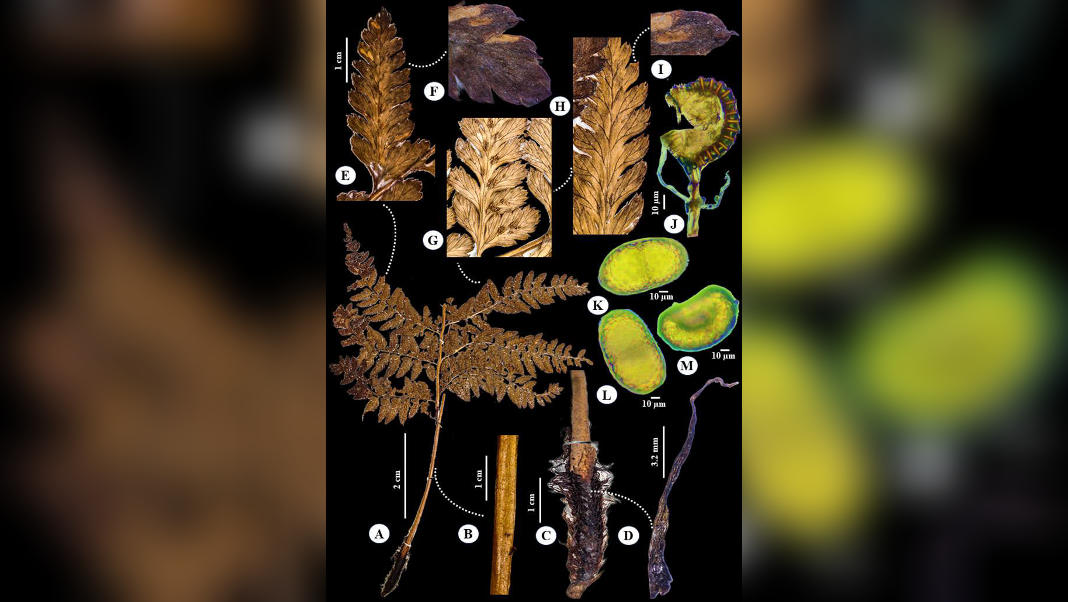

The fern can be identified by its glossy black scales near the base of the stalk, less dissected leaflets and tiny bristle-like structures on the upper surface of the fronds.
ROOPAK GOSWAMI
Shillong, May 10: A rare Himalayan fern previously believed to occur only in Uttarakhand, Arunachal Pradesh and Nepal has now been recorded in Meghalaya for the first time, highlighting both the hidden botanical richness of the Khasi Hills and growing concerns over fragile mountain habitats.
Researchers from the Botanical Survey of India (BSI) have found Athyrium vermae at Shillong Peak in East Khasi Hills, extending the known range of the species into Meghalaya. The finding was published in the journal Pleione.
The study was carried out by A. Benniamin, D. Jesubalan, Sabyasachi Mondal, Rajat Mondal, Navya T.B., Abhijith Krishnan, Sanchita Saha, Safeer Ahmed and Selvakumar Chandrasekar under the National Mission on Himalayan Studies project.
What makes the discovery significant is that the fern is considered rare and potentially threatened globally. After analysing its distribution and habitat, the researchers assessed the species as “Endangered” under IUCN criteria because of its restricted range and shrinking habitat.
The fern was found growing in moist, shaded evergreen forest patches at around 1,913 metres altitude near Shillong Peak — one of Meghalaya’s busiest tourist destinations.
According to the study, increasing tourism pressure, road expansion, deforestation and habitat fragmentation in high-altitude ecosystems could threaten the survival of the species in the future.
The researchers noted that although Meghalaya is known for its rich fern diversity, many pteridophyte species in the state remain poorly explored.
The discovery itself came after scientists re-examined an old herbarium specimen collected from Shillong Peak in 2010. Initially identified as a different species, the specimen was later confirmed as Athyrium vermae after detailed morphological analysis and verification by noted pteridologist Christopher Fraser-Jenkins.
The fern can be identified by its glossy black scales near the base of the stalk, less dissected leaflets and tiny bristle-like structures on the upper surface of the fronds.
The study says the finding adds to Meghalaya’s growing importance within the Eastern Himalayan biodiversity landscape and underlines the need for more focused botanical surveys in the region.
Researchers have called for immediate conservation measures, including habitat protection, monitoring of known populations and sustainable management of ecologically sensitive hill ecosystems around Shillong Peak.