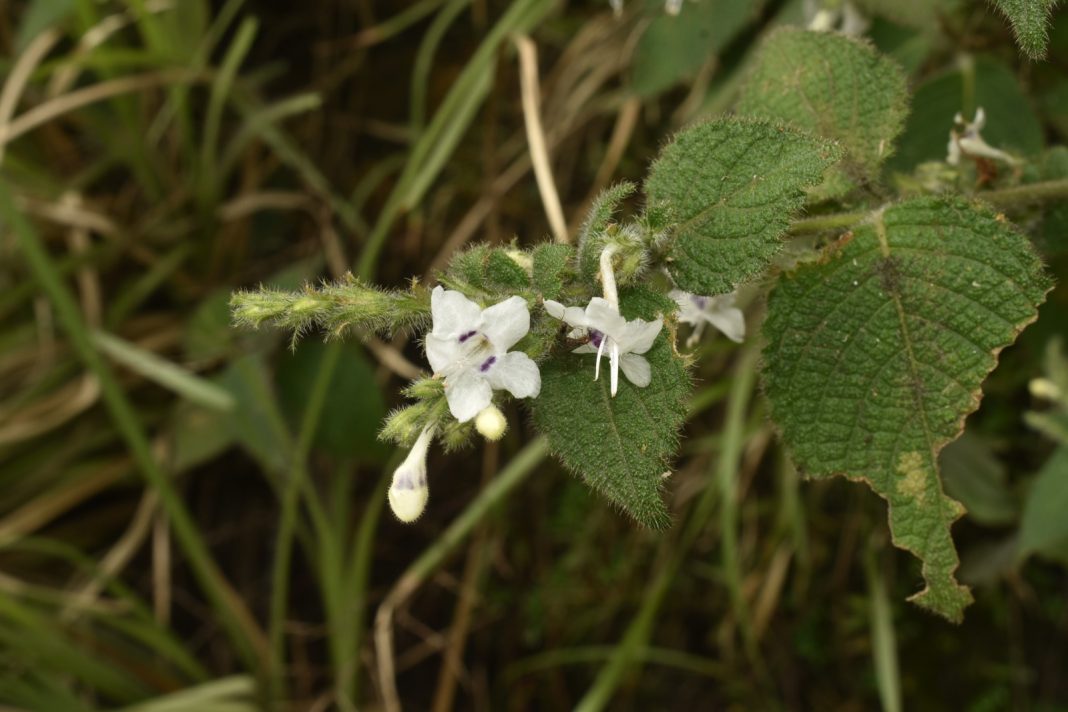

The species was last collected in 1930 from Mawmluh by botanist PC Kanjilal.
Roopak Goswami
Shillong, Feb 22: Ninety-three years after it went into oblivion and believed to have disappeared, a plant species has been rediscovered in Khasi Hills region, boosting Meghalaya’s biodiversity record further.
Rediscovery of Strobilanthes khasyana, a rare endemic flowering plant of Northeast India, was made during fieldwork by scientists from Botanical Survey of India (BSI), Shillong, at Mawsynram in August 2023.
The species was last collected in 1930 from Mawmluh by botanist PC Kanjilal. Since then, no confirmed collections were available in Indian herbaria — raising fears that the plant may have been lost from the wild.
Originally described in 1847 from the Khasi Mountains, Strobilanthes khasyana belongs to the Acanthaceae family. Its unique characteristics — including tufted axillary spikes, only two fertile stamens, and distinctive ribbed pollen grains — once led taxonomists to place it under a separate, monotypic genus.
The recent collection marks the first confirmed sighting from Meghalaya in over nine decades.
A senior BSI scientist involved in the study said the rediscovery underscores how little is still known about the region’s plant wealth.
“We have only touched the tip of the iceberg. As per literature, so many species are yet to be rediscovered,” the scientist said, adding that Meghalaya’s rugged terrain and underexplored forests continue to conceal botanical treasures.
The statement reflects a larger reality — that several historically recorded species in Northeast India have not been relocated for decades, not necessarily because they are extinct, but because systematic surveys remain limited.
The rediscovery highlights the extraordinary yet underdocumented biodiversity of the Khasi Hills, the importance of sustained scientific field surveys and the urgent need for habitat conservation in high-rainfall zones like Mawsynram and Cherrapunjee.
The plant flowers between August and January, making the monsoon and post-monsoon months critical for tracking such rare species.
“For Meghalaya, this is more than a scientific footnote. It is a reminder that the state’s forests may still harbour species thought lost to history,” a scientist said.
After 93 silent years, a forgotten endemic has resurfaced — and scientists believe many more may be waiting in the mist-laden hills.