
By Dipak Kurmi
The entry of the country’s largest multi-brand retailer into the market for Bihu eatables has quietly but decisively altered the commercial landscape of Assam’s traditional food economy. By bringing hygienically packed pitha, laroo and other festive delicacies into air-conditioned shopping malls, corporate retail has not merely widened consumer choice but has also exposed local food entrepreneurs to a new set of market realities. What was once perceived as a largely seasonal, informal and locally confined market has now revealed itself as a much larger, more aspirational space that extends well beyond Assam, encompassing the Assamese diaspora across India and abroad. Urbanisation within the state has further accelerated this shift, as city-based consumers increasingly seek convenience, hygiene and brand assurance alongside cultural authenticity.
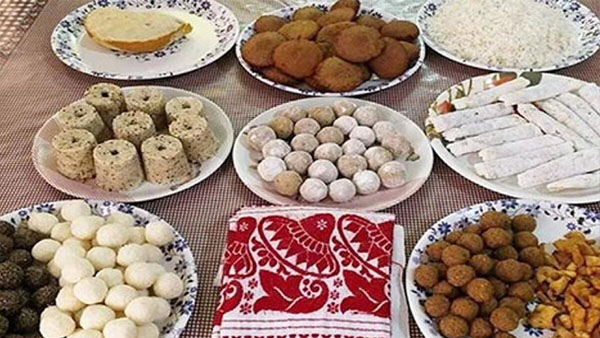
For decades, the imagination surrounding the size and scope of the Bihu cuisine market remained modest. It was largely limited to the bustling makeshift pre-Bhogali Bihu markets in Guwahati and other urban centres, where farmer-producers, small traders and rural food entrepreneurs converged to sell traditional snacks. These markets played an important socio-economic role, especially for rural households, as Bhogali Bihu is a post-harvest festival centred on abundance, feasting and sharing. The sale of ready-to-eat and pack-and-carry items made from rice, sesame, coconut, jaggery, flattened and puffed rice offered farmers an opportunity to augment household income at a crucial time of the year. Yet, despite their vibrancy and cultural significance, these markets largely remained unorganised and informal.
One of the most persistent limitations of this informal ecosystem has been the lack of attention to packaging, branding and quality control. Most rural food entrepreneurs, many of them first-generation business owners, focused primarily on production rather than presentation. Temporary packaging in polythene bags, though cost-effective, significantly reduced shelf life and raised concerns about hygiene and food safety. This proved to be a major barrier when it came to accessing diaspora markets, where consumers are willing to pay a premium but expect professionally packaged, certified and branded products. In this gap between tradition and modern consumer expectations, multi-brand retailers and instant delivery platforms have found a lucrative opportunity.
Corporate retailers understand that the diaspora market for Bihu eatables is a high-end segment driven by nostalgia but governed by contemporary consumption standards. By offering similar products in sturdy, attractive packaging, backed by brand credibility and supply chain efficiency, they have positioned themselves as reliable providers of “authentic” Assamese flavours. However, authenticity in such contexts often becomes a marketing label rather than a guarantee of local sourcing. Big retailers enjoy the flexibility to source ingredients and even finished products from anywhere, maximising profit margins while remaining largely disconnected from local production ecosystems. The sight of coconuts sourced from Kerala flooding Guwahati markets during Bihu is a telling example of how easily local supply chains can be bypassed.
This reality challenges the assumption that the entry of large corporate players into the Bihu eatables market will automatically benefit local farmers and producers. Unlike traditional handloom products such as the Gamosa or Mekhala Chador, Bihu food items currently lack any meaningful form of protection. There is no regulatory barrier preventing retailers from sourcing or manufacturing these products outside Assam. As a result, the cultural symbolism of Bihu cuisine risks being detached from its local agrarian and artisanal roots. Without protective measures or strategic intervention, local entrepreneurs may find themselves marginalised in a market that is built on their own traditions.
One possible avenue for protection lies in expanding the list of traditional food items that carry geographic indication tags. GI tagging can help establish a formal link between a product and its place of origin, potentially safeguarding the interests of local growers and processors. However, GI tags alone are not a panacea. Without effective branding, marketing and distribution strategies, the economic potential of GI-tagged products often remains unrealised. The value of such tags can only be unlocked when local entrepreneurs are equipped to convert cultural capital into commercial strength.
This is where the role of the state becomes critical. Supporting local food entrepreneurship is not merely an economic imperative but also a cultural one. Sustainable food businesses rooted in local production systems help preserve indigenous food practices and ensure that cultural traditions are passed on to future generations in living, evolving forms. The central and state governments can play a transformative role by investing in packaging infrastructure, providing training in food safety standards, and facilitating certification processes that enhance market credibility. Institutions such as the Indian Institute of Entrepreneurs and NEDFI are well placed to offer consultancy services focused on brand building, helping local enterprises develop coherent marketing strategies that resonate with modern consumers.
Innovative retailing ideas will be essential if local entrepreneurs are to secure a fair share of the market. While matching the scale of multi-brand retailers is neither feasible nor desirable for small producers, aggregation models can help achieve limited economies of scale without sacrificing local character. Cooperative branding, shared processing facilities and collective marketing platforms can enable rural entrepreneurs to access urban and diaspora markets more effectively. Digital payment ecosystems and e-marketing opportunities have further lowered entry barriers, allowing even small producers to reach customers directly if they are able to position their products effectively.
Assam’s emerging startup ecosystem offers additional possibilities. Government-supported incubation programmes can help organic entrepreneurial ideas flourish, but there is a risk of complacency if incubation is treated as an end in itself. Romanticising innovation without a long-term roadmap for sustainable production and market expansion can lead to fragile businesses that collapse under competitive pressure. Local food entrepreneurs must critically assess their current shortcomings in packaging, branding and distribution, and be willing to adapt without diluting the cultural essence of their products.
Ultimately, the challenge posed by mega retail brands is not simply a threat but also a wake-up call. It highlights the untapped potential of Bihu eatables as premium cultural products with year-round marketability. Preserving local food traditions in a rapidly modernising economy requires more than nostalgia; it demands strategic thinking, institutional support and entrepreneurial resilience. If the state acknowledges this reality and articulates policies that actively promote local food entrepreneurship, it can align economic development with cultural preservation. The sustainability of local food entrepreneurs, in both festival and regular markets, will determine whether Bihu cuisine remains a living tradition rooted in Assam’s fields and kitchens, or becomes just another commodified product on a corporate shelf.
(the writer can be reached at dipakkurmiglpltd@gmail.com)