
By Satyabrat Borah
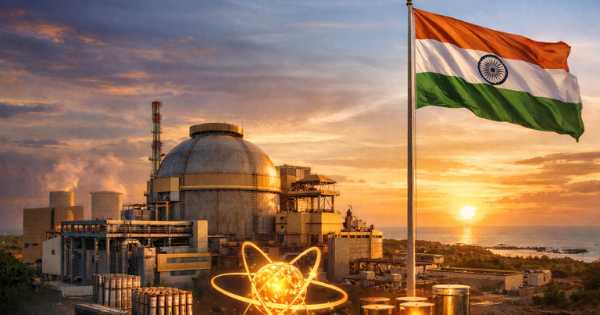
The concept of a self-reliant India has moved from being a simple political slogan to a lived reality within the most sophisticated laboratories of the country. This week marked a profound shift in the global scientific balance of power as India stepped into an elite circle that previously had only one member. By operationalizing a fast breeder reactor at Kalpakkam in Tamil Nadu, India has become the only nation other than Russia to master a technology that effectively creates more fuel than it burns. This is not just a win for the Department of Atomic Energy but a massive statement of intent for a nation that aims to power its future without leaning on the crutches of imported resources.
The prototype fast breeder reactor is a marvel of indigenous engineering. It represents decades of quiet persistence by Indian scientists who understood very early on that the traditional path to nuclear energy would eventually hit a wall. Most conventional nuclear reactors across the globe rely on uranium. The trouble for India is that it possesses very little uranium of its own. Relying on imported uranium often comes with heavy diplomatic strings attached and leaves the national power grid vulnerable to the whims of international trade and geopolitics. This is exactly why the fast breeder program is the linchpin of the national energy strategy.
The genius of this specific reactor lies in how it handles fuel. In a standard reactor, you put in fuel, it reacts, and you are left with waste. In a fast breeder reactor, the process is designed to be much more efficient. It uses the waste products from conventional reactors and through a complex process of nuclear alchemy, it breeds new fissile material. This means the fuel cycle becomes a loop rather than a straight line ending in a trash heap. For a country with limited uranium but vast ambitions, this circularity is the only way to ensure that the lights stay on for generations to come.
India sits on roughly twenty five percent of the entire world’s thorium deposits. Thorium is a naturally occurring radioactive element that is much more abundant in the Indian soil than uranium. While thorium itself cannot be used directly as fuel in a standard reactor, it can be placed inside a fast breeder reactor where it transforms into a potent source of energy. We are not at the stage of full thorium utilization quite yet, but the success at Kalpakkam is the necessary bridge to get there. If India successfully scales this technology, the numbers are staggering. Some experts estimate that the thorium reserves could generate five hundred gigawatts of electricity every year for the next four centuries. To put that in perspective, that is double the peak power demand recorded in the current fiscal year. It is the kind of energy security that most nations can only dream of.
As the fastest growing major economy on the planet, the appetite for power is insatiable. Every new factory, every new skyscraper, and every new electric vehicle adds to the load. If we look at our neighbors, the scale of the challenge becomes clear. China’s peak power demand recently was six times higher than that of India. As the Indian economy matures and more people move into the middle class, the demand for electricity will skyrocket. Meeting this demand requires a diverse portfolio. We need coal and gas for the immediate term, and we certainly need solar and wind to meet our climate goals. But intermittent sources like wind and sun cannot provide the steady, heavy duty baseload power that a massive industrial economy requires. That is where nuclear energy fills the gap.
There is a common fear regarding the hazardous waste produced by nuclear plants. While this is a valid concern, it is important to look at the carbon footprint. Nuclear energy produces almost no carbon dioxide during operation, making it one of the cleanest ways to generate mass electricity. Fast breeder reactors actually make this process even cleaner because they use the very waste that people are worried about as their primary fuel. By recycling spent fuel, these reactors reduce the volume and the toxicity of the long term waste that needs to be stored. It turns an environmental liability into a strategic asset.
The government has set an ambitious target to increase nuclear power capacity from nine gigawatts today to one hundred gigawatts by the year 2047. This is a massive leap that requires not just scientific brilliance but also huge financial investments. The introduction of the Shanti Act last year was a clear signal to the markets. By making the nuclear sector more attractive to private companies, the state is acknowledging that it cannot do this alone. Bringing in private capital and expertise will be essential to meeting these high targets within the next two decades.
The global landscape for nuclear energy is also shifting. After a period of stagnation following major accidents in the past, the world is seeing a nuclear renaissance. More than sixty new reactors are currently being built across various continents. The 2020s have marked a return to nuclear expansion that is expected to accelerate well into the 2030s. Nations are realizing that achieving net zero carbon goals is nearly impossible without a significant nuclear component in their energy mix.
This expansion comes with its own set of anxieties. Recent history has shown that nuclear facilities are not immune to the horrors of modern warfare. Attacks on plants in Iran and Ukraine have raised serious red flags. While these structures are built with incredible layers of safety and can withstand natural disasters like earthquakes or tsunamis, they are not designed to be targets for deliberate ballistic missile strikes. The memory of Chernobyl still looms large in the collective human consciousness. That disaster showed us that a compromised nuclear plant can have consequences as devastating as a weapon. Even four decades later, a thirty kilometer exclusion zone remains around that site as a haunting reminder of what happens when things go wrong.
As India builds out its nuclear infrastructure, the focus on safety must be as intense as the focus on production. Adding capacity is a necessity for growth, but it must be balanced with a demand for the strict enforcement of international safety norms. The red lines that protect nuclear sites from conflict must be respected by all nations. The journey toward being truly self reliant involves more than just building the machines. It involves creating a robust ecosystem where safety, environmental responsibility, and economic growth go hand in hand.
The success at Kalpakkam is a tribute to the patience of the Indian scientific community. They worked through decades of international sanctions and technology denials to build something that is uniquely suited to the Indian context. This is what true self reliance looks like. It is not about isolating from the world but about building internal strength so that the nation can engage with the world on its own terms. With the fast breeder program, India is no longer just a consumer of global technology but a leader in the next generation of energy production. The path ahead is long and will surely have many hurdles, but the foundation laid this week is solid. It offers a glimpse of a future where energy is not a constraint on growth but the very engine that drives it forward for centuries.