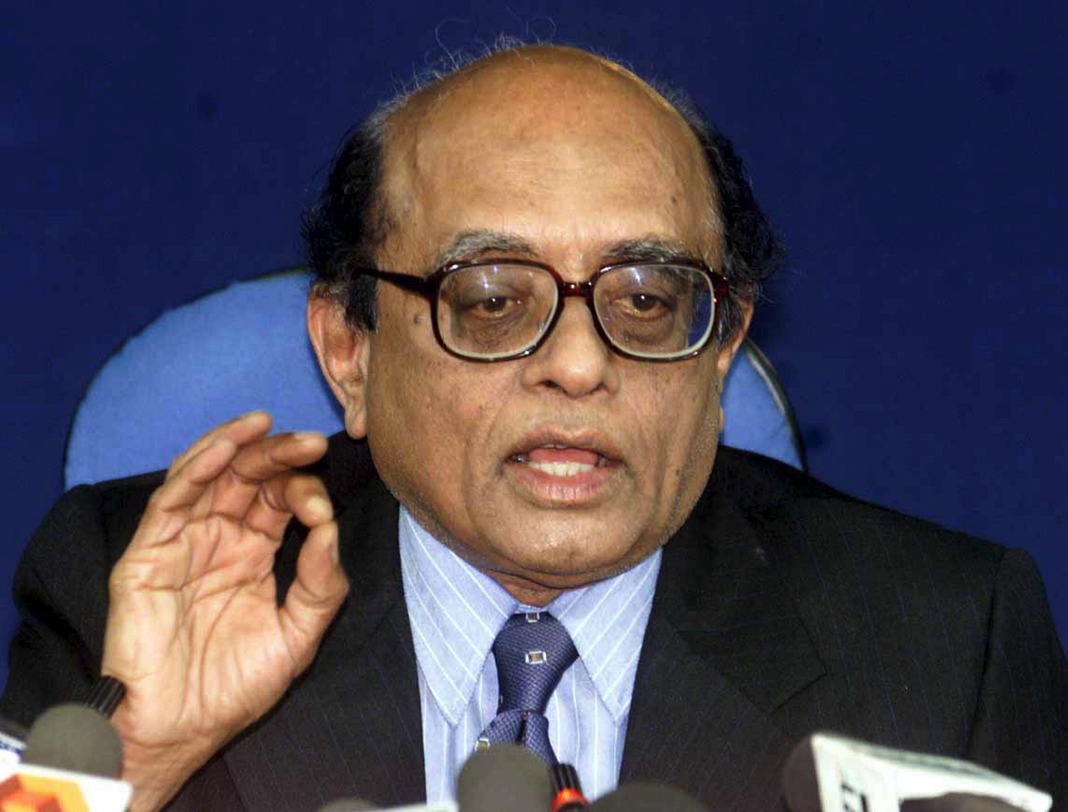

New Delhi, Jan 5: Eminent physicist Rajagopala Chidambaram, who played a key role in the nuclear tests of 1974 and 1998, died on Saturday, according to the Department of Atomic Energy (DAE). He was 88.
Chidambaram, who was also associated with the nuclear weapons programme, breathed his last at Jaslok Hospital in Mumbai, a DAE official said.
Born in 1936, Chidambaram was an alumnus of Presidency College in Chennai and Indian Institute of Science, Bengaluru.
Chidambaram held numerous prestigious positions throughout his career, including Principal Scientific Adviser to the government of India (2001–2018), director of Bhabha Atomic Research Centre (1990-1993), chairman of Atomic Energy Commission, and secretary to the government of India, DAE (1993-2000).
He also served as chairman of the Board of Governors of the International Atomic Energy Agency (IAEA) (1994–1995).
Chidambaram played a pivotal role in shaping India’s nuclear capabilities.
“He played an integral role in the nation’s first nuclear test in 1974, and led the Department of Atomic Energy team during the Pokhran-II nuclear tests in 1998. His contributions established India as a nuclear power on the global stage,” a statement issued by the DAE said.
“As a world-class physicist, Dr. Chidambaram’s research in high-pressure physics, crystallography, and materials science significantly advanced the scientific community’s understanding of these fields. His pioneering work in these areas laid the foundation for modern materials science research in India,” it said.
He was honoured with prestigious accolades, including the Padma Shri in 1975 and the Padma Vibhushan in 1999. He received honorary doctorates from several universities and was a fellow of eminent Indian and international science academies.
He championed initiatives in areas such as energy, healthcare and strategic self-reliance and steered numerous projects that significantly advanced India’s science and technology landscape, it said.
He was instrumental in initiating India’s indigenous development of supercomputers and conceptualising the National Knowledge Network, which connected research and educational institutions across the country. (PTI)